

Every December the same thing happens. You pull last year's favourite suit out of the wardrobe, and it looks lovely but does very little against a 6 a.m. chill. So you start hunting for a woolen suit for women, only to land on pages of "soft, warm, cosy" with no real way to tell one fabric from another.
Two fabrics dominate that search: wool and pashmina. People often treat them as one thing. They aren't, and the gap between them decides whether you'll wear a suit twice a week or twice a season. Below, the two are compared properly so you can choose before you pay. Our winter suits for women collection is built around pashmina and winter spun, so check the fabric details on any product page you're considering, and let this guide tell you what those details should say.
Short answer for anyone in a hurry: a woolen suit for women gives you the most insulation per layer but can feel coarse, while pashmina trades some of that heat for lightness and a gentler feel. Pick wool if your skin copes and your days are cold and outdoors. Pick pashmina for everything else. Everything after this explains why, and where each choice goes wrong.
What a woolen suit for women really means
The phrase is looser than it sounds. On a shopping page, a woolen suit for women can mean pure wool, a wool blend with polyester or acrylic mixed in, or just a fuzzy fabric that feels warm in the hand. The label inside the garment is the only dependable guide, so read it before you fall for the colour.
Wool comes from sheep, and its fibres trap air, which is why it holds heat even when the weather turns damp. Pashmina is a much finer fibre, traditionally linked with Kashmir and known for being light yet warm. Both are natural. Both also get blended, and that's where the confusion starts.
A suit sold as pashmina isn't always pure pashmina. Some are blends, and some are only pashmina style fabrics. Look for the fabric composition on the product page or the care label, because a woolen suit for women and a pashmina set should both name what they're made of. If the information isn't there, ask before buying.
Pashmina vs wool: what you notice once it's on
Softness is where the two part ways first. Wool fibres are thicker on average, so a woolen suit for women can feel scratchy at the neck and wrists, exactly where a collar and sleeves touch bare skin. Pashmina fibres are finer, so the same contact usually feels gentler. If you've ever pulled on a wool sweater and wanted it off within the hour, treat softness as your first filter.
Warmth is the one place wool tends to win outright. Per layer, a thicker wool fabric usually insulates more, which is why a woolen suit for women makes sense for long stretches outdoors. Pashmina is warm for how little it weighs, but on the coldest mornings a single pashmina layer may want a thermal underneath or a shawl over the top. For many people that's a fair trade. For someone standing outside at a function for hours, it isn't.
Here's how a woolen suit for women stacks up against pashmina in one place.
|
What you're comparing |
Wool |
Pashmina |
|---|---|---|
|
Feel on skin |
Can feel coarse at the neck and wrists |
Finer, usually gentler |
|
Weight |
Often heavier |
Often lighter |
|
Warmth per layer |
Higher |
Good for how light it is |
|
Long hours in heated rooms |
Can feel too warm |
Easier to stay comfortable |
|
Care |
Heat and rough handling can shrink it |
Needs gentle handling |
Winter spun, the other fabric in our winter range, sits outside this pairing. It isn't wool and it isn't pashmina, so judge it by its own composition line rather than by the reputation of either.
Weight and the layering problem
Fabric weight is easy to overlook and hard to fix after buying. It changes how a suit hangs, how quickly it warms you and how tiring it feels after ten hours. A heavy woolen suit for women can drag on the shoulders of an oversized kurta and leave little room for anything underneath. A lighter pashmina drapes and moves, which is why it pairs so easily with a shawl. Product pages rarely list weight, so judge it from the description and from how the cut is meant to fall.
Layering is where heavy cloth hurts most. You'll probably add a shawl, a cardigan or a jacket, so the suit turns into a base layer rather than the whole outfit. A thick woolen suit for women under a thick coat leaves you stiff, and one layer too many is the usual reason winter sets stay in the wardrobe. If you plan to layer, our guide on how to wear a suit in winter covers shawls, thermals and footwear in detail.
Heated rooms matter too. Offices and crowded halls punish heavy cloth. You're warm in the car, hot in the hall, and cold again on the way out. A woolen suit for women that feels perfect outdoors can become a burden by the second hour indoors.
How to choose without overthinking it
Most fabric advice compares cloth on a table. You'll wear yours on a body, in a particular room, under a shawl. So ask these instead.
Where will the day go? If most of it is outdoors, a woolen suit for women earns its weight. If you drift between rooms, go lighter.
How does your skin handle fibre? If a collar has ever bothered you, make soft on skin the first test. What touches you matters more than what shows outside, and a smooth thermal underneath can make a woolen suit for women far easier to live in.
Do you sit a lot? A fabric can look great standing and bunch badly at the hip once you're seated. Check how the kurta falls when you sit, or look for an oversized cut with room to spare.
How often will it actually get worn? Think in wears per season. A suit you'll put on thirty times is a different purchase from one that comes out for two functions. Even a handsome woolen suit for women is a poor buy if it only suits a single occasion.
Where pashmina fits: two sets from the Pyoor range

Take the Marigold Winter Pashmina Farshi Set. The kurta is long, collared and cut in an oversized fit, paired with a green farshi salwar detailed with lace on the neck and sleeves. Both pieces are pashmina, and the set has pockets, which matters more than it sounds when your hands are cold and you're carrying a phone. The marigold and green shades sit well together, and the set suits daily wear, relaxed meetups and gifting. If a woolen suit for women feels too heavy for the way you spend your days, this is the kind of pashmina set to look at.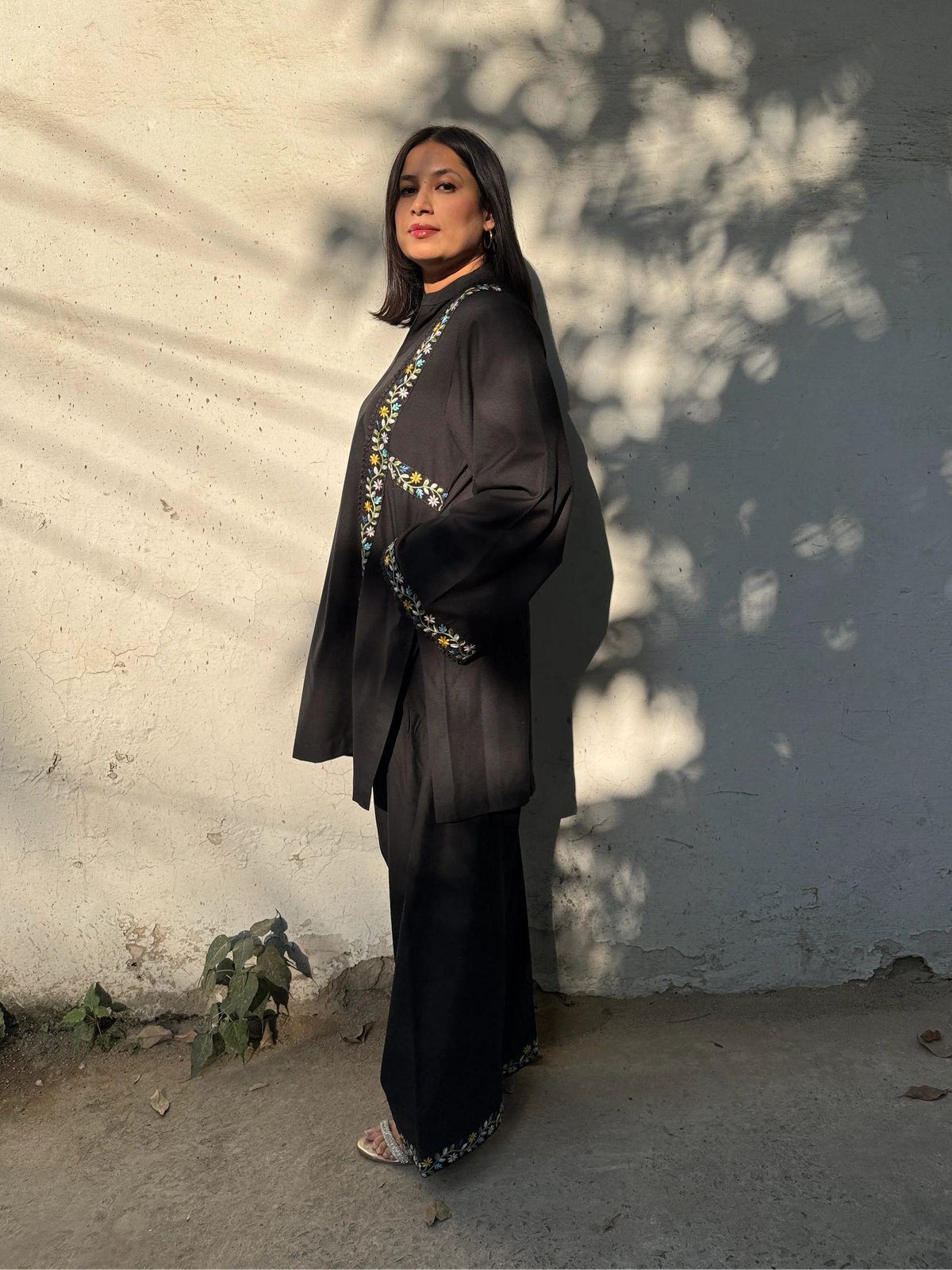
The Solids Black Pashmina Farshi Set takes a quieter route. The oversized kurta carries double lace detailing on the front and sleeves, and the loose farshi salwar has a 12 inch mori and 3 inch feasing, so there's room to move. Pockets are included here too. Black reads classic, which makes it easy for outings, gatherings or an ordinary cold Wednesday, the kind of day you might otherwise reach for a woolen suit for women.
Both sets are pashmina, so they sit on the pashmina side of this comparison and say nothing about what a woolen suit for women looks like in a finished outfit. Open the product page for the full fabric details before you decide.
Everyday fabric or festive fabric?
Almost nobody asks this about a woolen suit for women or its pashmina cousin, and it changes the answer. Festive wear forgives fuss. You'll sit for photos, step in and out of cars and take the shawl off when the room warms up. An everyday suit has to survive buses, desks and laundry. Heavier cloth feels grand at an evening function and tiring on a Tuesday. A lighter pashmina set handles the Tuesday easily and can still go to a gathering with a good shawl.
Think about the job your suit does most often. Daily life? Put softness and weight first. Mostly occasions? You can accept more structure. A woolen suit for women bought only for functions tends to spend most of the season folded away, so it's worth being honest about which kind of wearer you are.
Cut matters as much as cloth, even on a woolen suit for women. Our guide to winter salwar suits for ladies covers farshi, oversized and other silhouettes, and it's worth reading alongside this one, because a loose cut changes how any fabric wears.
Reading a care label before you buy
Care is where good fabrics go to die. A woolen suit for women can shrink or felt if it meets hot water and rough handling. Pashmina is delicate and can snag or pill. Neither forgives guesswork. Care labels vary by garment, and a blend changes the rules, so follow what's printed on yours.
A short check before you pay for any woolen suit for women: the fibre percentages, the washing symbol, the drying instruction and whether dry cleaning is advised. If the product page doesn't list care instructions, it's reasonable to ask first. Needing dry cleaning after every wear is a different commitment from freshening a suit at home.
Real questions people ask about a woolen suit for women
Is a woolen suit for women warmer than a pashmina set?
Usually, yes per layer, because wool is thicker and insulates more. A pashmina set with a thermal underneath and a shawl over the top can close much of that gap, and it's lighter to wear.
How do I know if a suit is real pashmina?
Check the fabric composition on the product page or the care label. It should name the material clearly. If it only says pashmina style, or says nothing, treat it as unverified and ask.
Will wool feel itchy on my skin?
It can, mostly at the neck and wrists. Finer or blended fibres are gentler, and a soft thermal helps. If you've reacted to wool before, test a woolen suit for women against your inner wrist before you commit.
Which fabric is better for daily wear in winter?
Pashmina is usually the easier daily pick, because it's lighter and gentler on skin. A woolen suit for women wins if your days are spent mostly outdoors.
Can I wash a warm suit at home?
Only if the care label says so. Many warm fabrics prefer gentle handling or dry cleaning, and hot water can ruin wool. When in doubt, follow the label.
Still undecided about a woolen suit for women? Open two sets from the winter range, read the composition line on each, and ask which one you'd actually put on at 7 a.m. That's usually your answer. And if wool still tempts you after that, read its care label twice and size up for layering.
0 comments