

Ten days. A puja at home, a friend's sangeet, maybe a wedding lunch somewhere in between, and then Diwali night itself. Scroll through enough shopping sites during that window and every diwali suit starts blurring into the next one. Farshi, Anarkali, straight cut, all filed under "festive wear" like the differences don't matter. They do. What you wear standing near a diya for twenty minutes is a different job entirely from what you want on at 11pm dancing at someone's sangeet.
This isn't a fabric primer. You already know silk is festive and cotton is casual. What's worth your actual time is which silhouette suits which part of your Diwali week, why some styles look incredible in a photo but move badly in real life, and where the usual advice quietly stops being useful. Browse our collection of diwali suits if you want, though this piece is really about helping you pick before you scroll through fifty options.
The One Thing That Actually Separates These Styles
Forget the embroidery for a second. The real difference between suit types comes down to how the bottom half is built, and that one detail decides almost everything about how the outfit behaves once you're wearing it for six hours straight.
A straight suit keeps a clean vertical line, kurta falling straight, paired with a straight pant or simple salwar. Barely any extra volume, which is exactly why it's the easiest cut to walk, sit, and eat in without constantly adjusting fabric.
Add a flare from the waist or chest and you've got an Anarkali, and that flare alone does the visual work, no heavy embroidery required to carry the drama. It photographs beautifully because the flare catches light and motion together. The tradeoff shows up fast in a small car or a packed hall, where all that extra fabric needs somewhere to go.
Then there's the farshi set, cut long enough for the salwar to pool on the floor instead of stopping at the ankle, usually with a fitted or semi fitted kurta up top. Old world elegance, basically, because the excess fabric drapes instead of sitting flat. A diwali suit set built this way was never meant for a lot of walking. It's meant to be seen standing still, seated, or moving through a room slowly.
A salwar kameez rounds things out as the least fussy option of the four, festive without formal, closer to dressed up everyday wear than anything on this list.
Each style solves a different problem. Picking based on how something looks in a product photo, without thinking about what your evening will actually demand, is where most people go wrong.
Body Type Advice Isn't Wrong, It's Just Not the Real Question
Pear shape wears this, apple shape wears that, you've read it a hundred times. Not bad advice, just incomplete. It skips the more immediate question: how long are you wearing this, and what are you doing in it?
A lot of standing, greeting relatives at the door, moving room to room, maybe helping host? A straight suit or a slightly fitted Anarkali will treat you far better than any farshi hem, no matter how good it looked on the hanger. That trailing salwar needs space and a slow pace to look intentional. Otherwise it gets in the way, yours and everyone else's.
Seated for most of the night, at a puja, a family dinner, something more formal? A farshi set stops being decorative and becomes genuinely practical. The drape settles into itself when you sit, no fighting fabric every time you shift.
Fabric weight matters more than people give it credit for too. A heavier gajji silk suit holds embroidery beautifully and drapes with real structure, but it also holds heat, and by hour three in a crowded room with limited airflow, you'll feel that weight whether you meant to or not. A lighter organza dupatta over a silk base, instead of stacking a heavy dupatta on an already heavy kurta, keeps things from tipping into too-much-fabric territory.
Getting Through a Long Festive Day Without Three Outfit Changes
Diwali rarely stays in one place. Morning puja, evening card party, dinner that runs late, and somehow nobody's actually changing outfits three times in a day. So the real question is which diwali suit can stretch across a day like that without you looking underdressed at 8am or overdressed by 10pm.
A straight suit in a rich colour with detailed embroidery handles this best. Swap flats for heels, change a simple dupatta drape for something more structured, and the same outfit reads completely differently by night than it did in morning light. Farshi sets don't stretch this way nearly as well since the trailing hem genuinely limits movement, so they're at their best when you're staying in one place for most of the event.
One detail people skip constantly: the pleated, fanned dupatta drape from styled shoots takes real effort to maintain. For an evening in and out of a car, on stairs, near diyas and candles, a simpler shoulder drape that just stays put works better and looks just as elegant once you're actually there.
Jewellery and Footwear, Matched to the Suit
A farshi set with heavy embroidery on the kurta doesn't need a loaded neckline underneath. One strong pair of earrings or a single layered necklace is plenty, the outfit's already doing the visual work. A straight suit in simpler fabric can carry more jewellery without looking cluttered since there's more visual room for it.
Footwear matters most with a farshi. Heels are fine, but very high ones turn stairs into a genuine hazard once the fabric's pooling around your feet. Flats or a low block heel work better, and nobody's checking your shoe height once you're seated for most of the night anyway.
When Each Style Actually Wins
Movement, multiple stops, or you'd rather not think about your outfit again once you've left the house, that's a straight suit's territory. Forgiving, easy on any surface, rarely needs mid-evening fixing.
A sangeet entrance, a group photo, one hour where you're the focus, the Anarkali earns its place there. Once that moment passes, the flare can start feeling like extra fabric to manage.
Slower, seated, indoor evenings where the outfit's meant to be admired rather than moved through a crowd, that's when a farshi set wins. A wedding lunch, a smaller family Diwali evening, a puja seated near the mandir for most of the ceremony, all of these suit the style. It's quietly the best option for low light too, since the extra fabric catches candle and diya glow in a way flatter silhouettes don't.
Several smaller gatherings across the week rather than one big event calls for the salwar kameez, comfortable enough for a long stretch without ever looking underdressed.
Two Sets From Our Collection Worth a Look
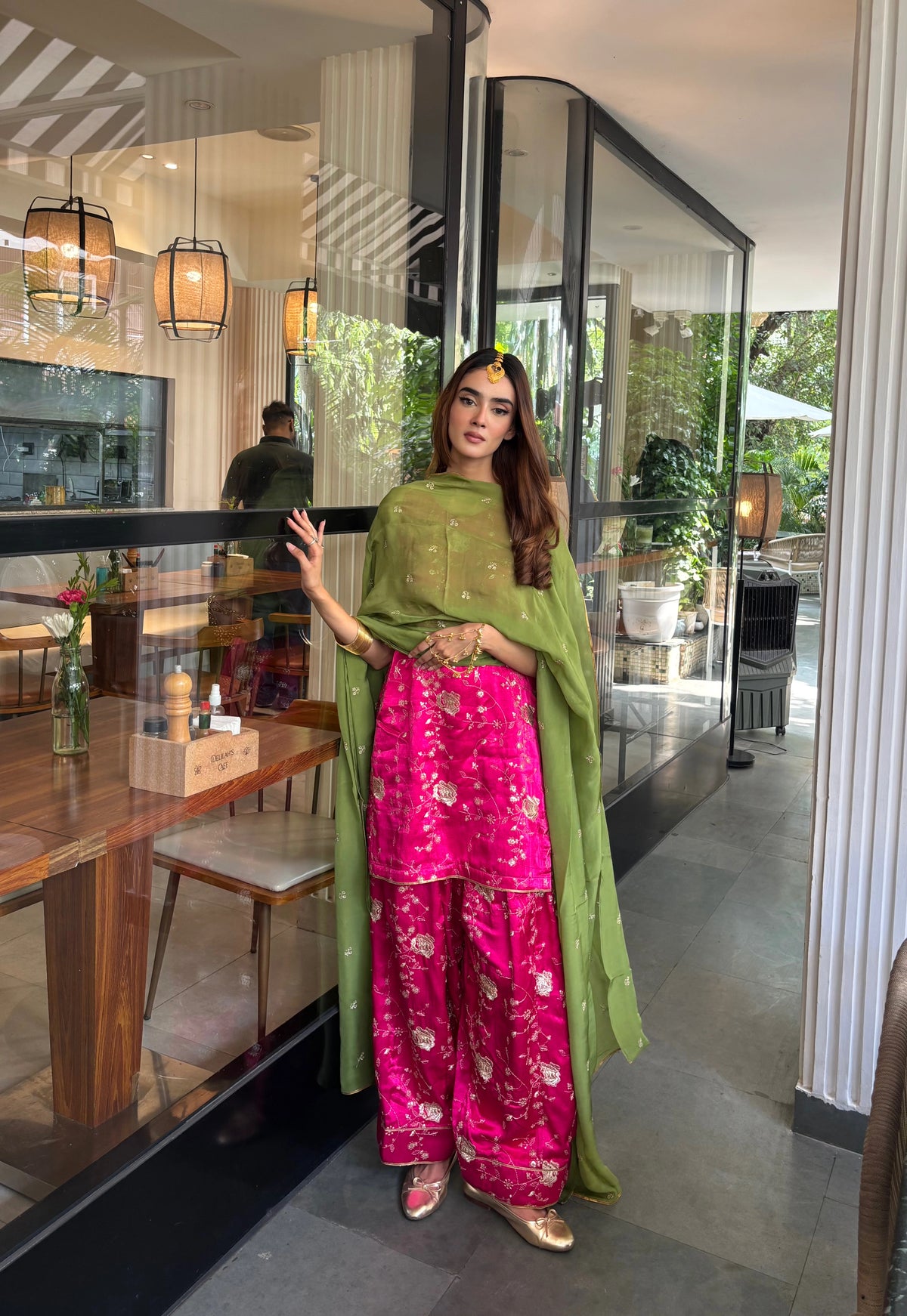
The Blush Pink Vintage Farshi Set leans into that seated, slower occasion completely. Soft pink gajji silk, embroidery running the length of the kurta, cut close but not restrictive. What makes it work as a set rather than two separate pieces is the matching embroidery carried through the farshi salwar. Cotton lining keeps it wearable across a long event, and the mehendi green organza dupatta stays light instead of adding to the weight.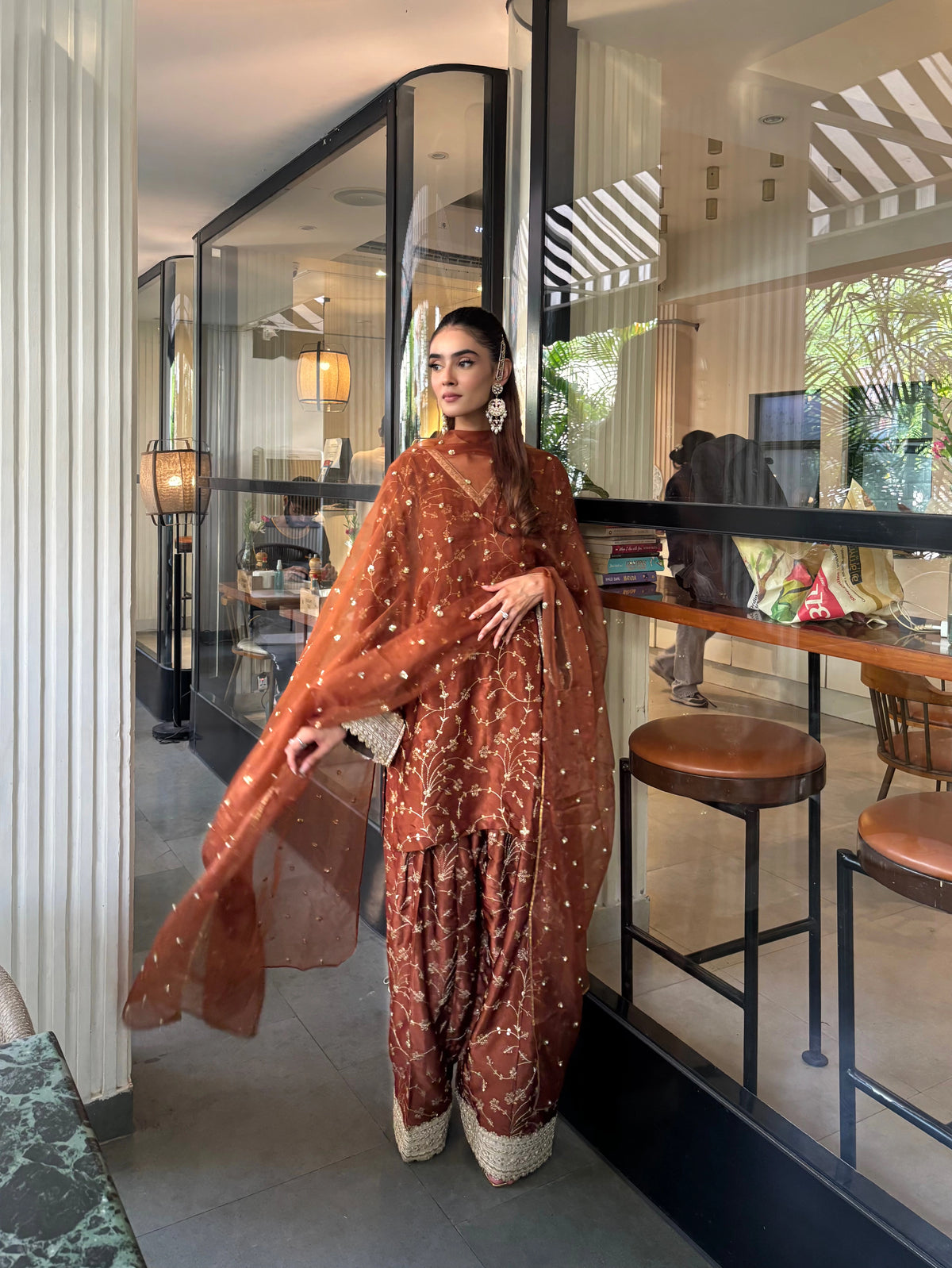
Go deeper into the evening and the Mehreen Brown Silk Farshi picks up where that leaves off. Richer tone, pure gajji silk, fine embroidery that continues from kurta into salwar so nothing feels stitched on as an afterthought. The cotton lining underneath does real work here too, keeping the silk from stiffening against your skin during a few hours of standing for photographs. Hand embroidered, but the brown organza dupatta stays light on the shoulder rather than dragging the whole look down.
Both are part of our diwali outfits for women collection, better suited to sitting or moving slowly than a night spent on your feet. Our earlier guide on Diwali outfits goes deeper into fabric and fit if you want more before deciding.
Real Questions People Ask
What's the actual difference between a diwali suit and a diwali suit set?
People use the terms interchangeably in practice, but "set" usually means the top, bottom, and dupatta were designed together as one matching piece. Coordinated embroidery across all three is part of why farshi sets are almost always sold this way.
Is a farshi set too formal for a smaller gathering?
It comes down to how much sitting versus standing the evening involves, not the size of the crowd. A small, seated family dinner suits a farshi set just as well as a bigger event does.
How do I know if an Anarkali will suit my height?
Shorter heights generally do better with a higher waist flare rather than one starting at the chest, since it creates more visible leg line. Not a hard rule, just a decent starting point.
Can one outfit work for both a puja and a party later the same day?
A straight suit is your best bet. It adapts easily with a change in jewellery, footwear, or dupatta styling. A farshi or heavily flared Anarkali is much harder to shift between a morning and evening mood.
What should I check before buying online?
Lining details and fabric weight affect comfort more over a long event than embroidery density ever will. If fabric composition or care instructions aren't listed clearly, ask before you order.
Do farshi sets need special care while walking or sitting?
A bit. The trailing salwar needs some awareness on stairs or uneven ground, and most people find it easiest to gather the extra fabric slightly when standing up from sitting.
Look at your actual Diwali schedule before you fall for a colour or a cut. How much of it is sitting, how much is standing, how many places are you going. That answers the silhouette question faster than any list, this one included.
0 comments