

Three weeks to Diwali, a family gathering to dress for, and a phone full of saved posts that all start looking the same. Sound familiar? That's usually when the search for diwali outfits for women starts, not because people want more pictures, but because most of what's out there shows pretty outfits without explaining why one works better than another. This guide gets into fabric, fit, colour, and a few things people only figure out the hard way, standing in front of a mirror at 6pm with an hour left. Browse our collection after if you want, but at least you'll know what to look for by then.
What Makes an Outfit Actually Work on the Day
There's a real gap between an outfit that looks festive in a photo and one that survives the evening you've actually got planned. Diwali usually means pooja first, then sitting cross legged on someone's floor, greeting relatives, eating more than planned, maybe hopping between two or three houses if your family's spread out. The outfits that hold up are the ones built for that whole stretch, not just the first twenty minutes when everyone's still taking photos.
Fabric decides a lot of this early on. Heavy brocade and zari catch the light beautifully, that's exactly why they show up everywhere this time of year, but they trap heat and start feeling stiff after a few hours. Cotton and cotton silk breathe better, crease less, and hold up fine through a car ride and three different houses. Neither is the wrong choice for diwali outfits for women in general. It depends what your evening actually looks like.
Fit matters here too, more than most guides admit. A loose kurta over a fitted salwar gives you room to sit, eat, move, without tugging at your dupatta every ten minutes. A fully fitted set looks sharper for photos but can start pinching after hour three. The pieces that get worn again next Diwali tend to be the ones that were actually comfortable the first time around, worth remembering before you check out. So many festive outfits end up worn once and shoved to the back of the closet simply because the fit was wrong from the start.
Picking a Style: Start With Your Actual Day, Not Your Body Type
Every guide tells you to think about body type. Fine, sure, but that's not the most useful place to start. A better question: what does your day actually look like? Early pooja followed by a long dinner means comfort should win over drama. One evening event, fixed guest list, shorter timeline? Go ahead and pick something more structured, you've got the room for it.
Colour tends to split people into two camps when they're shopping for diwali outfits for women. Some want the classic red, deep pink, gold combination that glows under fairy lights and diyas, and there's nothing wrong with that instinct. Others go for contrast, a bright kurta against a completely different shade on the bottom, which reads more modern and photographs fine in daylight too, not just indoors. Both show up constantly. Neither is automatically the safer pick.
What actually matters is whether you'll wear it again. A diwali suit in a colour you'd reach for another day gets more use than one that only makes sense once a year, purely because it trended somewhere for two weeks. Versatile shades tend to age better in a wardrobe than whatever's trending this particular season.
Sleeve length and neckline get forgotten until the fitting, and that's a mistake. Full sleeves with lace or embroidery add a dressed up finish without needing much jewellery to back it up. If you're already planning statement earrings, keep the neckline simple, or the whole look starts competing with itself.
Footwear and Accessories, the Part Most Guides Skip
Nobody plans their footwear until the morning of, and it usually shows in the photos. A farshi hem needs low heels or flats you can actually walk in, since the fabric pools around your feet and a high heel makes stairs genuinely risky. If your family's celebration involves a lawn, gravel, or uneven flooring anywhere, plan for that now, not while you're already dressed.
Jewellery works best when it's proportional to the outfit, not layered on top of it. A heavily embroidered neckline needs one good pair of earrings, not a full set. A simpler kurta can carry a statement necklace without looking overdone. This is one of those small calls that separates outfits that photograph clean from ones that look cluttered by the third photo of the night.
Bangles are worth a mention too, since they're easy to overlook until you're mid meal and realise you can't move your wrist properly. A few good pieces read better in photos than a stack that clinks every time you reach for food.
Farshi, Straight Suit, or Sharara: What Actually Fits Your Day
Choosing between a farshi set, a straight cut suit, and a sharara comes down to what problem you're solving. A straight suit is the easiest to sit and move in, good for a long evening or a lot of floor seating. A farshi has more drama, reads more traditional, but needs more thought around shoes and movement, as covered above.
A sharara lands somewhere in between, movement and flow without quite the same volume as a farshi. None of these is the objectively best choice among diwali outfits for women, whatever some roundup somewhere claims. A farshi set for a two hour evening event photographs beautifully and rarely feels restrictive in that window.
That same set worn across a six hour, multi stop family day starts to feel like a lot of fabric to manage by the end of it. Comparisons online rarely mention how much your actual day length should shape this decision, and that's usually where regretted purchases come from. Think through your schedule first. It narrows things down faster than another roundup ever will.
Shopping Online: What to Check Before You Order
Buying festive wear online comes with its own set of blind spots. Fabric can look different on screen than in person, so check if the product page mentions weight or texture, not just colour. Farshi lengths especially need attention, since the hem is meant to graze the floor and that changes with your height. Look for brands that offer height based customisation rather than one fixed length for every size.
Sizing charts vary a lot between brands too. If you're between sizes or need something outside the standard range, check whether custom stitching is available before you commit, it's far easier to sort out before ordering than after the outfit arrives and doesn't sit right.
Two Options Worth a Closer Look
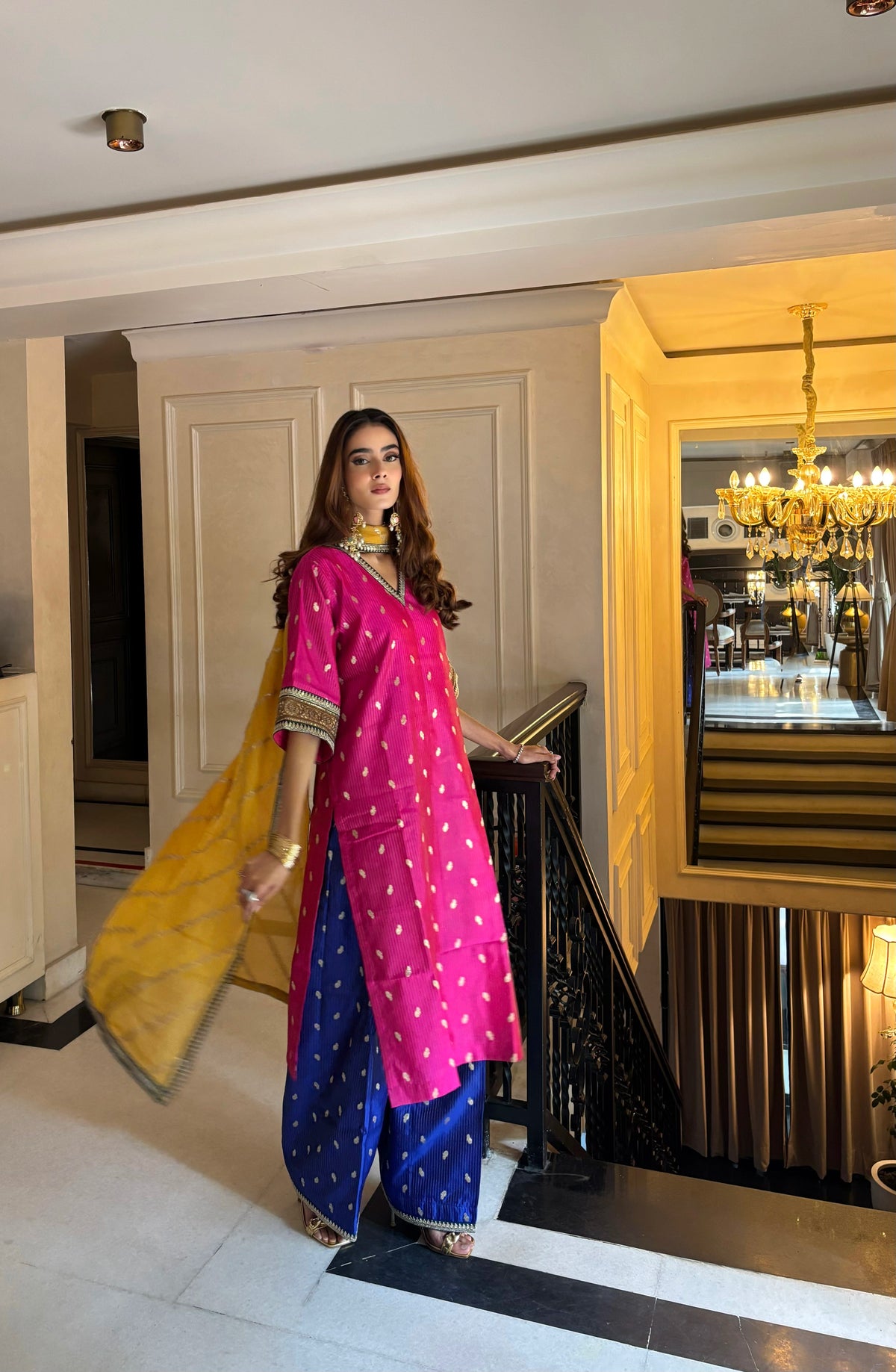
The Bahaar Colorblock Brocade Set with Dupatta is a good example of the brocade and farshi combination discussed above, and it's one of the more requested diwali outfits for women in our catalogue this season. The handwoven brocade kurta comes in a rich Rani Pink, cut loose with lace detailing at the neck and sleeves, paired with a blue colorblock farshi salwar for contrast. The yellow embroidered organza dupatta is exactly the kind of piece the earlier point about restrained jewellery applies to, since the embroidery already carries plenty of visual weight on its own. It's fully lined and made to order based on height, which matters more than people expect once a farshi hem is involved.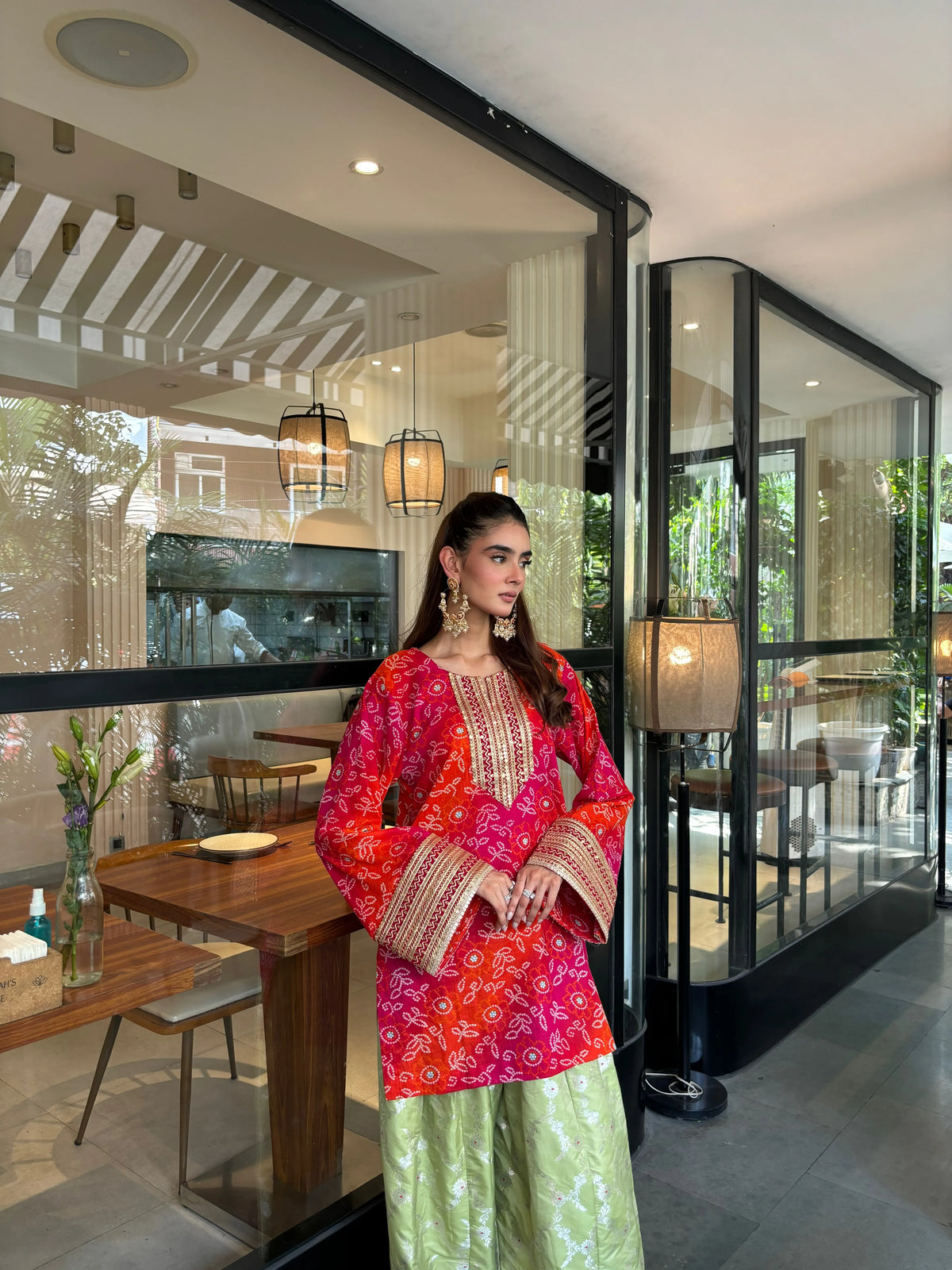
If your day leans toward comfort over drama, the Alia Bandhani Farshi Set takes a different approach among our diwali outfits for women. Soft cotton kurta, printed in a red and orange Bandhani pattern, paired with a pastel green self weave brocade farshi salwar. The oversized fit and actual pockets built into the design make it genuinely practical for a longer day, pooja, lunch, an evening gathering, no costume change needed in between.
Real Questions People Ask
Do diwali outfits for women need to be red or gold to look festive?
Not really. Red and gold are traditional, sure, but contrast pairings and pastels with metallic thread work read as equally festive, especially indoors under warm lighting.
How do I know if a farshi set will suit my height?
Most are made to order based on height precisely because the floor grazing hem needs to sit right. Worth checking if a brand offers that before ordering diwali outfits for women, it saves an alteration headache later.
What fabric holds up best across a long day with multiple events?
Cotton and cotton blends tend to handle it better than heavier brocade. They breathe more, crease less between locations.
Is an oversized fit less festive than a fitted one?
Not necessarily. A strong colour, good embroidery, or a farshi bottom still reads as festive on an oversized silhouette. Fit changes comfort more than it changes how dressed up something looks.
Can I wear the same diwali suit for pooja and dinner later?
Yes, especially if it's breathable and comfortable. A structured farshi set with a loosely draped dupatta works fine for pooja and holds up just as well later in the evening.
Are farshi sets harder to move in than a straight cut?
A bit more care around shoes and stairs, yes, because of the volume. Not actually difficult once you know to plan for low heels and a little extra room.
If you're still stuck between a few options, start with your actual day. How long does it run, how much sitting versus standing, how many houses are you visiting, before you fall for a colour or a cut just because it's trending. That question alone narrows down diwali outfits for women faster than any style guide, this one included. Once that's sorted, figuring out whether a farshi, a straight suit, or a sharara actually fits your day gets a lot easier.
0 comments