

If you've scrolled through ethnic wear collections lately, you've probably noticed the same word popping up again and again: farshi. It's not a new invention. Farshi suits have been part of South Asian wardrobes for generations, worn at weddings, festive gatherings, and formal family functions. What's changed is how women are wearing them now, and why a silhouette once reserved for special occasions is showing up in everyday festive rotations too.
The oversized farshi has a way of making an entrance without trying too hard. The fabric pools gently at the ankles, the kurta sits loose through the shoulders and body, and the whole outfit moves when you walk instead of clinging to you. For a lot of women, that's the appeal. Comfort and drama used to feel like opposite goals in ethnic wear. This style manages both at once.
What Actually Makes a Farshi Salwar Suit Different
A farshi salwar suit isn't just a longer version of a regular salwar. The word farshi comes from farsh, meaning floor, and the salwar is deliberately cut with extra length and extra width so the hem grazes or lightly pools on the ground. Traditional patterns use a wide mori, the circumference at the ankle, often finished with a feasing or facing that adds volume without adding bulk at the waist.
That extra fabric is doing real work. It changes how the outfit falls when you sit, stand, or move around a room full of people. A regular churidar hugs the leg. A farshi salwar drapes. You get soft folds instead of a fitted line, and that softness reads as elegant rather than sloppy, provided the proportions are right.
The kurta paired with a farshi salwar tends to be long as well, often reaching mid calf or lower, which balances the volume below. Pair a short kurta with a wide farshi salwar and the outfit can look unfinished. Pair a long, flowing kurta with it and the whole thing reads as one continuous silhouette rather than two separate pieces fighting each other.
Choosing an Oversized Suit That Actually Works for You
Here's where a lot of buyers get it wrong. They assume oversized means shapeless, so they either avoid the style entirely or pick a set that swallows them. Neither is necessary. An oversized farshi suit for women is built around a relaxed fit through the body and generous volume at the hem, not a formless bag.
Fabric weight matters more than people expect. A heavy fabric in an oversized cut can feel like wearing a curtain, especially through Indian summers or in a warm banquet hall. Lighter cotton or cotton blends hold their shape at the hem while still moving freely, which is why so many modern farshi sets lean on breathable fabric rather than stiff brocade for daytime or semi festive wear.
Height plays a role too, though not the one people usually assume. Shorter women don't need to avoid a farshi salwar. What matters is where the kurta ends and how much length pools at the ankle. Too much extra fabric bunching at the feet can visually shorten the leg line, so a slightly shorter mori or a kurta that hits a touch higher can keep the proportions balanced without losing the flowing effect.
Sleeve length and neckline detailing also change how the outfit reads. A busy, heavily embellished neckline on top of an already voluminous farshi salwar can start to compete with itself. Simpler necklines, or embroidery concentrated in one area rather than spread everywhere, tend to let the silhouette do the talking.
Styling a Modern Farshi Suit for Different Occasions
One thing that separates a modern farshi outfit for women from the more formal versions of decades past is how easily it moves between settings. You don't need a wedding invitation to justify wearing one.
For daytime festive events, like a Diwali lunch or a family puja, a cotton farshi set with subtle embroidery works well with minimal jewellery, maybe just jhumkas and a bindi. The relaxed fit means you're not adjusting your dupatta every ten minutes or worrying about a tight waistband after a big meal, which honestly matters more than most style guides admit.
For evening functions, a farshi suit with a contrast dupatta or a bolder print carries more visual weight without needing heavy embellishment. Block printed dupattas, in particular, add colour and pattern without pushing the outfit into overly formal territory. Footwear tends to work best when it's low and comfortable, since the hem is already doing the visual heavy lifting. Tall heels can actually throw off the proportion by lifting the hem too far off the ground and cutting the flow of the fabric.
Layering is where a lot of people miss an opportunity. A light jacket or an unstitched dupatta draped loosely over the shoulder can add structure to an otherwise soft silhouette, especially useful in cooler months or air conditioned venues where a fully flowing outfit can feel a bit exposed.
Comparing This Silhouette to Other Ethnic Styles
It helps to know when a farshi suit is the right call and when another silhouette will actually serve you better. A straight cut salwar suit is more practical for long travel days or work adjacent festive events where you're on your feet moving between rooms. The fitted line means less fabric to manage, but you lose the dramatic fall that makes farshi outfits memorable in photos.
An anarkali gives you volume too, but the flare usually starts higher up, around the waist or bust, which changes how it sits on different body types. A farshi salwar suit concentrates its volume lower down, near the ankles, which tends to be more forgiving through the midsection since attention shifts toward the hem rather than the waistline.
A sharara sits somewhere between the two, with flared, wide legged pants rather than a continuous salwar drape. Sharara sets often photograph well from the front but can feel bulkier when sitting for long stretches, since the fabric doesn't pool the same way a farshi hem does. If you're choosing between the two for a seated event like a sangeet dinner, that's worth thinking through before you buy.
None of these silhouettes is objectively better. It genuinely comes down to how long you'll be wearing the outfit, whether you'll be seated or standing most of the time, and how much movement you want out of the hemline.
A Few Sets Worth Knowing About
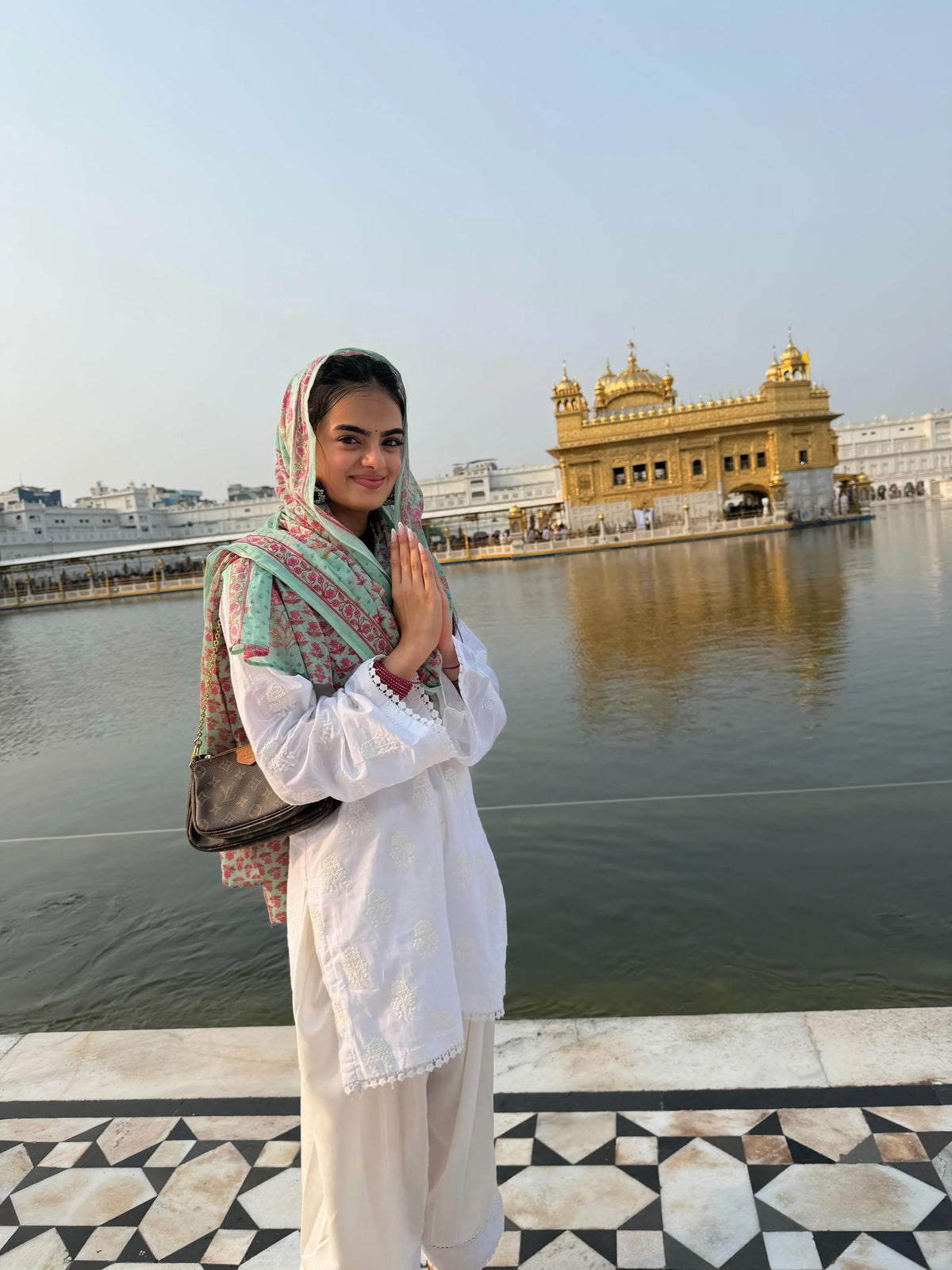
If you're trying to picture how this translates into an actual outfit rather than a general idea, a few pieces from Pyoor's farshi collection show the range within the style. The Parizaad Embroidered White Set uses a relaxed oversized fit in breathable cotton, with soft embroidery on the kurta and a contrast ferozi block print dupatta that keeps the white base from feeling too plain. It's built for comfort first, which makes it a solid pick for anyone easing into the oversized farshi silhouette without wanting anything too bold.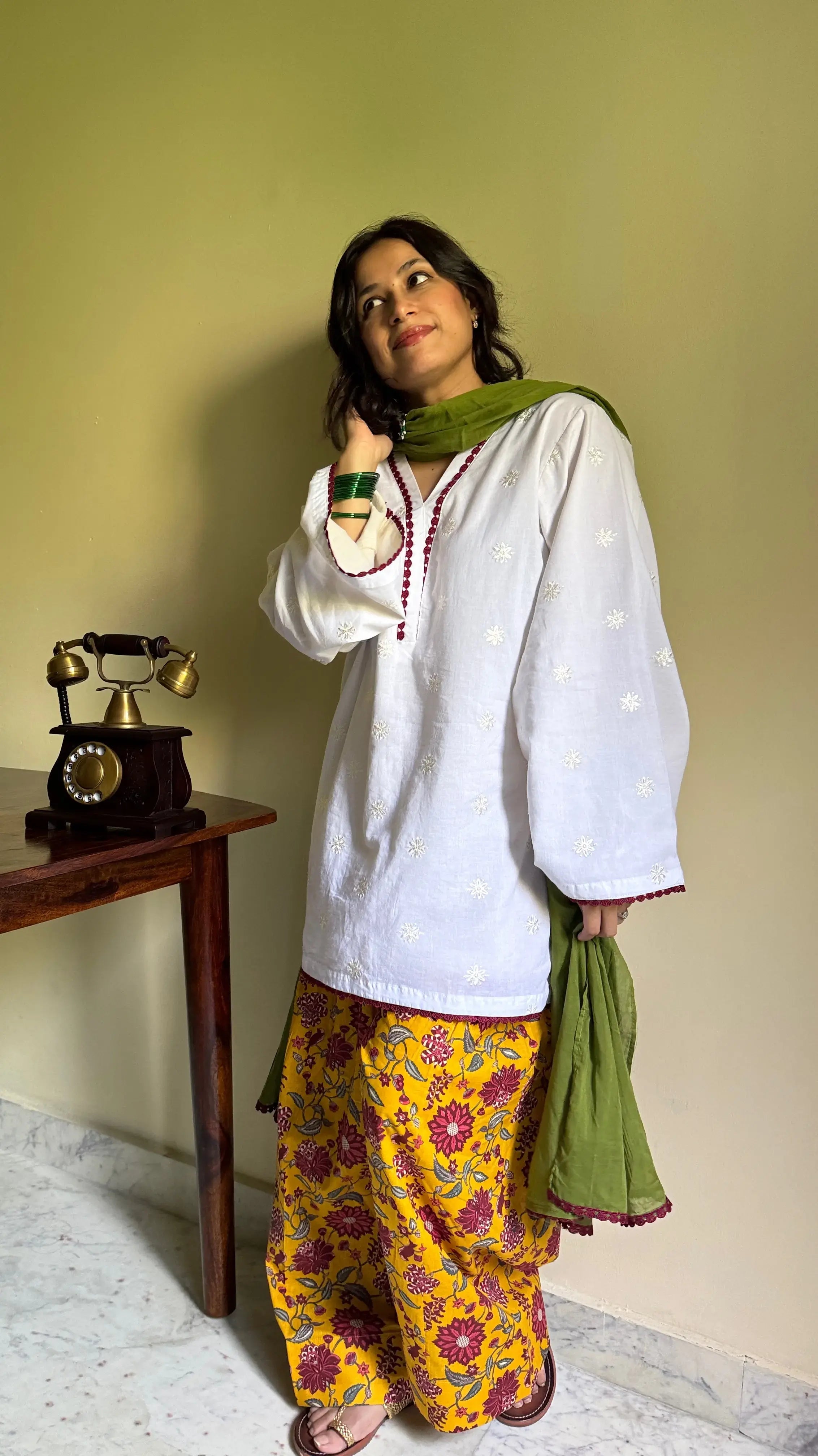
The Marigold Farshi Salwar Suit Set leans more traditional, with a printed yellow farshi salwar cut with a twelve inch mori and a three inch feasing for extra movement, paired with a cotton kurta finished in subtle all over booti embroidery. The soft green mul cotton dupatta, finished with lace edging, gives the whole set a vintage feel that suits festive daytime functions particularly well.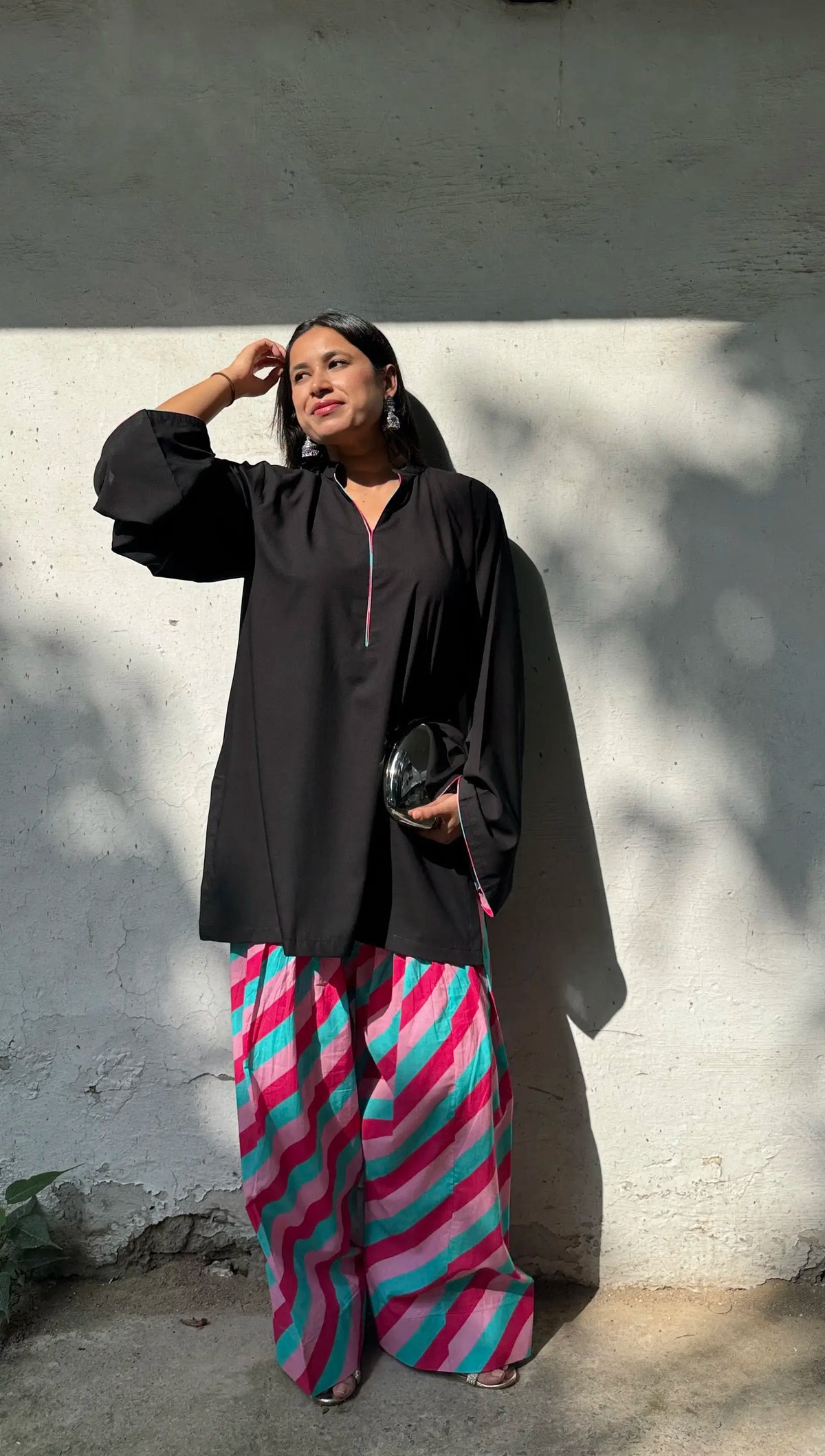
For something with a bit more personality, the Stripes Farshi Salwar Set pairs a vibrant striped farshi salwar with a black cotton kurta, with stripe detailing repeated at the neckline and sleeves. It's an oversized fit built for daily wear or casual festive outings rather than formal events, and the pure cotton construction keeps it breathable enough for long hours. Details like these are worth checking directly on the product page, since fit and fabric specifics can shift slightly between batches.
Suit Questions People Actually Ask
Is a farshi suit comfortable for everyday wear, or only for special occasions?
It depends entirely on the fabric and cut. A lightweight cotton oversized farshi suit works fine for daytime festive wear or casual outings, while heavier fabrics with more embellishment tend to suit formal events better. The silhouette itself isn't the limiting factor, the fabric weight usually is.
How do I know if a farshi salwar suit will suit my height?
Shorter women should pay attention to where the kurta ends and how much fabric pools at the ankle, since too much bunching can shorten the leg line. Taller women generally have more flexibility with mori width and kurta length without the proportions feeling off.
What should I wear underneath this kind of salwar set?
A simple cotton slip or camisole under the kurta is usually enough, since the fabric itself provides coverage and structure. Avoid anything too fitted underneath that would show through a lightweight cotton kurta.
Can this style be worn for a mehendi or a smaller family function, not just weddings?
Yes, that's actually where a lot of modern farshi suits get the most wear now. A cotton set with lighter embroidery suits a mehendi or a daytime family event, while heavier fabrics and richer colours are better saved for evening functions.
Does the oversized fit make the outfit look bigger than it actually is?
Not if the proportions are balanced. The relaxed fit through the body paired with a defined hemline actually tends to be more flattering than a tight fit, since it skims rather than clings, though a heavily embellished neckline paired with a very wide hem can start to look busy.
If you're curious how any of this looks in person rather than in description, it's worth browsing through a few farshi sets and paying attention to fabric weight, mori width, and kurta length side by side. Those three details tell you more about how an outfit will actually feel to wear than any product photo can.
0 comments