

Open any ethnic wear wishlist right now and you'll probably spot a pakistani salwar suit sitting somewhere near the top. That's not really a coincidence, and it says something about how well this style holds up over time. This style has managed to stay in demand for years while so many other trends have come and gone, mostly because it gets the balance right between looking traditional and feeling wearable. But picking the right one still trips people up. What fabric works for a long function? Is heavy embroidery worth it for a daytime event? Should you go ready made or get something stitched? This guide walks through all of that, using a few pieces from Pyoor's pakistani suits collection as real examples along the way.
What Actually Makes a Pakistani Salwar Suit Different
A pakistani salwar kameez tends to have a longer, fuller kurta than what you'd typically see in an Indian salwar suit, and the salwar itself usually carries more volume through the leg. The dupatta is often styled differently too, draped in a way that frames the neckline instead of just hanging straight down the back. Put those three things together and you get the drape that people instantly recognize as a pakistani salwar suit.
There's also the matter of fit. Most designs favor flowing lines over tight, structured cuts. So a pakistani suit for women tends to feel comfortable during long functions, since there's enough room to sit, walk and move without anything pulling or riding up awkwardly. A well made design like this can also work across a wider range of body types than fitted styles, simply because it doesn't depend on precise tailoring the way a fitted kurta does.
Then there's embroidery placement, which changes the whole feel of the outfit. Some designs keep the detailing to the neckline and hem. Others cover the piece almost entirely. The first reads as lighter and more everyday. The second feels much more occasion specific. Knowing this ahead of time makes shopping a lot less confusing.
Fabric and Comfort: What to Check Before You Buy
This is where a lot of buying decisions go wrong, honestly. A pakistani salwar suit can look stunning in a product photo and still feel like a mistake six hours into a wedding function if the fabric isn't right for the setting. Cotton and cotton blends breathe well, which makes them a solid pick for daytime events, warm weather, or anywhere you'll be standing for a while. Satin and silk based fabrics drape more richly and photograph beautifully under indoor lighting, but they tend to run warmer, so they usually work better for evening functions or venues with strong air conditioning.
Take Pyoor's Cherry Embroidered Farshi Salwar Set as an example. It pairs a rich red kurta cut in a comfortable oversized fit with a cotton Farshi salwar carrying delicate embroidery and a soft lining. Since both pieces are made from breathable cotton, this particular pakistani salwar suit holds up well through warm days and events that run long, without the extra weight that heavier fabrics bring.
If you're buying a pakistani salwar suit set for an outdoor daytime event, cotton is almost always the safer choice. For an evening reception or a sit down dinner indoors, a satin or silk pakistani suit tends to hold its shape better once the lighting changes. Lining matters more than most people realize too. A soft inner lining keeps embroidered or heavier fabrics from feeling scratchy against your skin, and you notice that a lot more after a few hours than you expect to.
Color plays into this as well. Deeper, richer tones in this kind of outfit generally photograph better under evening light, while brighter or pastel shades suit daytime settings where natural light does most of the work. A cherry red or deep maroon pakistani salwar suit holds its color well indoors and outdoors, which is part of why bold reds keep showing up in festive collections year after year.
Choosing Between a Simple and an Embroidered Design
Not every occasion needs the same level of detailing, and this is where a lot of buyers overthink things. A heavily embroidered pakistani salwar suit design usually suits evening weddings, receptions and festive nights, where the lighting and setting naturally support more elaborate work. A simpler pakistani salwar suit often works better for daytime functions, family lunches or casual festive gatherings, where you want to look put together without seeming overdressed for the room.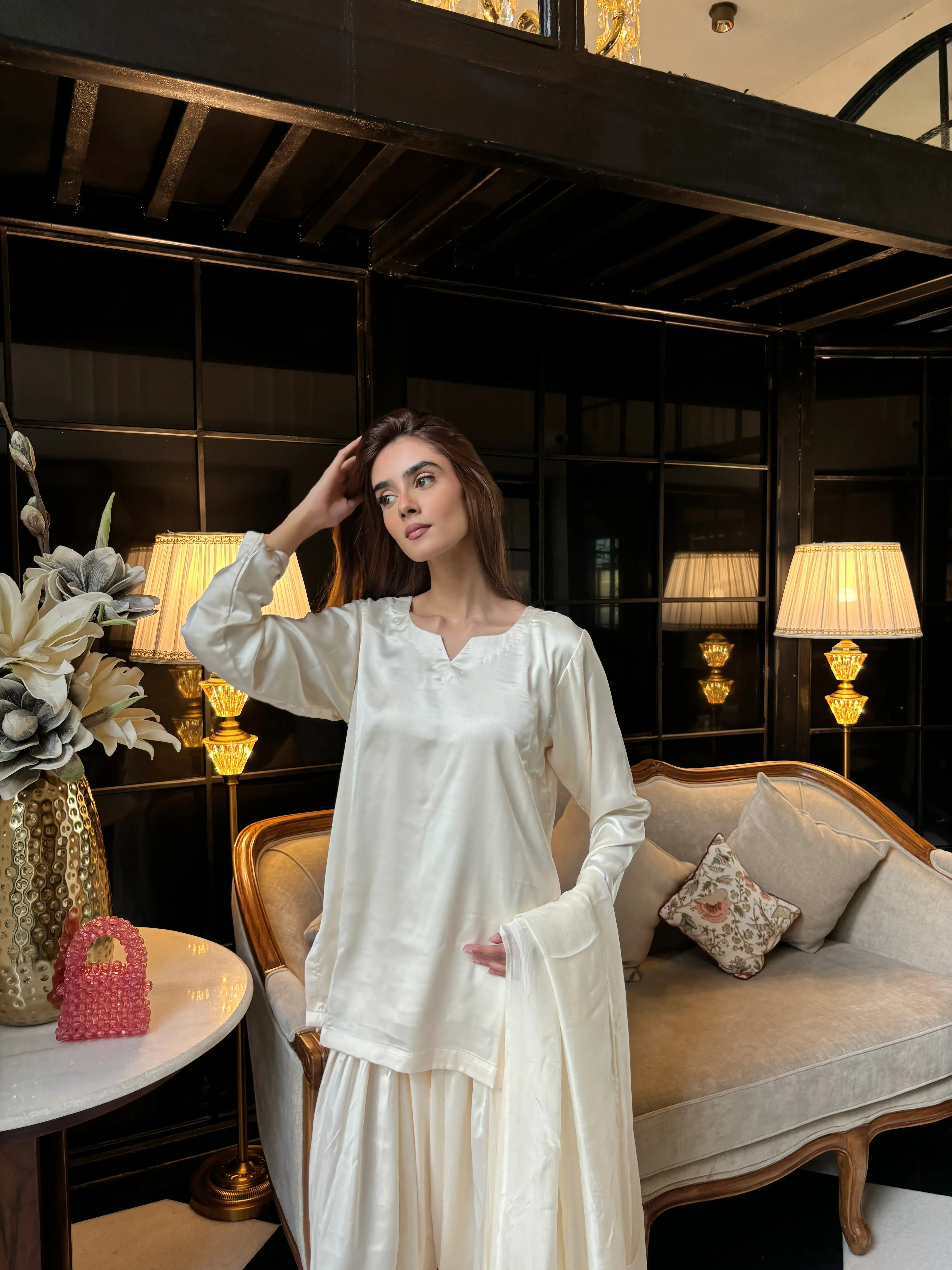
Pyoor's Malai Satin Farshi Set is a good example of the simpler end of that range. It's made from soft satin in an ivory cream shade with an oversized, relaxed fit. The look is understated rather than heavily worked, and that's exactly why it suits festive lunches and small gatherings so well. It still feels dressed up without carrying the weight of dense embroidery. The organza dupatta runs about 2.6 meters, which keeps it easy to manage rather than something you're constantly readjusting.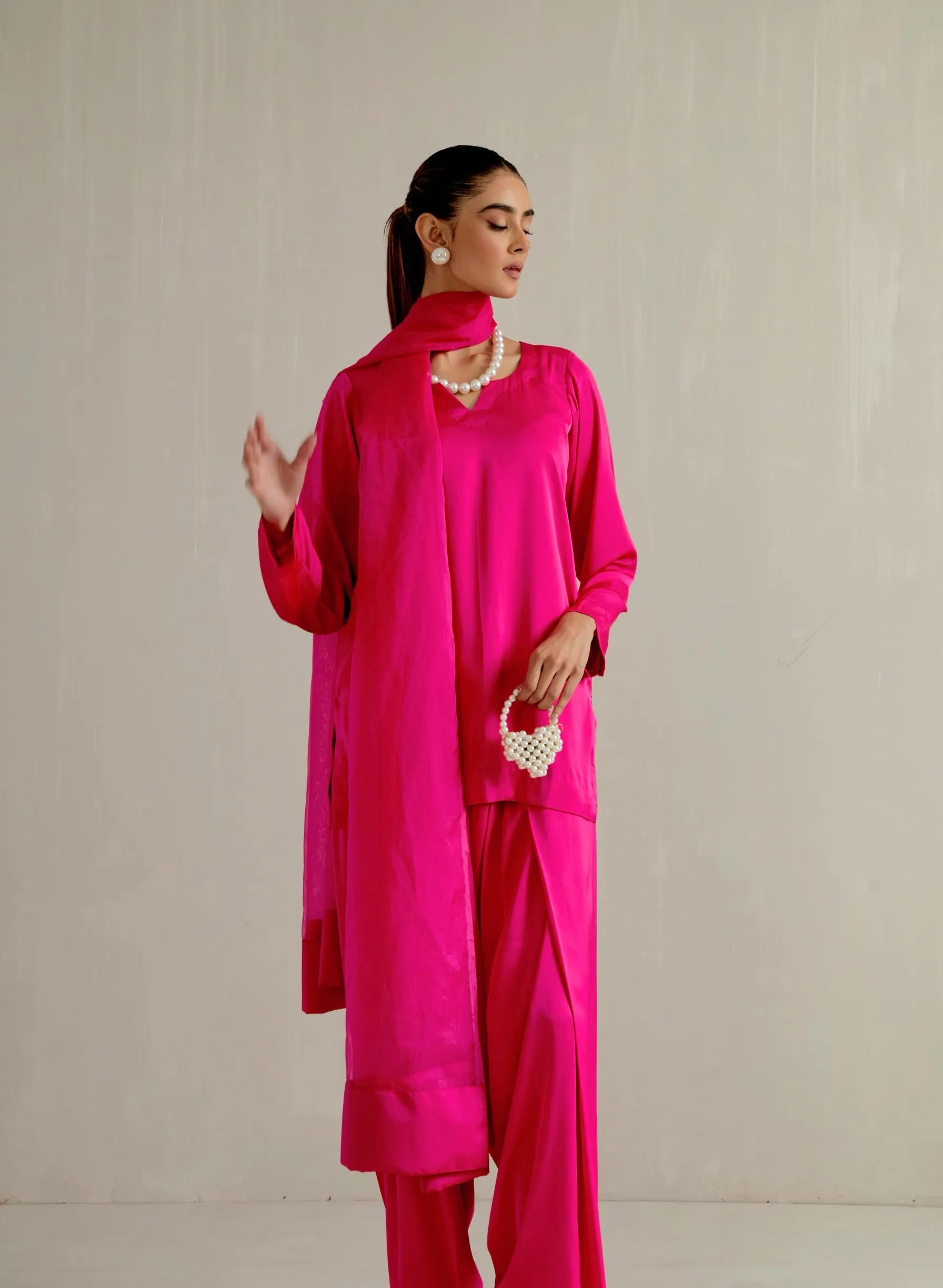
On the more elaborate end is the Gulaab Middle Eastern Kurta set with dupatta, a three piece satin ensemble with a heavily adorned Afghani salwar and a full sleeve kurta. The neckline shifts between a semi V shape at the front and a round cut at the back, and the pink organza dupatta comes bordered in satin for a more formal finish. A pakistani suit design like this fits occasions where you actually want the outfit to be the main event, think a sangeet, a wedding function or a formal evening gathering.
Styling It for Different Occasions
Styling changes what a pakistani salwar suit is suitable for almost as much as the outfit itself does. A simple version can look considerably more festive with statement jhumkas, a few stacked bangles and heeled juttis. Swap in minimal jewelry and flats, and the same outfit reads as everyday wear instead. That flexibility is a big part of why this kind of set earns its place in a wardrobe. One outfit, several different looks depending on what you pair with it.
For heavily embroidered pieces, the logic flips. When the kurta and salwar already carry a lot of detailing, simpler jewelry tends to work better, small studs, one statement piece, a clean hairstyle, so the outfit's own work stands out rather than competing with your accessories. Piling on jewelry over an already detailed pakistani salwar suit can end up looking cluttered instead of festive.
Footwear deserves a mention too, especially with a Farshi or floor grazing hem. A longer hemline needs a heel comfortable enough to walk in for hours, since you're managing both the length of the outfit and standing through most of the event at once. For daytime versions of a pakistani salwar suit, flat juttis or block heels usually make more sense than stilettos. A good ensemble should feel wearable by the end of the night, not just at the start of it.
Ready Made, Stitched or Unstitched
Buying a pakistani salwar suit ready made saves you the wait and takes away any dependence on finding a good tailor, which matters if you're shopping close to an event date. You also get to see the exact fit and finish before committing to it. The tradeoff is that ready made sizing follows standard measurements, so small alterations may still be necessary depending on your build.
Stitched pakistani suits for women that leave some room for tailoring, an oversized kurta fit, for instance, tend to be more forgiving here, since the silhouette itself doesn't depend on an exact fit the way a tailored blouse would. That's one reason oversized, relaxed cuts have become so common in modern pakistani salwar suit designs. They tend to work well straight off the rack for a much wider range of body types.
Whatever route you take, check the product details for fabric composition, lining, dupatta length and care instructions before buying. Those small details tell you a lot more about how a pakistani salwar suit will actually feel to wear than the photos ever will. It's a small habit that saves a lot of disappointment once the outfit actually arrives.
Real Questions People Ask About Pakistani Salwar Suits
What is the main difference between a pakistani salwar suit and a regular salwar kameez?
The kurta runs longer and fuller, the salwar carries more volume, and the dupatta is usually styled to frame the neckline. Together, these details give this style its distinct drape.
Is a pakistani salwar suit comfortable for long events like weddings?
Generally, yes, especially in breathable fabrics like cotton. The relaxed, oversized fit common in most designs like this makes movement easier through long functions.
Which fabric works better for summer, cotton or satin?
Cotton is the more breathable option and suits warm weather or daytime events. Satin drapes richly and photographs well but tends to run warmer, so it's better suited to evening or indoor functions.
Can a simpler version still look festive?
Yes, and styling does most of the work here. Statement jewelry, heeled footwear and a well set hairstyle can turn a simple one into something festive appropriate without needing heavy embroidery at all.
Should I buy a pakistani salwar suit ready made or get one stitched?
Ready made is the better option if you want to see the exact fit before buying and don't have time for alterations. Oversized silhouettes, which show up often in current designs like these, tend to suit a wider range of body types straight off the rack.
Does this style suit every body type?
Largely, yes. The relaxed, non fitted cut is a big part of why so many women find a pakistani salwar suit easy to wear regardless of body shape, since the kurta isn't tailored close to the body the way structured western wear tends to be. It's one of the more forgiving styles of ethnic wear for this reason, and it rarely needs the same level of alteration that fitted outfits do.
If you're ready to browse a few options for yourself, Pyoor's pakistani suits collection has pieces ranging from the relaxed, everyday friendly Malai Satin Farshi Set to the more detailed Gulaab Middle Eastern Kurta set, so you can match your next piece to the occasion instead of the other way around.
0 comments