

Farshi styles are floor length salwar sets built around an extra wide mori, the flared ankle opening that lets the fabric pool and trail as you move. This guide breaks down the narrow, medium, and broad mori versions, walks through how to pick between them for your height and event, and compares three specific sets so you can see the differences in practice.
If you've ever stood in front of your wardrobe wondering why one farshi suit pools beautifully around your feet while another just looks bunched up and awkward, you're not alone. The mori width, the fabric, and even the way the salwar is stitched all change how the whole outfit sits and moves.
What makes farshi styles different from a regular salwar
The real difference between a farshi salwar and a regular salwar comes down to the mori, the width of the fabric at the ankle opening. In a standard salwar, the mori stays close to the leg. Among farshi styles, the mori flares out generously, so the fabric spreads and pools on the floor when you stand still and creates a soft trailing movement as you walk.
That flare is what gives farshi styles their signature drama, though the width of the mori isn't just a decorative choice. It directly affects how much fabric you're managing when you sit, walk up stairs, or dance at a function. A narrow mori set behaves very differently from a broad mori one.
Fabric choice matters just as much as cut. A cotton farshi set holds its shape and stays breathable through a long daytime event, while a silk farshi set carries more weight and drapes with a heavier, richer fall that suits evening functions better. Chikankari farshi pieces bring in delicate hand embroidery that reads as understated luxury, and mukaish work farshi adds tiny metallic dots that catch light without shouting for attention.
How to choose the right farshi salwar designs for you
Mori width is the first thing to decide, since it affects your comfort more than anything else. A narrow mori gives you a sleeker silhouette with a gentle trail, which works well if you want to ease into the look without feeling swamped in fabric. A medium mori sits comfortably between drama and practicality, offering that classic pooled effect while still being manageable for a full day of moving around. A broad mori asks for the most commitment, since it's built for occasions where you'll mostly be standing, greeting guests, or posing for photos rather than rushing between tasks.
Your height and how you plan to move through the event matter too. Shorter frames often look proportionally balanced in a narrow or medium mori, since a broad one can visually overwhelm a smaller frame. If you know you'll be climbing in and out of a car, sitting through a long ceremony, or walking on uneven ground outdoors, lean toward a narrower cut.
Fabric weight should factor into your decision as well. Heavier silk farshi set options hold their pooled shape more dramatically but can feel warm for daytime summer functions. Lighter cotton silk blends or Chanderi fabrics give you that same trailing silhouette with far less physical weight.
That's one of those small considerations that matters more than people expect once you've been wearing an outfit for six or seven hours straight.
How should you style a farshi salwar suit for different occasions?
The kurta you pair with your farshi salwar sets the tone for the whole look. A relaxed, oversized kurta with minimal embroidery lets the salwar do the visual work. A heavily embroidered kurta paired with a plainer farshi salwar balances things out so nothing competes for attention.
Footwear matters more than most people think. Since farshi styles are designed to pool and trail, tall heels can actually work against the silhouette by pulling the fabric taut instead of letting it settle naturally. Flat juttis or low block heels usually let the fabric fall the way it was designed to, especially with a broad or medium mori.
For daytime events like a mehendi or a haldi, printed farshi sets in lighter fabrics keep you comfortable while still looking festive. Embroidered farshi suit options in richer fabrics suit evening receptions or wedding functions, where the lighting and setting call for something with more shine and texture.
Layering a dupatta loosely over one shoulder, rather than pinning it tightly, tends to complement the flowing nature of the silhouette rather than fighting against it.
How do the different farshi styles compare to each other?
Mori width is the clearest way to separate the different farshi styles, and here's how the three main options break down.
| Mori width | Who it suits | Best for | Movement considerations |
|---|---|---|---|
| Narrow | First timers and a wide range of body types | An easy, everyday festive look | Least fabric to manage, easiest to move around in |
| Medium | Anyone unsure which category suits them | Sangeets, family dinners, festive settings with some movement | Balances drama with practicality |
| Broad | Anyone chasing maximum visual impact | Weddings, receptions, photo heavy events | Most fabric to manage, best suited to standing or slow movement |
Fabric pairing changes this comparison further. A broad mori in georgette moves and pools very differently than a broad mori in cotton silk, since georgette has more fluidity and drape while cotton silk holds a slightly crisper shape.
Mori width alone can't tell you the whole story.
A few farshi sets worth knowing about

Take the Meera Pink Handwork Chikankari Farshi as an example of the narrow mori done well. The oversized cotton silk salwar keeps the silhouette simple and modern, while the kurta and dupatta carry chikankari handwork that adds a soft, detailed finish without weighing the outfit down. Chanderi fabric keeps the kurta light enough to wear through a long celebration or a quieter family gathering, and the narrow mori means you're not managing armfuls of extra fabric while you do it.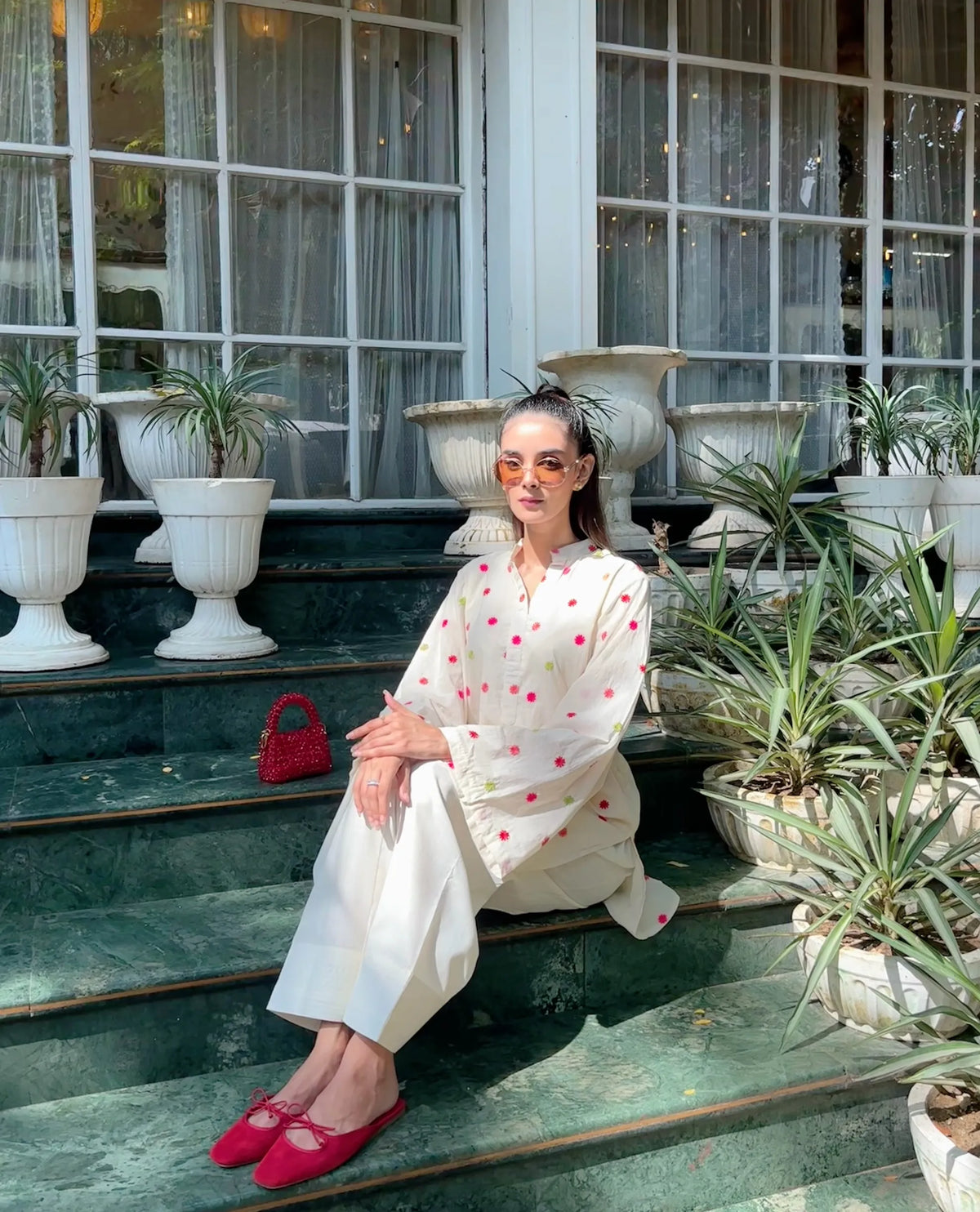
The Heer set takes the medium mori in a different direction. It's built from pure cotton with embroidered flower booties throughout and an attached lining for comfort, paired with a loose, off white salwar.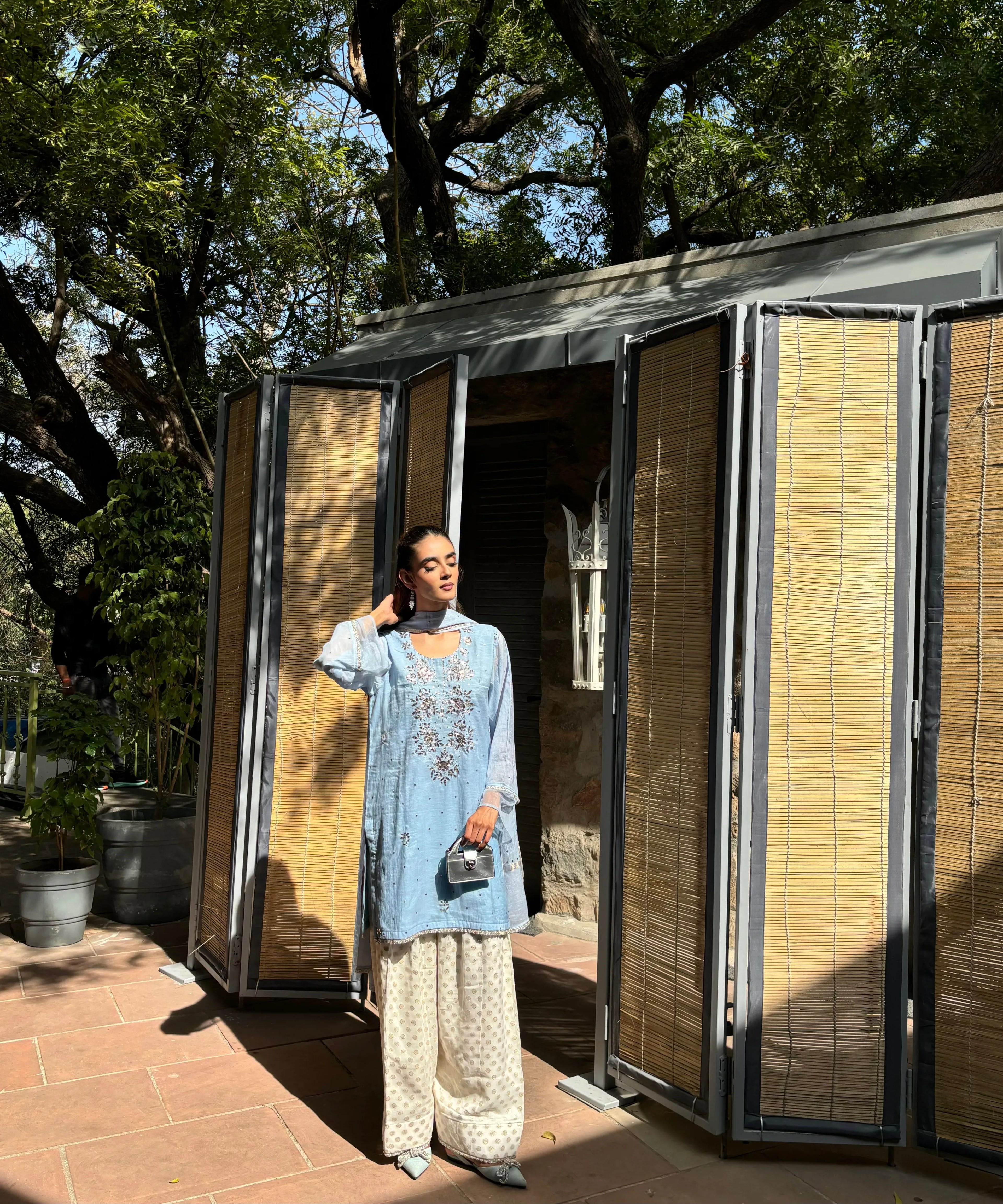
Georgette changes the equation entirely in the Powder Blue Mukaish Handwork Farshi, where a broad mori salwar carries zari work throughout and pairs with a mul chanderi kurta finished in mukaish embroidery. Between the fuller mori and the richer fabric, this one is built for a wedding or a major celebration rather than a quiet afternoon.
Common questions about farshi salwar suits
What is the difference between a farshi salwar and a regular salwar?
The main difference comes down to the mori width. A regular salwar tapers close to the ankle, while a farshi salwar flares out so the fabric pools on the floor. This creates the trailing, graceful movement that farshi styles are known for.
Can I wear this kind of salwar suit if I am not very tall?
Yes, though mori width matters more here than height alone. A narrower or medium mori tends to balance shorter frames better than a very broad one, which can visually overwhelm someone with a smaller frame.
Which fabric works best for farshi styles in summer?
Cotton or cotton silk blends breathe better and feel lighter over long hours compared to heavier silk options. If the event runs through a warm afternoon, this kind of fabric choice will keep you far more comfortable.
Is it hard to walk in a broad mori set?
It takes a little getting used to, since there is more fabric to manage. Choosing flat footwear and being mindful of stairs or uneven surfaces makes a real difference, and many people find it easier once they have worn the style once or twice.
Do these kinds of suits work for daytime events?
Yes, especially in printed or lighter fabric versions. Heavier embroidered pieces tend to suit evening functions better, but a well chosen daytime set can look just as festive without feeling too warm.
Mori width is the first decision when picking between farshi styles, fabric comes second, and footwear should support whichever silhouette you land on rather than fight it. If you're curious how these details show up in person, the farshi salwar suit collection on the Pyoor website has each of the three mori widths represented across different fabrics.
0 comments