

Scroll through any wardrobe inspiration page right now and you'll notice the same question popping up in comments: which pakistani salwar kameez design is actually worth buying this season? Fair question. Interest in pakistani salwar suit styles has climbed steadily over the past couple of years, and a lot of women are done with plain, forgettable kurta sets. They want fabric that feels good, a silhouette that does something, and a bit of personality in the cut.
Here's what makes a good pakistani salwar kameez work. It does two jobs at once. Tradition shows up in the embroidery, the cuts, the fabric choices that have stuck around for decades. But it still needs to feel current enough for a lunch, a festival, or a family function, not something pulled from a costume rack. This piece goes through what a modern pakistani salwar suit design actually looks like today, which fabrics hold up, and a few specific pieces worth knowing about.
What Makes a Pakistani Salwar Kameez Design Feel Modern
Proportion. That's the biggest shift in pakistani salwar kameez design over the last few years. Kurtas are cut looser now, sleeves are fuller, hemlines land anywhere between knee length and floor sweeping depending on what the occasion calls for. Salwars changed too, and not in a small way. The tight churidar has taken a back seat to farshi and afghani cuts that pool at the ankle and actually move when you walk instead of clinging to the leg. Dupattas got lighter as well, mostly organza or chiffon now, since a heavy dupatta can drag down what should be a breezy outfit.
Embroidery got more selective too. Rather than covering the whole kurta edge to edge, a lot of designers place detailed handwork along the neckline, the cuffs, maybe the hem, and let the rest of the fabric just breathe. That's a big part of why a modern pakistani salwar kameez photographs so well and doesn't feel heavy to wear the way older, fully worked pieces sometimes did. Color leans toward soft pastels for daytime, richer jewel tones once evening rolls around, though ivory and cream still sell steadily because honestly, they suit almost anyone.
Pakistani Salwar Suit Styles Women Are Actually Choosing
Type "pakistani salwar suit designs" into a search bar and a pattern shows up fast. Farshi sets. Three piece suits with a full dupatta. Satin based ensembles that keep resurfacing no matter how many trend cycles pass. There's a reason for that repetition. These styles photograph well, work for both daytime events and evening functions, and don't need a stylist standing by to make them look finished.
Take the Cherry Embroidered Farshi Salwar Set as one example. It pairs a rich red kurta, cut in a relaxed and slightly oversized shape, with a cotton farshi salwar carrying delicate embroidery along the hem. Both pieces use breathable cotton, so the set stays wearable through a long afternoon event or a warm evening gathering. The kurta has a soft, flowing drape, and the salwar keeps that traditional character without tipping into heavy or fussy territory. It works for a daytime celebration just as easily as a casual festive outing, and that's exactly what makes this pakistani salwar kameez worth repeating in a wardrobe instead of wearing once and forgetting about.
Pakistani Suits for Women: A Quick Fabric and Fit Guide
Not every pakistani suit for women is built the same, and fabric decides how an outfit actually feels long before anyone thinks about print or embroidery. Cotton is the safe pick if you run warm or you're heading somewhere that stretches across several hours. Pakistani cotton suits breathe, hold their shape wash after wash, and don't go stiff against the skin the way some blends do.
Satin sits at the other end. Smoother, a little reflective, reads more formal, which is why it suits evening functions better than a full day out in the sun. Organza, usually kept for dupattas, adds volume and shine without piling on real weight. Shopping for a pakistani suit set and not sure where to begin? Think about the event first. A relaxed lunch calls for cotton. A party leans toward satin, silk blends, or an embellished set with a heavier dupatta. Getting this right matters more than most buyers expect, since fabric decides how the whole pakistani salwar kameez sits and moves once it's actually on the body.
Middle Eastern Inspired Pakistani Suit Sets for a Modern Wardrobe
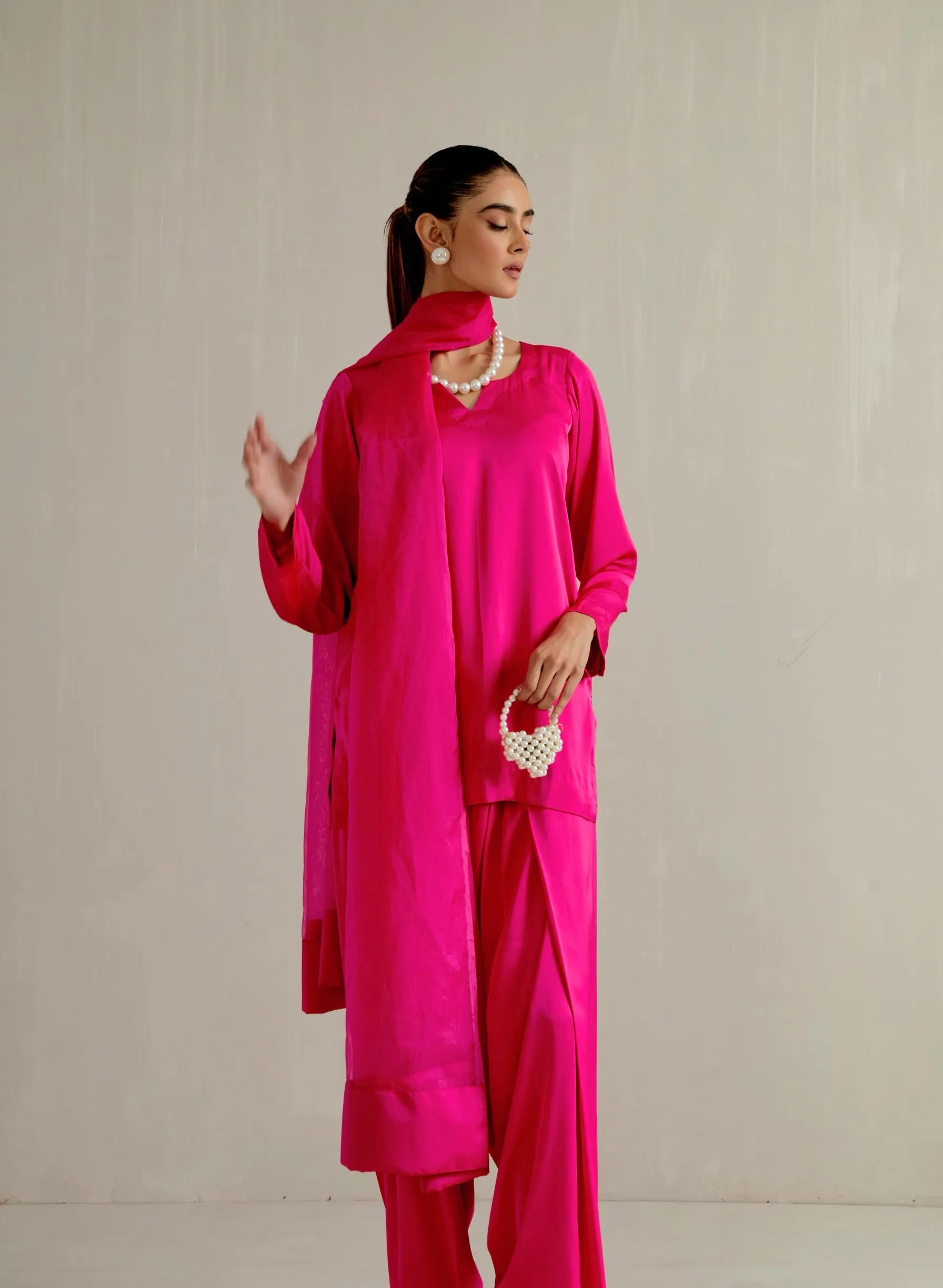
One newer direction in pakistani suit design borrows from Middle Eastern silhouettes, and it's found a real audience among women who want elegant without defaulting to another anarkali or straight cut suit. The GULAAB Middle Eastern Kurta Set with Dupatta is a solid example of this crossover. It's a three piece satin ensemble built around a heavily worked afghani salwar and a full sleeve kurta, with a semi V neckline at the front and a rounded neck at the back. Small detail, but it gives the whole outfit a cleaner line than the usual symmetrical front and back cut.
A pink organza dupatta finished with a satin border rounds out the set, adding contrast without pulling focus from the rest of the outfit. Sets like this prove a pakistani suit design can borrow from another regional tradition and still read as unmistakably Pakistani in structure. For a sophisticated evening event, or maybe a smaller wedding function, this kind of set offers something a bit less predictable than what's usually on offer.
Simple Pakistani Suit Design Ideas for Everyday Wear
Not everything needs embroidery. Not every pakistani salwar suit needs embellishment or a statement dupatta either. Simple pakistani suits, the ones built around one fabric, a soft color, clean stitching and not much else, have quietly become one of the most requested categories out there. Makes sense. They work for office days, casual outings, even a relaxed evening at home when you still want to feel a little put together.
For everyday salwar kameez wear, cotton and cotton blends carry most of the load. A straight or slightly A line kurta with a simple salwar or straight pants covers most daily needs, no fuss with managing a heavy dupatta or delicate embroidery that needs hand washing. Building a small rotation of pakistani suits for regular use? Prioritize comfort and a fit that lets you actually move, ahead of anything trend driven. Simple doesn't mean boring here. A well cut, well fitted pakistani salwar kameez in a good color looks just as intentional as a heavily worked piece. Just quieter about it.
Pakistani Suit Set Picks for Festive and Party Wear
Festive season shifts what people look for in a pakistani suit for women party wear. Comfort still matters, sure, but most shoppers will trade a little of it for richer fabric, fuller silhouettes, details that catch the light once the evening lighting kicks in. This is where farshi sets show up again, this time in softer, more luxurious fabrics than their everyday cotton counterparts.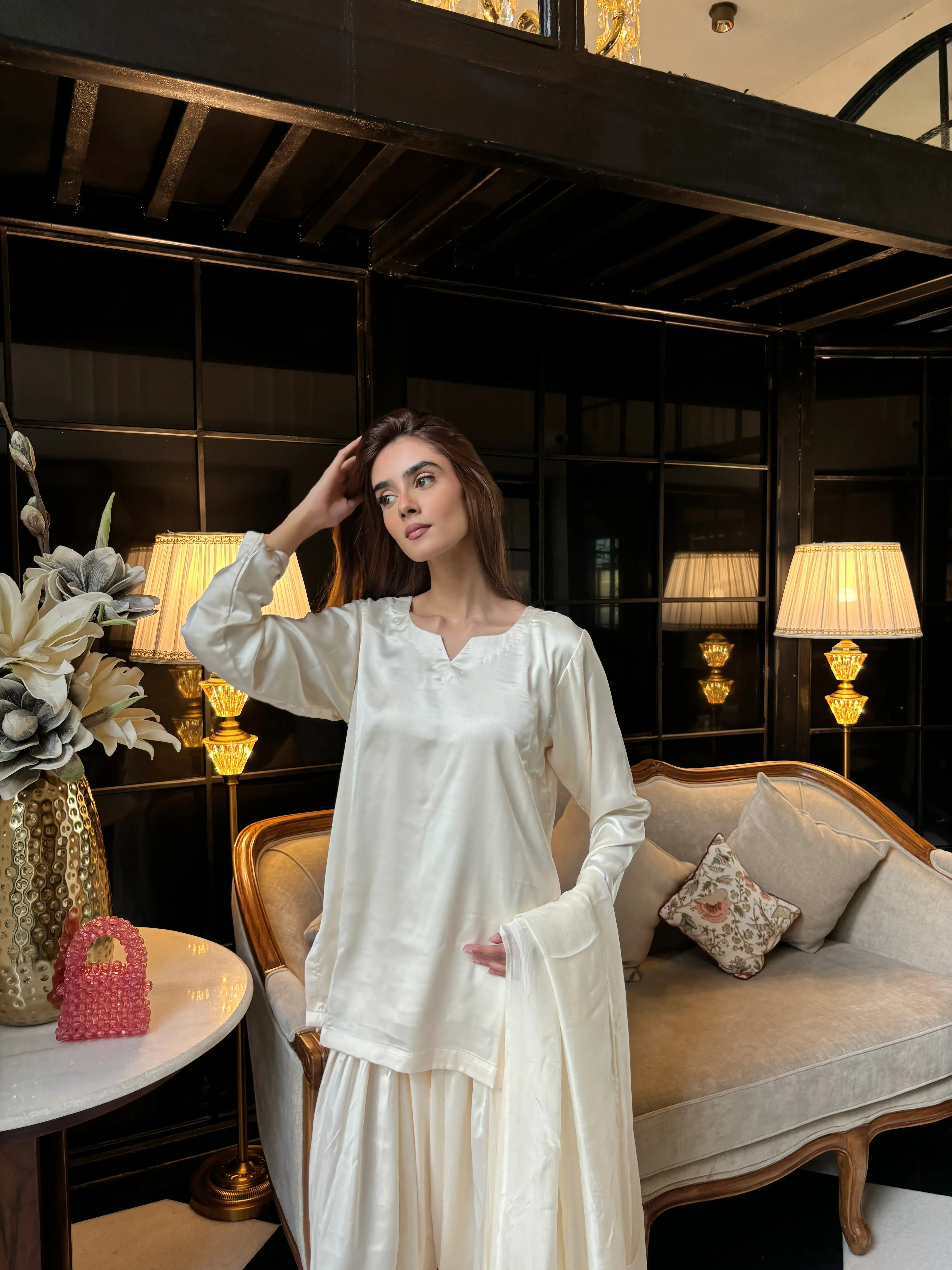
The Malai Satin Farshi Set fits right into this category. Made from a soft satin with an almost buttery feel against the skin, it comes in an ivory cream shade that reads clean under both daylight and indoor lighting. The oversized fit keeps things relaxed rather than restrictive, which matters at events that run long. Shirt and pants are cut from the same satin for a consistent finish, while the organza dupatta, 2.6 meters of it, adds movement without being a hassle to manage. Solid pick for festive lunches or small family functions, and a pakistani salwar kameez that still photographs well by the time the night winds down.
How to Style Your Women's Pakistani Suit for Any Occasion
Buying the right outfit is only half the job. Styling is what decides whether a pakistani salwar kameez looks finished or just sort of thrown together. For daytime and casual events, keep jewelry light, jhumkas or simple studs, a slim bangle set, sandals or juttis in a neutral shade. This keeps the fabric and embroidery of the suit as the actual focus instead of competing with a pile of accessories.
Evening or festive wear allows for more. A statement earring, a maang tikka if the outfit calls for it, heels or embellished juttis, all of it raises the formality without a full outfit change. Dupatta draping changes the look too. Pinned over one shoulder, it feels modern and easy to move in. Draped symmetrically across both shoulders, it reads more traditional. Small choices like these usually separate a pakistani salwar kameez that looks store bought from one that looks like someone actually styled it.
Find a Pakistani Salwar Kameez That Fits Your Occasion
Ready to shop instead of just browsing ideas? Pyoor's pakistani suits collection covers most of what's mentioned here, breathable cotton farshi sets, satin party wear pieces, Middle Eastern inspired ensembles. Take a look and pick a pakistani salwar kameez that actually fits your next occasion, your comfort needs, and how you like to dress.
Questions Shoppers Often Ask About Pakistani Salwar Kameez
What is the real difference between a pakistani suit and a regular salwar kameez?
A regular salwar kameez usually sticks to a straight or slightly flared cut paired with a simple churidar or straight pant. A pakistani salwar suit tends to go fuller, with farshi or afghani cut salwars and more detailed necklines, which gives it a different silhouette even when the fabric itself is casual.
Which fabric works best for a pakistani salwar suit in warm weather?
Cotton, hands down. Pakistani cotton suits breathe well and hold their shape through a full day out, while satin and heavier silk blends work better saved for evening events or spaces with air conditioning.
Are farshi salwar sets actually comfortable, or just good for photos?
A well made farshi salwar set, especially in cotton or a soft satin, holds up fine for extended wear. The flare sits at the ankle instead of restricting movement, so sitting, walking, moving through a full event doesn't feel tight or awkward.
How do I pick the right pakistani suit for a party versus a casual day out?
For daytime or casual settings, go with simple pakistani suits in cotton, light or no embroidery. For parties, satin, silk blends, or sets with embellished necklines and fuller dupattas hold their shape and shine better once the lights go low indoors.
What makes a pakistani suit set different from an Indian anarkali?
An anarkali flares out from the waist into a long, frock like silhouette over fitted bottoms. A pakistani suit set keeps the kurta straighter, or only lightly flared, so the volume and movement come from the salwar itself, giving the whole outfit a different shape and drape entirely.
0 comments