

Right before wedding season or the first hot week of the year, the same scroll happens. Ten tabs open, necklines compared, fabric photos zoomed in until they blur, and one question keeps coming back: will this still feel fine to wear six hours in? For a lot of women, that question is exactly why pakistani printed suits have edged out heavier ethnic wear in their closets.
A good printed suit set has to manage two jobs at once. It needs the depth of a proper print or embroidered detail, and it needs to survive a full day, whether that's a desk job, errands, or a wedding function that runs late. Most shoppers only think about print. Fabric and cut are usually what decide whether the suit gets worn again.
Why Pakistani Printed Suits Are Becoming a Daily Favourite
Anyone who has moved from net or heavy georgette into cotton knows the difference within the first hour. Nothing clings. Nothing needs re-adjusting every twenty minutes. Printed salwar kameez in a breathable fabric just sits and lets you get on with the day.
There's also the fact that prints age better than most trend pieces. A block print or a floral motif on cotton doesn't scream for attention, and it doesn't need heavy jewellery to look finished. That's part of why pakistani printed suits for women work for both a Tuesday at work and a small evening gathering, without owning two separate wardrobes for it.
The Cherry Embroidered Farshi Salwar Set is a fair example of this. A rich red kurta, cut oversized, paired with a farshi salwar that carries light embroidery along a soft lining. Both pieces are cotton, so a daytime function or a casual festive evening stays comfortable instead of turning into a wait for the AC. It reads as festive without trying too hard, which is really the point of printed ethnic wear for women that's meant to be worn more than once.
What Makes a Pakistani Printed Suit Set Actually Lightweight
Plenty of listings say "lightweight." Fewer earn it. There's a gap between fabric that looks airy under studio lighting and fabric that still feels fine after a train ride in June.
Fabric Choice Changes Everything
Cotton and lawn do most of the work for pakistani cotton printed suits meant for regular wear. Cotton breathes on its own, softens with each wash, and doesn't hold heat the way polyester blends tend to. Lawn is a finer weave of the same fibre, a bit crisper, still kind to skin.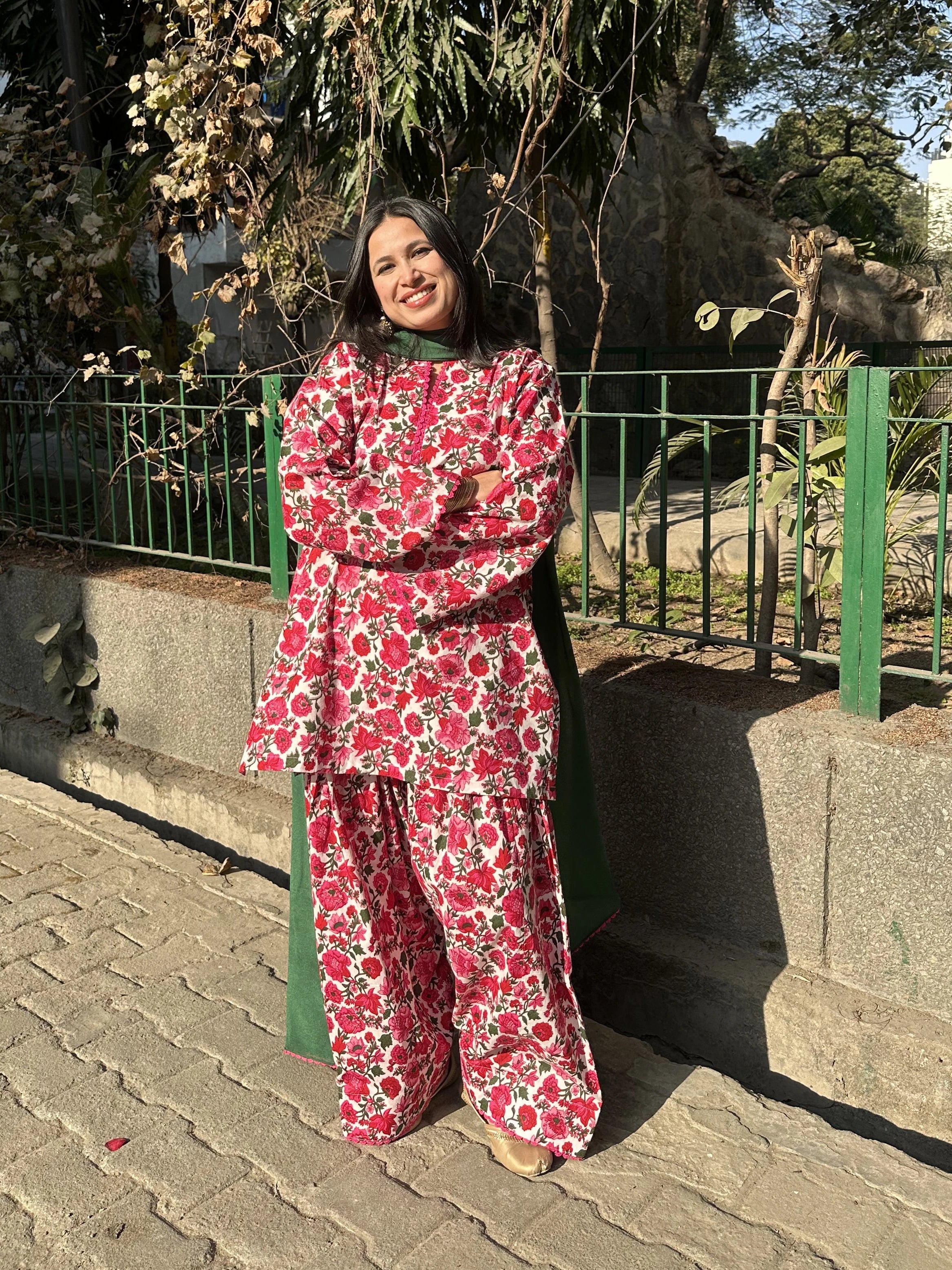
The Nooria Floral Farshi Set leans on this. Soft cotton kurta in a floral print, cut oversized, paired with a farshi salwar. Lace runs across it for texture, not weight, and a dark green chinon dupatta finishes the set without adding any bulk to how it sits.
Fit That Lets You Breathe and Move
Fabric alone isn't the whole story. An oversized cut through the body and sleeves lets air move, and that's really the mechanic behind why loose ethnic wear feels cooler than fitted pieces. It isn't just the cotton doing the work.
Small things add up too. The Nooria kurta comes with side pockets, which sounds minor until you're at a function without a bag and need somewhere for your phone. Details like that are what separate everyday pakistani suit styles built for actual days from suits that only work in a photograph.
Care matters more than people expect too. Cotton and lawn hold their shape well if washed in cool water and dried away from direct sun, which keeps prints from fading after a few washes. A quick iron on a medium setting brings back the crispness without flattening the embroidery or lace.
Styling Pakistani Cotton Printed Suits for Real Days, Not Just Photoshoots
Ethnic wear rarely gets bought for one occasion anymore. A single set now has to stretch across a work meeting, a lunch, and a family evening, sometimes in the same week.
A few ways that stretch actually happens in practice:
- Swap studs for jhumkas and the same kurta moves from office to festive
- A dupatta pinned structured reads more formal than one left loose on the shoulder
- Block heels instead of flats change the mood for a dinner out
- A light jacket over the kurta works for a cooler evening without hiding the print

The Coco Block Print Farshi is built for exactly this kind of rotation. It comes in the brand's usual oversized fit, with a contrast block print and lace detailing that keep it simple enough for a regular day but still has enough presence for a casual festive outing. It's the set you grab on a morning when you don't want to think too hard about what to wear.
Picking Printed Pakistani Suits Online Without the Guesswork
Buying printed pakistani suits online has one real drawback. You can't touch the fabric first, and lighting in a product photo can make almost anything look breezy. A few checks help close that gap.
Start with the fabric line in the description. "Cotton" and "pure cotton" aren't automatically the same thing, and a blend behaves differently once the weather turns humid. Fit description matters just as much, since an oversized cut isn't measured the same way as a fitted or semi-fitted kurta, and size charts shift from one brand to the next.
Where the embroidery sits changes how heavy a set feels too. Detailing kept to the hem or neckline tends to wear lighter through a full day than embroidery spread across the whole piece, even on identical fabric.
Return policies and size charts are worth a minute before checkout as well. Oversized fits are forgiving, but only within a range, and a brand's own chest and length measurements are more reliable than guessing off a regular size. Reading a couple of customer photos, when available, tells you more about drape than the studio shot ever will.
A quick way to weigh it up before checkout:
- Fabric type tells you how the suit will breathe, and how it holds up after repeated washing
- An oversized fit generally allows more airflow than a fitted cut
- Farshi styles flow more and lean festive, while a regular salwar is easier for daily movement
- Lighter, more contained print or embroidery placement usually means a cooler wear
Pakistani Lawn Printed Suits for Summer Mornings and Festive Evenings
Summer is where lightweight ethnic wear earns its keep. Pakistani lawn printed suits handle heat noticeably better than heavier fabric, and floral printed pakistani suits in particular move easily between a bright morning and a softer evening without a full outfit change.
A farshi set sits in an odd, useful middle ground. Flowing enough for a function, cotton enough to survive a warm afternoon without feeling like a costume by 4pm. That's probably why sets built this way get repeat wears instead of hanging untouched after one event.
If you're torn between prints, think about where you'll actually wear it. A softer floral suits daytime and casual settings, while a bolder block print or an embroidered farshi carries more naturally into evening. None of this needs a plain, safe print to stay cool. It just needs the right fabric doing the actual work underneath.
Common Questions About Pakistani Printed Suits
Are pakistani printed suits good for daily wear?
Cotton and lawn sets, yes. The breathable fabric and looser cuts hold up through office hours and errands without needing constant adjustment.
What is a farshi salwar, and how is it different from a regular salwar?
It's longer and flared, flowing toward the floor for a more festive look. A regular salwar sits closer to the ankle, which makes it a bit easier for everyday movement.
How do I know if a printed suit will actually be lightweight before buying online?
Check the fabric line first. Cotton and lawn are safer than synthetic blends. Then look at where the embroidery sits. Minimal, well-placed detailing wears lighter than dense, all-over work.
Can printed pakistani suits be worn for both casual and festive occasions?
Often, yes. A cotton farshi salwar set can work for a casual daytime gathering and still hold up for a smaller festive event with the right styling around it.
What fabric is best for pakistani suits in summer?
Pure cotton and lawn stay ahead of most alternatives here, mainly because both let air move instead of trapping heat against skin.
How should I care for a printed cotton or lawn suit so the print lasts?
Cool water, a gentle wash, and drying away from direct sunlight keep colours from fading fast. Ironing on medium heat, rather than high, protects any embroidery or lace from flattening out over time.
If you're putting together a wardrobe of pakistani printed suits you'll actually reach for on a busy week rather than save for one event, fabric and fit are worth deciding before print. The Cherry Embroidered Farshi Salwar Set, Nooria Floral Farshi Set, and Coco Block Print Farshi each take a slightly different route to that same idea, and picking between them mostly comes down to how often you want to wear it again.
0 comments