

If you have ever tried on a farsi salwar set right before a wedding function and spent the evening tugging at heavy layers, you already know why lightweight versions of this style matter so much. The flare and drama of a farshi silhouette used to come with a trade off. You got the grand movement, but you also got the weight, the heat, and the constant adjusting. That is changing, and it is worth understanding why before you pick your next farshi salwar suit for a festive occasion.
A farsi salwar set gets its character from the salwar itself, cut so wide and so long that it pools slightly at the feet, almost like a skirt with soft folds instead of a straight fall. Traditionally, a farsi salwar set achieved this fullness with heavier fabrics that could hold their shape, which is part of why older farshi styles feel substantial the moment you put them on. Modern versions rework the same silhouette using fabrics that drape rather than sit, so a lightweight farshi salwar set can carry the same volume without dragging on your shoulders or hips through a five hour function.
What Makes a Farsi Salwar Set Different From a Regular Salwar Suit
The difference is mostly in the cut of the bottom. A regular salwar suit, the kind found in most pakistani suit set options, uses a moderate amount of fabric in the pants, enough to allow movement but not so much that it changes the shape of the outfit. A farsi salwar set, on the other hand, uses considerably more fabric, sometimes double or more, so that when you stand still the salwar forms soft pools near the ankle and when you walk it moves with you in a way that feels almost fluid.
This is also where a lot of buyers get confused between a pakistani suit and a farsi salwar set, since the two overlap in some collections. Not every pakistani suit for women uses the farshi cut. Many women's pakistani suit options stick to straight pants, palazzo style bottoms, or a more fitted churidar. The farshi element is specifically about that wide, floor grazing salwar, and it is the one detail that turns a plain pakistani suit into this particular style. So when you are searching for a farshi suit set, it helps to look at the actual cut of the bottoms in the product photos rather than assuming every pakistani suit for women will have it.
The kurta paired with a farsi salwar set also tends to be longer than usual, often reaching mid calf or below, since a short kurta would look oddly proportioned against such a full bottom. Sleeves are usually generous too, sometimes flared or bell shaped, which keeps the overall silhouette balanced from top to bottom rather than heavy only at the base.
How to Choose a Lightweight Farsi Salwar Set That Actually Feels Light
Weight is not only about the type of fabric used, though that matters a great deal. It is also about how much fabric goes into a farsi salwar set and how it is constructed. A farshi salwar design with too many extra panels or a heavily lined dupatta can end up feeling bulky even if the base fabric is technically light. When you are shopping for a farsi salwar set, ask yourself three things. What is the kurta fabric. What is the salwar fabric. And is the dupatta lined or unlined.
Silk, when it is a finer weight silk rather than a heavier brocade, works beautifully for this kind of farshi suit because it holds the shape of the flare without needing stiff interlining. Chanderi is another fabric worth knowing about since it has a natural sheen and enough body to hold pleats and folds without feeling stiff on the skin. Among pakistani cotton suits, a farshi cut is a good option too, particularly for daytime functions or warmer weather, since cotton breathes in a way that silk and brocade simply cannot match.
Fit matters just as much as fabric choice when you are buying a farsi salwar set. An oversized or relaxed cut through the kurta means the outfit does not fight you for room to move, which becomes noticeable during long functions where you are standing, sitting, and moving between rooms for hours. A fitted kurta on top of a full farshi salwar suit can also throw off the proportions, making the bottom look heavier than it needs to.
Styling a Farsi Salwar Set for Different Festive Occasions
The nice thing about a farsi salwar set is that it adapts to the mood of the occasion mostly through color and embellishment rather than needing a different silhouette altogether. For something like Diwali, where the evening usually involves a lot of movement between family visits and gatherings, brighter tones like orange, pink, or a deep jewel color tend to photograph well under string lights and diyas. For a wedding function, especially a daytime one, softer or more elegant color combinations with embroidery detailing at the neckline and cuffs work well without pulling attention away from the bride.
If you are wearing a farsi salwar set to something with a more relaxed dress code, a printed or lightly embroidered farshi kurta set in a single color family looks put together without feeling overdressed. Simple pakistani suits in this cut, without heavy embellishment, still carry the drama of the silhouette on their own. The dupatta does a lot of work too. A net or organza dupatta with embroidery along the border adds festive shine to a farsi salwar set without adding real weight, which matters when you already have volume in the salwar.
One thing worth knowing if you have not worn a farsi salwar set before. Because the salwar pools at the ankle, footwear with a slight heel tends to look more balanced than completely flat shoes, and you will want to practice walking in the outfit once before the actual event so you know how much fabric to gather when you sit down.
Farsi Salwar Set Compared to Other Popular Ethnic Silhouettes
It helps to know how this style sits next to other options you might be considering. A straight pant suit is easier to move in and works well for travel or office adjacent festive events, but it does not have the dramatic fall a farsi salwar set gives you. An anarkali gives you volume too, unlike a farsi salwar set where the flare comes from the bottoms rather than the kurta, which changes how the outfit moves when you walk. A lehenga offers maximum drama but comes with more weight and is usually reserved for the biggest events like sangeets or receptions.
A farsi salwar set sits in an interesting middle ground. It gives you the grandness of a lehenga in terms of visual impact, but because good versions use lighter fabric and a considered cut, it does not demand the same physical effort to wear through a long evening. This makes it a reasonable choice for functions that are festive but not necessarily the single biggest event on the calendar, things like sangeet adjacent dinners, Diwali gatherings, or a close relative's mehendi.
Pakistani salwar kameez traditions actually lean on this silhouette quite often, which is part of why so many pakistani suit designs you come across online will feature the farshi cut alongside other elements like gota work or delicate chikankari. If you have been comparing this against other pakistani suit for women party wear options, the width and length of the salwar is usually the deciding factor. Among pakistani embroidered suits especially, the farshi cut tends to stand out in photographs because there is simply more fabric to carry the detailing.
A Few Farsi Salwar Sets Worth Knowing About
Seeing how the fabric and fit choices actually come together in a finished farsi salwar set is more useful than reading about them in the abstract, so it is worth looking at a few real examples from the current pakistani suit collection.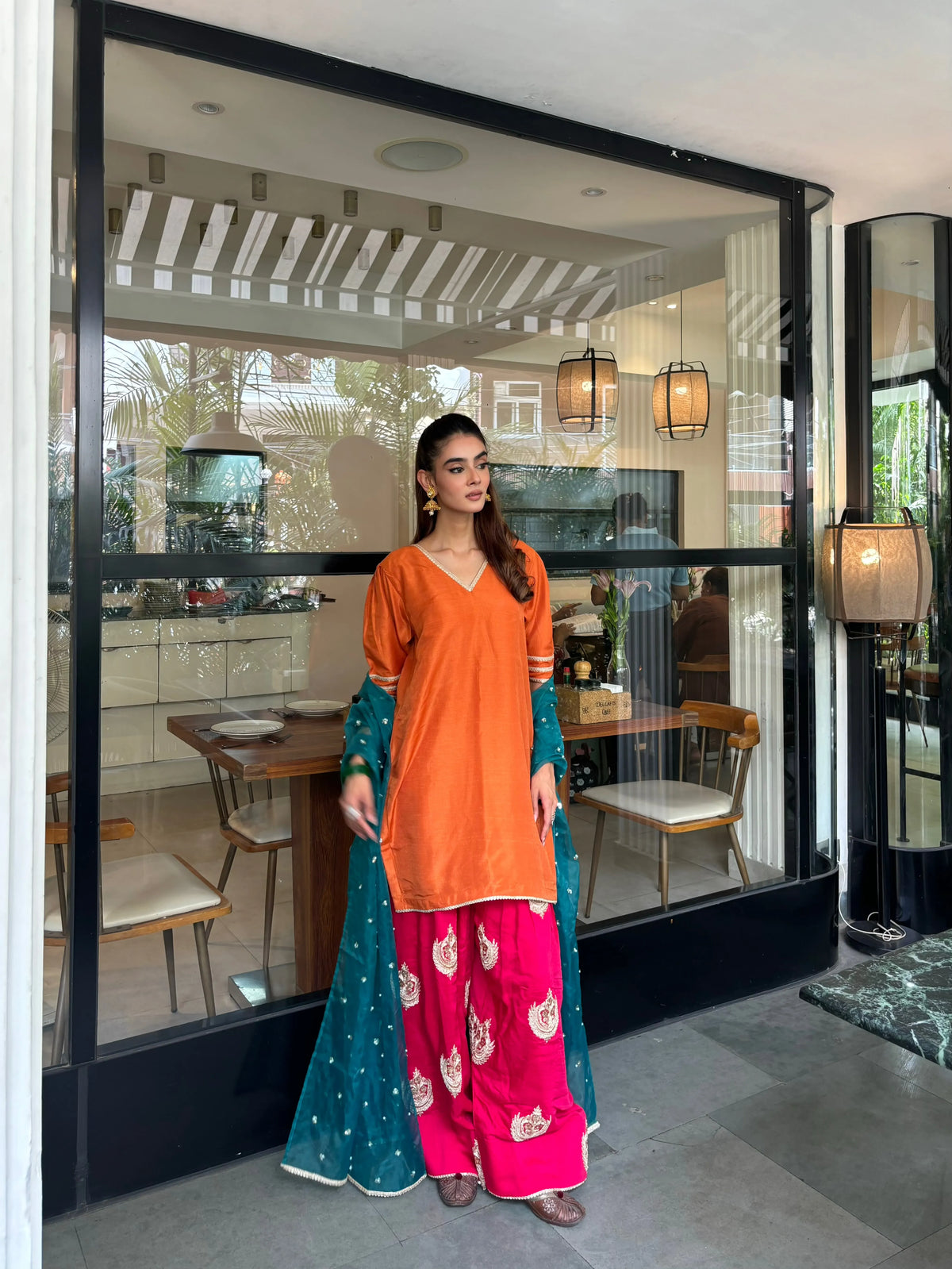
Take the Gulshan Orange Contrast Farshi Set. An orange silk kurta sits against a contrasting pink Chanderi salwar worked with chaand embroidery, and the pairing reads as bold without feeling loud. The kurta's oversized cut keeps the top half easy to move in, while the weight of the outfit stays mostly in the salwar itself. A ferozi organza net dupatta with embroidery finishes things off without adding bulk, which is really the balance any good farsi salwar set should be aiming for.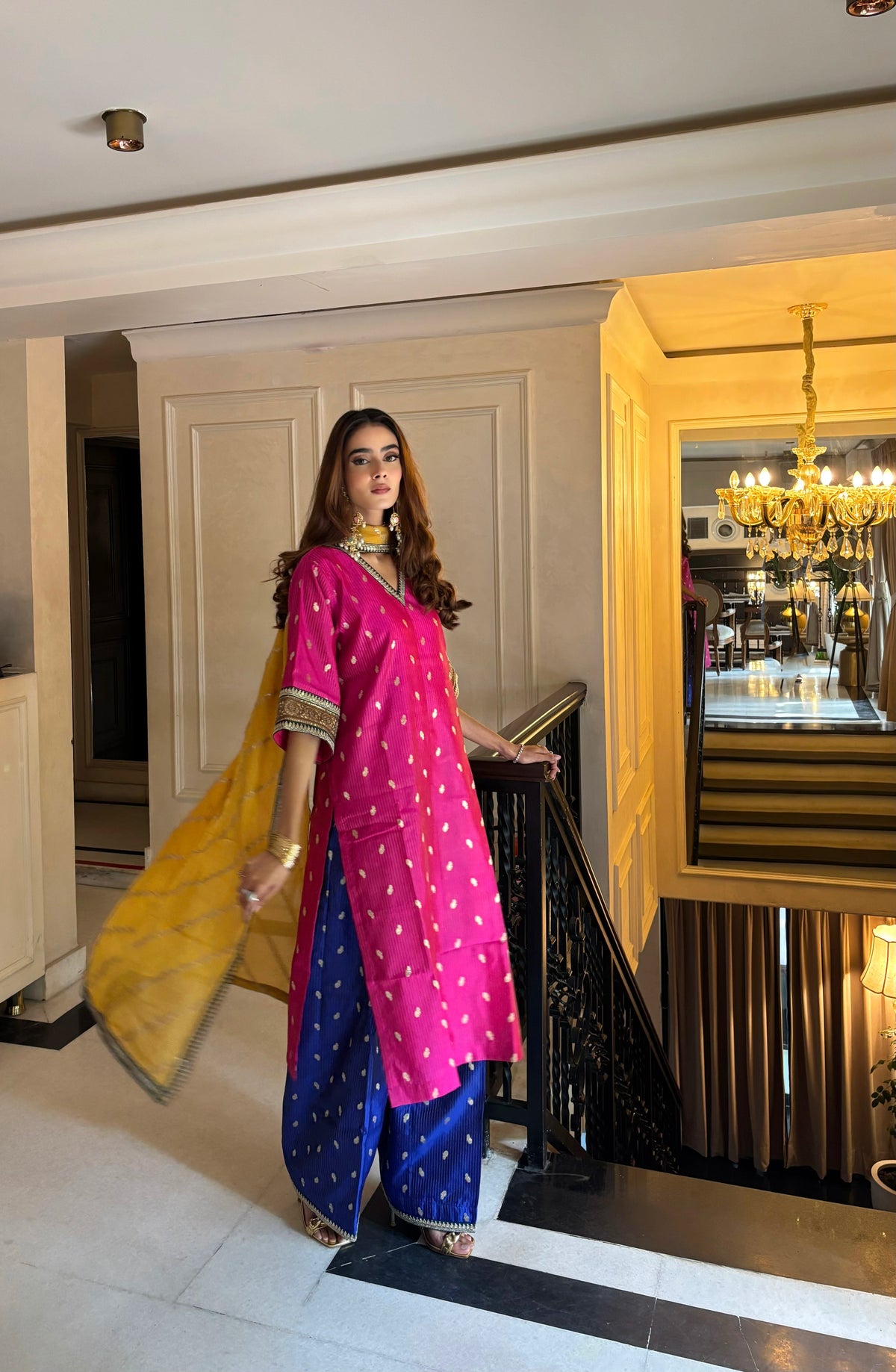
The Bahaar Colorblock Brocade Set with Dupatta takes a different approach to color. A handwoven brocade kurta in Rani Pink, finished with lace at the neck and sleeves, is paired against a blue farshi salwar that colorblocks against it rather than matching it. Since every farsi salwar set here is cut to the wearer's height instead of a standard size, the proportions of the salwar tend to fall correctly, which matters more than with most other pakistani dresses for women. A yellow organza dupatta with embroidery adds one more layer of contrast that catches the light well in the evening.
For a quieter farsi salwar set, there is the Parizaad Embroidered White Set, which takes the same farshi silhouette in a calmer direction. White forms the base across the kurta and salwar, with soft embroidery worked in rather than layered on top, and a ferozi block print dupatta breaks up the white with a single accent color. Cotton runs through the whole set, which is what makes it suited to daytime festive wear or warmer months when a heavier fabric would feel like too much.
Common Questions About Farsi Salwar Sets
Is a farsi salwar set comfortable to wear for long hours?
It depends heavily on the fabric and the fit. A lightweight silk or Chanderi paired with an oversized kurta cut tends to stay comfortable through long functions, while heavier brocade or a fitted kurta on top can start to feel restrictive after a few hours.
What is the difference between a farshi suit and a regular pakistani suit for women?
The main difference is in the bottom. This style uses a wide, floor length salwar that pools at the ankle, while many other pakistani suits for women use straight pants or a more fitted churidar instead.
Can a farsi salwar set be worn for daytime events or only evening functions?
Pakistani cotton suits in this cut work well for daytime functions since the fabric breathes and feels lighter in warmer weather. Silk and brocade versions tend to suit evening events better because of how they catch the light.
How do I know what length to choose for the salwar?
Since the salwar is meant to pool slightly at the ankle rather than sit flat, getting the length right matters more here than with a regular suit. Sets that are made to order based on height, like some farsi salwar set options available now, tend to fit the silhouette more accurately than standard sizing.
Do I need a specific type of footwear with a farsi salwar set?
A slight heel usually balances the proportions better than completely flat shoes, since the salwar already adds visual weight near the ankle. Comfort still matters, so choose something you can actually stand and walk in for the duration of the event.
Is embroidery necessary or can a simpler design still look festive?
Simple pakistani suits with minimal embroidery can look just as festive as heavily embellished ones, especially when the color and fabric choice already carry visual interest on their own.
If you are trying to figure out which farsi salwar set actually suits the function you have coming up, it helps to start with the fabric and fit questions before you fall for a color or a print. Look at the collection with those questions in mind, and the right piece tends to stand out fairly quickly.
0 comments