

Choosing a winter outfit can become tricky when a warm kurta looks too long, a salwar adds unwanted volume, or a beautiful set doesn't fall quite right on your frame. The difference often comes down to proportion rather than height alone. A few inches in kurta length or a change in the salwar cut can completely alter how an outfit looks.
A ladies long suit offers plenty of room to experiment with winter fabrics, relaxed silhouettes and traditional bottoms. However, the right combination depends on where the kurta hem falls, how much fabric gathers around the ankles and how the outfit moves when you walk.
For women shopping for a ladies long suit, understanding these details makes choosing a winter outfit easier. Petite women can create a more elongated appearance, taller women can enjoy longer silhouettes, and women who prefer a relaxed fit can find proportions that feel comfortable without making the outfit look oversized.
At Pyoor, winter dressing includes styles that bring together warmth and everyday practicality. The idea is simple: choose a silhouette that works with your height, not against it.
How a Ladies Long Suit Changes Your Overall Proportions
The visual balance of a suit depends on three things: the kurta hemline, the width of the salwar and the amount of fabric around the lower leg. These elements work together, so choosing each piece separately without considering the complete outfit can produce an unexpected result.
For example, a long kurta with a wide Farshi salwar creates a different silhouette from the same kurta paired with straight pants. Neither combination is automatically better. The first has a more traditional, flowing appearance, while the second creates a cleaner outline.
A useful way to think about a ladies long suit is to look at where the outfit creates its widest point. If the kurta ends around the calf and the salwar also has considerable volume, the lower half can appear visually fuller. A narrower bottom may balance that effect.
Consider these general proportions:
-
A shorter or mid calf kurta with a relaxed straight salwar creates a relatively clean silhouette.
-
A longer kurta with a Farshi salwar produces a traditional look with more fabric movement.
-
An ankle length kurta with a narrower bottom creates a continuous vertical appearance.
-
An oversized kurta works best when the bottom has a deliberate shape rather than simply adding more loose fabric.
These are styling starting points, not strict rules. Your preferred comfort, footwear and the way the garment fits at the shoulders also matter.
Choosing the Right Kurta Length for Your Height
The hemline deserves more attention than it usually gets. Two kurtas can have almost identical designs but look noticeably different because one ends above the calf while the other reaches the ankle.
For petite women
If you are petite, a ladies long suit with a hem just below the knee or around mid calf can be worth trying. This length gives you the appearance of a longer lower leg without overwhelming your frame.
However, petite women don't need to avoid long kurtas altogether. An ankle length style can look balanced when its overall shape is relatively straight and the bottom doesn't add excessive volume.
Pay attention to the following details:
-
Look for a kurta that follows a relatively straight line.
-
Avoid too much fabric gathering around the ankles.
-
Choose a salwar that doesn't extend too far beyond your natural footwear line.
-
Keep the shoulder fit comfortable rather than excessively oversized.
If you love traditional Farshi bottoms, you can still wear them. Just consider how much fabric gathers at the hem and whether the kurta length leaves enough visual definition between the two pieces.
For women of average height
Women with an average height range often have more flexibility with kurta lengths. A ladies long suit ending below the knee, around mid calf or close to the ankle can work depending on the cut.
The most useful approach is to consider the bottom before deciding on the top. If the salwar has a generous flare, a kurta that ends around the calf can create a balanced appearance. If the bottom is relatively narrow, a longer kurta may look more proportionate.
An important detail is the position of the hem when you move. A kurta that looks ideal while standing may shift or bunch when you sit. Check the length in both positions, particularly if you plan to wear the outfit for several hours.
For tall women
Taller women can explore longer kurtas without necessarily making the outfit appear too heavy. An ankle length kurta or a long silhouette paired with a Farshi salwar can look particularly attractive when the fabric falls naturally.
A ladies long suit with an oversized fit can also provide comfortable room for winter layering. The main consideration is to avoid choosing a top and bottom that both have excessive volume unless that is the intended look.
For a more defined appearance, try a longer kurta with a relatively controlled bottom. If you prefer a traditional, flowing silhouette, a wider salwar can provide the desired shape.
Farshi, Straight or Relaxed Salwar: Which Cut Should You Choose?
The salwar changes how the entire outfit is perceived. Even if you have found your preferred kurta length, the bottom can make the silhouette look more traditional, structured or relaxed.
A Farshi salwar has a generous, flowing shape with fabric that creates volume around the lower legs. It is a good choice if you enjoy traditional silhouettes and want your outfit to have movement.
With a ladies long suit, the Farshi cut works particularly well when the kurta has enough length to visually connect with the bottom without hiding its shape completely.
The Marigold Winter Pashmina Farshi Set at Pyoor illustrates this combination. It features a warm, oversized marigold collared kurta paired with a green Farshi salwar. Both pieces are made from pashmina, with lace detailing on the neck and sleeves. The set also includes pockets, which are useful for carrying small everyday essentials.
Its relaxed kurta and flowing bottom make it an option for women who enjoy a more traditional winter silhouette.
Straight bottoms create a more controlled outline. They are particularly useful if you prefer a long kurta but don't want additional volume around your ankles.
This combination can work well for petite women who want to wear longer tops, as well as women who prefer a cleaner appearance for everyday activities.
A straight cut also makes footwear choices simpler because there is less fabric competing with the shape of your shoes.
Relaxed bottoms are useful when comfort and easy movement are priorities. They offer more room than straight pants without necessarily having the extensive flare of a Farshi salwar.
A ladies long suit with an oversized kurta and relaxed bottom can be a comfortable option for travel, casual family visits and longer days outside.
The trick is to consider the complete outline. If the kurta is already very wide, a slightly more controlled bottom can help maintain balance.
How to Balance an Oversized Kurta in Winter
Oversized clothing can feel particularly comfortable during colder months because it leaves room for layering. However, a loose fit doesn't automatically create a flattering silhouette. The relationship between the shoulder line, kurta length and bottom cut matters more than simply choosing a larger size.
A good example is Pyoor's Dhaaga Set Winter Spun Oversized Fit. It features a mehendi green oversized kurta paired with a white Farshi salwar, with both pieces made from winter spun fabric.
The contrasting colours help distinguish the upper and lower portions of the outfit. This is worth considering if you like an oversized ladies long suit but don't want the entire silhouette to look like one continuous block of fabric.
Here are some ways to approach this combination:
If you are petite: Consider whether the oversized shoulders and long hem make the outfit look heavier than you intended. A more controlled kurta length can help.
If you are tall: You can experiment with longer hems and fuller bottoms, particularly if you enjoy traditional silhouettes.
If you prefer a relaxed appearance: Don't feel the need to make every part of the outfit fitted. Instead, pay attention to where the fabric falls and whether it allows comfortable movement.
One detail that often gets overlooked is sleeve length. If the sleeves are already loose, a heavily gathered bottom can make the complete outfit look bulkier. A little visual contrast between the upper and lower portions can help.
Ankle Length or Calf Length: Which One Looks Better?
This is one of the most useful decisions to make before buying a winter suit. Both lengths have their place, but they serve slightly different styling preferences.
| Feature | Calf length kurta | Ankle length kurta |
|---|---|---|
| Overall appearance | Lighter and more open | Longer and more traditional |
| Petite frames | Often easier to balance | Works with a controlled silhouette |
| Tall frames | Creates a visible break | Makes use of the longer frame |
| Farshi salwar | Shows more of the bottom | Creates a fuller traditional outline |
| Straight pants | Gives a balanced separation | Creates a longer vertical line |
A calf length ladies long suit can be useful if you want the salwar to remain a visible part of the outfit. This is particularly relevant with Farshi cuts, where the fabric itself contributes to the overall design.
An ankle length option offers a different look. It can be especially appealing during winter because the longer kurta creates more coverage. However, check the hem against your footwear. If it repeatedly touches the floor or gets caught under your shoes, the length may not be practical for everyday wear.
A simple fitting test: Stand naturally, walk a few steps and sit down. Notice whether the hem moves comfortably and whether the salwar gathers awkwardly around your feet. This small check can tell you more than looking at a product photograph alone.
How to Style a Ladies Long Suit Without Losing Its Shape
Once you have selected the right proportions, the next step is styling. Winter outfits often involve shawls, jackets and additional layers, so the goal is to keep the original silhouette visible.
Choose your shawl length carefully
A long shawl can add another vertical layer to an already long kurta. If the shawl and kurta both have generous lengths, the outfit may appear visually heavier.
For an oversized ladies long suit, try wearing the shawl loosely over one shoulder rather than wrapping it around your entire upper body. This keeps more of the kurta visible.
A shorter shawl can also work well when you want to draw attention to the neckline or detailing around the chest.
Think about footwear before finalising the hem
Footwear changes where the kurta and salwar appear to end. Flat footwear may leave more fabric gathered around your feet, while footwear with a little height can change the way a long hem falls.
For a Farshi salwar, choose footwear that allows the fabric to move without dragging. With straight pants, you have more flexibility because the bottom generally has a narrower outline.
Use colour to define proportions
Contrasting colours can visually separate the kurta from the salwar. This is useful if both pieces have a relaxed fit.
The Marigold Winter Pashmina Farshi Set uses marigold and green, while the Dhaaga Set Winter Spun Oversized Fit pairs mehendi green with white. These combinations show how different colour relationships can give similar traditional silhouettes distinct appearances.
If you prefer a single colour throughout, you can use your shawl or footwear to introduce a little contrast.
Consider where you will wear it
For everyday errands or a relaxed outing, a practical ladies long suit with pockets can be more convenient than an outfit that needs constant adjustment.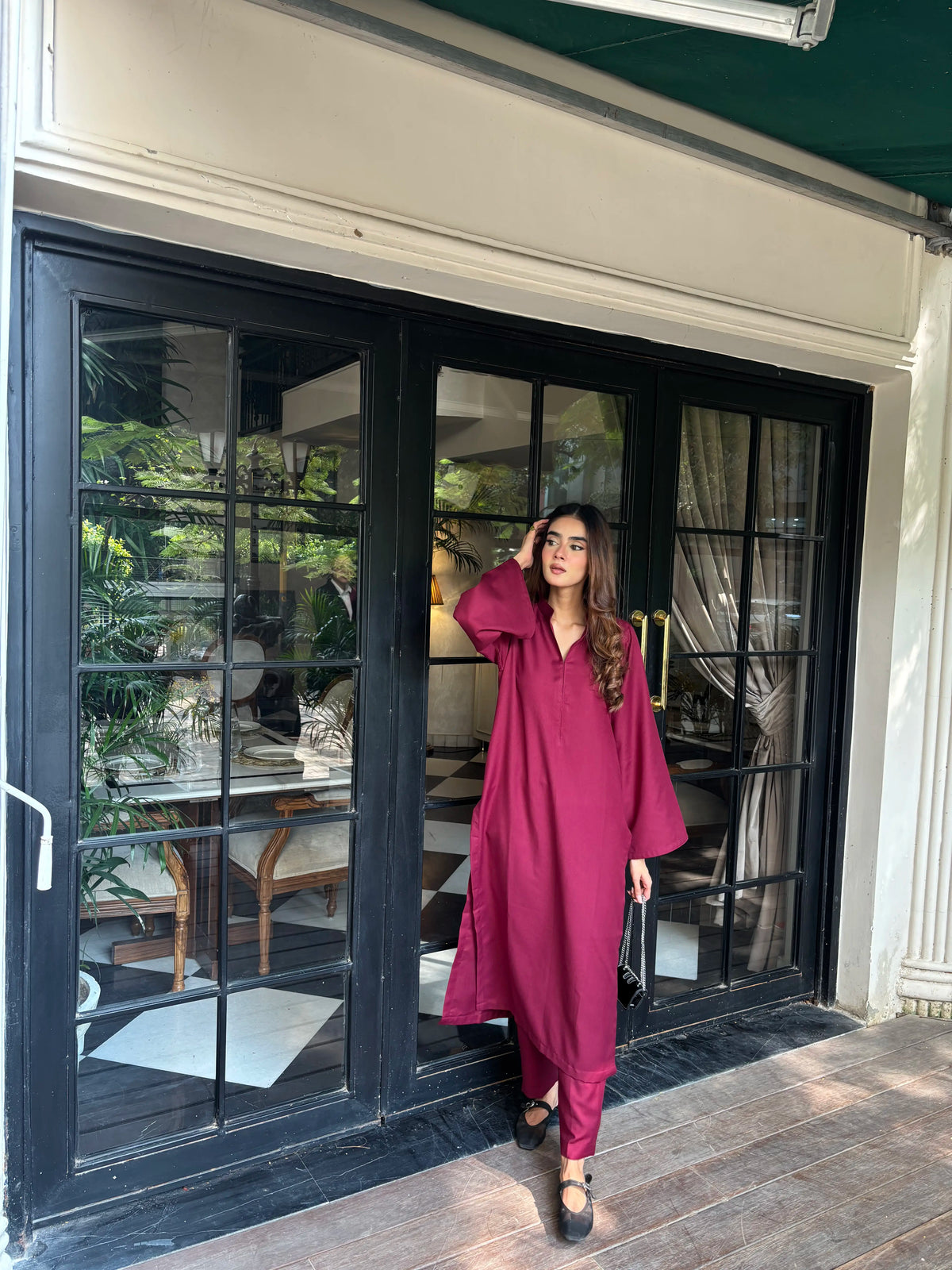
Pyoor's Maroon Wine Pashmina Co Ord is an example of a coordinated winter outfit designed around this kind of comfort. Its matching pashmina kurta and pants feature a signature oversized fit and built in pockets. The deep maroon colour gives the set a consistent appearance, while the relaxed cut leaves room for layering.
You can wear it as a coordinated outfit or add a shawl or jacket when the weather gets colder. It is suited to winter mornings, family dinners and travel days.
What to Check Before Buying Your Winter Suit
Product photographs are useful, but they don't always show how a garment will sit on your particular frame. Before selecting a ladies long suit, look beyond the overall design.
Check these details:
-
Kurta length: Compare the listed garment measurement with your preferred hem position.
-
Shoulder fit: An oversized silhouette should provide comfort without making the shoulder area look unintentionally oversized.
-
Salwar width: Check whether you prefer a straight, relaxed or generously flared bottom.
-
Fabric: Look at the stated material and fabric description to understand the type of garment you are purchasing.
-
Sleeve length: Consider whether the sleeves will sit comfortably when you wear additional layers.
-
Pockets: If you use your outfit for daily activities, practical pocket placement can make a difference.
-
Movement: Think about how the complete set will feel when walking, sitting and using stairs.
For women comparing different ladies winter suit sets, these details are often more useful than choosing an outfit based on its colour or photograph alone.
A good purchase should work with your normal routine. If you regularly commute, travel or spend several hours outside, consider how much adjustment the garment might need throughout the day.
Frequently Asked Questions
1. Which ladies long suit is suitable for petite women?
Petite women can consider a straight or moderately relaxed kurta ending around the knee or mid calf. Longer styles can also work when the bottom has a controlled shape. The important consideration is the overall proportion rather than avoiding long kurtas completely.
2. Is an ankle length kurta suitable for tall women?
Yes. An ankle length kurta can complement a taller frame, especially when paired with a suitable salwar cut. Farshi bottoms create a traditional, fuller appearance, while straight pants give the outfit a cleaner outline.
3. Can petite women wear Farshi salwar with a long kurta?
Yes. Petite women can wear Farshi salwars by paying attention to the amount of fabric around the ankles and the kurta hem. A slightly more controlled upper silhouette can prevent the outfit from appearing excessively bulky.
4. What is better for winter, pashmina or winter spun fabric?
The choice depends on the garment and your comfort preferences. Pashmina sets at Pyoor include the Marigold Winter Pashmina Farshi Set and Maroon Wine Pashmina Co Ord. The Dhaaga Set Winter Spun Oversized Fit uses winter spun fabric for both the kurta and salwar. Check each product's description for its specific fabric details.
5. How should I choose a shawl for a long winter suit?
Consider the kurta length and the volume of the salwar first. A loosely draped shawl can keep the outfit's original shape visible. If the kurta already has an oversized silhouette, avoid adding too much fabric around the shoulders unless you prefer a fuller appearance.
6. Which salwar cut is easiest to wear every day?
Straight pants and relaxed salwars are practical choices for women who prefer less fabric around their ankles. Farshi salwars are worth considering if you enjoy traditional styling and don't mind a fuller silhouette.
If you are exploring a ladies long suit for the colder months, start by deciding which kurta length feels comfortable and which salwar cut suits your everyday routine. You can then explore Pyoor's ladies winter suit sets to find a combination that matches your preferred proportions.
For more winter styling inspiration, read our guides on winter salwar suits and how to wear a suit in winter. A little attention to the hem, fabric and overall fit can make choosing your next winter outfit much easier.
0 comments