

You open the wardrobe two days before the function, pull out three outfits, and realise the cut was never the problem. It's the colour. Farshi salwar suit designs share the same wide flare and easy swing, so the shade you choose does most of the talking. Choose well and even a simple set looks planned. Choose badly and you're restyling in the car.
This guide sorts festive farshi colours by the moment you'll actually wear them: the morning puja, the afternoon lunch, the late reception. It also covers which sets photograph well, which shades fight with jewellery, and how to pair a kurta, salwar and dupatta without a clash.
What colours are trending in farshi salwar suit designs right now?
Three families keep showing up this season: soft pastels, deep jewel tones, and anything with a metallic shimmer. Pastels own the daytime. Jewel tones take over once the lights come on. Metallic work, whether mukaish dots or zari, sits across both and changes how a colour behaves in farshi suits of every kind.
The bigger shift is in combinations. Recent farshi suit colour trends lean towards a loud kurta with a calm salwar, or the reverse, rather than one flat shade head to toe. Two tone sets also photograph better in groups, because nobody ends up looking identical.
Traditional ethnic colour trends haven't gone anywhere. Reds, maroons and bottle greens still anchor the festive palette, with pistachio, powder pink and soft lilac now sharing the stage.
A quick guide to colour by occasion
Use this table to match farshi salwar suit designs to the hour of the function.
| Colour family | Best for | Why it works |
|---|---|---|
| Pastels (powder pink, mint, lilac, pale peach) | Morning rituals, daytime lunches, haldi | Soft in daylight and kind to cameras |
| Jewel tones (emerald, ruby, deep purple, sapphire) | Evening gatherings, weddings, receptions | Look richer under warm lighting |
| Metallic accents (mukaish, zari, gold or silver shimmer) | Receptions, sangeet, night functions | Catch light and add depth without extra jewellery |
| Warm brights (red, orange, marigold) | Pujas, Diwali, family functions | Cheerful, festive, easy to carry in a crowd |
Treat it as a guide rather than a rulebook. Plenty of sets cross these lines happily, and a ruby set at noon is hardly a crime.
Pastels in farshi salwar suit designs: soft without being boring
A pastel farshi set is the safest bet for a daytime function and the easiest to get wrong. The risk is looking washed out. Pastels need texture or embroidery to give the eye something to hold, so a plain pastel cotton can look like loungewear while the same shade in self weave brocade reads as occasion wear. Many pastel sets depend on that detail.
Skin tone matters here. Mint and powder blue tend to flatter warmer undertones, while peach and soft pink can vanish on lighter skin unless there's a contrasting border or dupatta. Hold the fabric near your face in daylight, since screens shift pastels more than any other colour.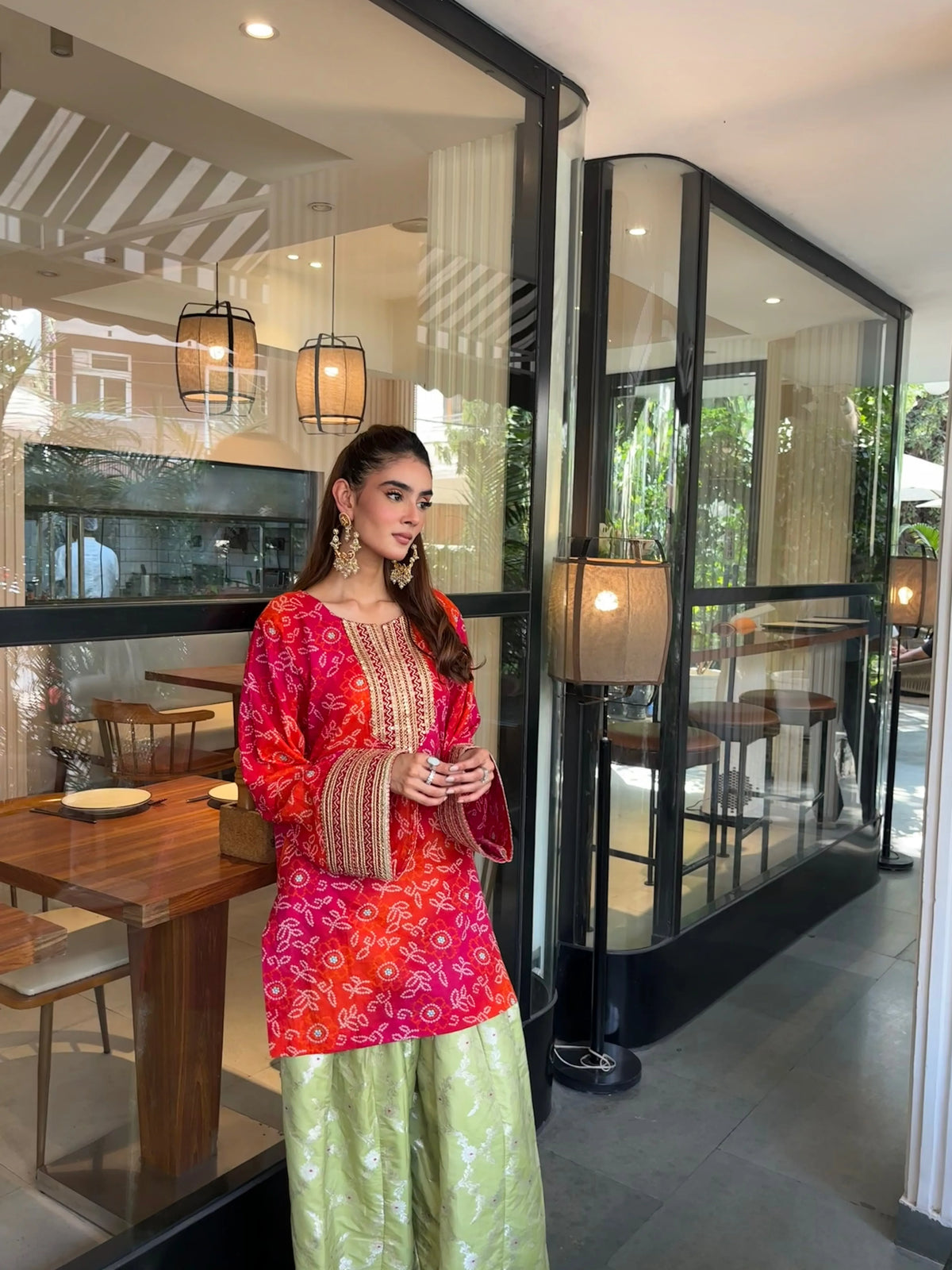
The Alia Bandhani Farshi Set uses pastel as a supporting player. Its pastel green self weave brocade salwar sits under a red and orange Bandhani kurta, so the green cools down a very bright top. That orange and green pairing shows contrast working in your favour. The kurta is soft cotton in the oversized fit, and there are pockets, which helps when you're carrying a phone through a long day of visiting relatives. Among festive farshi salwar suit designs, it's a good example of colour doing the work instead of heavy embellishment.
Jewel tones in farshi salwar suit designs: how deep is too deep?
A jewel tone farshi suit in emerald, ruby, aubergine or sapphire is built for artificial light. Under tube lights and diyas, those shades glow. In flat daylight they can turn heavy. If your function runs from afternoon into night, pick one of the darker farshi salwar suit designs with a lighter dupatta so the outfit adapts as the light changes.
Fabric changes everything. Gajji silk colours look especially rich because the fabric has a natural sheen, so a deep shade catches highlights across the folds. The same colour in cotton looks flatter and more casual.
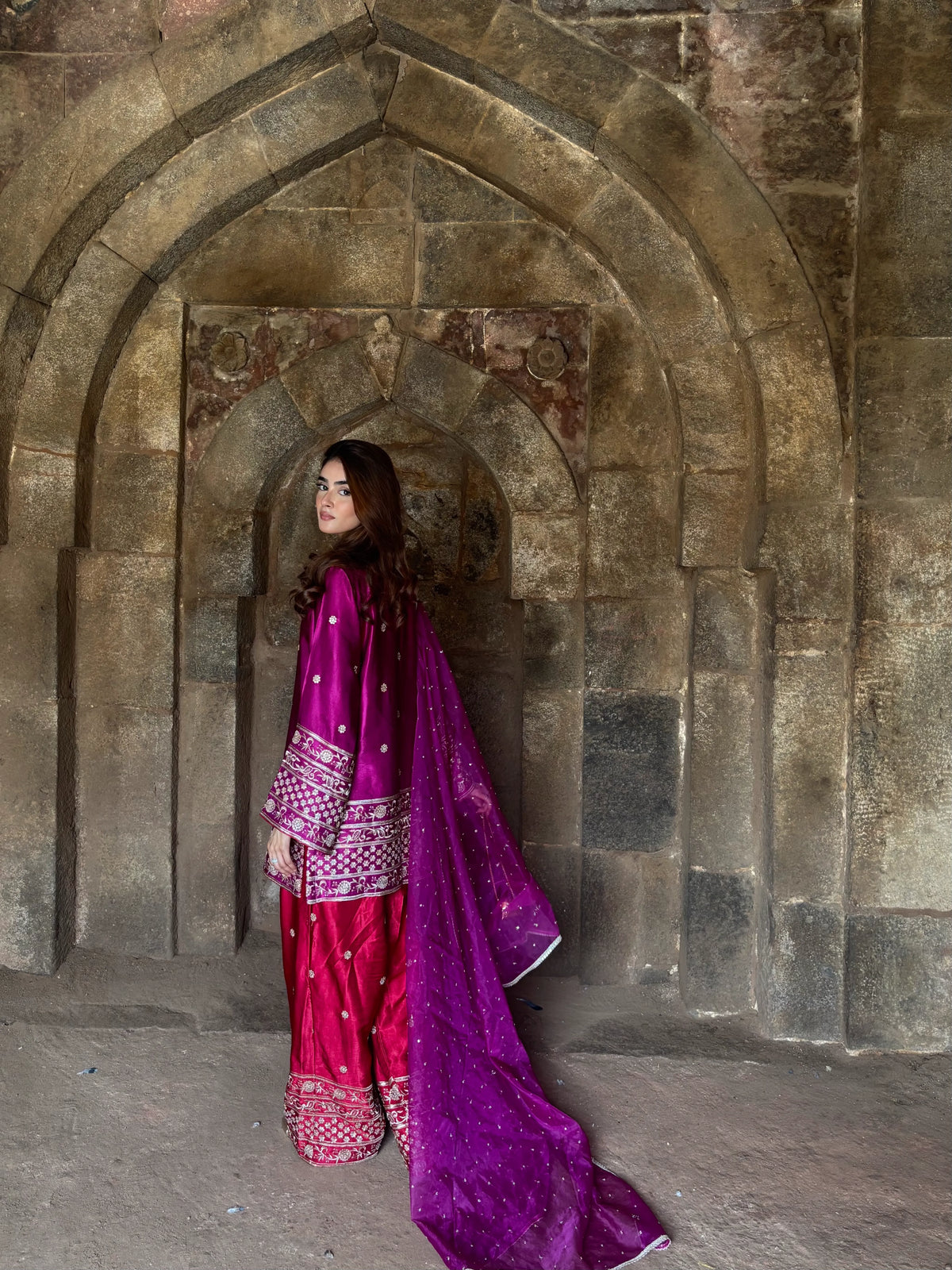
The Begum Gaji Silk Farshi Set shows this well. It combines purple and red, two shades that sit close on the colour wheel, so the look feels warm and layered rather than jarring. The kurta is soft Gaji Silk with a comfortable oversized fit, the matching salwar carries embroidery on the mori, and the bell sleeves are embroidered too. An embroidered organza booty dupatta adds a lighter layer so all that depth doesn't feel weighed down. For a wedding or an evening family function, it's one of the more convincing farshi salwar suit designs for festive wear.
Metallic touches and mukaish: colour that shifts with the light
A metallic farshi design doesn't add a new colour so much as change the one underneath. In farshi salwar suit designs, mukaish farshi colours are the clearest case. Tiny metallic flecks scattered across the fabric make a muted shade look lit from inside, and they move as you move. Sage green with mukaish reads as sage in a photograph and silvery green in person. Metallic farshi salwar suit designs reward that kind of close look.
The practical rule is to let the metallic work lead and keep everything else quiet. If the kurta carries the shimmer, the salwar can stay plain. If the dupatta sparkles, the rest can be simpler. Shimmer on all three pieces makes the outfit look busy rather than rich.
How to choose a shade for your function
Start with the time of day, then the venue, then the people. Every shortlist of farshi salwar suit designs gets easier after those three answers. A courtyard puja at ten in the morning asks for something different from a banquet hall dinner at nine at night.
Then look at who else is likely to be in the room. At family weddings a few of the older women will almost certainly be in red or maroon. Matching them exactly makes you part of the furniture. Sliding one step sideways into plum, orange or rust keeps you inside the festive palette while standing apart. Narrowing the options this way is quicker than scrolling endlessly.
One thing most guides skip is the cut. An oversized kurta gives you a bigger surface of one shade, so a bright colour feels louder than it would in a fitted kurta. If you're nervous about brights, put the quieter shade on top and let the salwar carry the colour. Plenty of farshi salwar suit designs are cut this way for that reason.
Contemporary shades against traditional ones in farshi salwar suit designs
Contemporary farshi shades such as sage, dusty rose, teal and soft terracotta feel fresh and look good on camera. They suit younger crowds and smaller gatherings. Traditional reds, maroons and greens carry weight at weddings and religious ceremonies, where the dress code is unspoken but real. Few farshi salwar suit designs break that rule completely.
You don't have to pick a side. A traditional colour in a modern cut works nicely, and so does a modern shade with classic embroidery. The best farshi salwar suit designs often mix the two. The red and orange Bandhani of the Alia set is a traditional print, while the pastel green below it is the modern touch.
First time buyers should lean traditional, since a red or maroon fits nearly every festive event. Starting with classic farshi salwar suit designs gives you a baseline to compare against.
Real questions people ask
Which colour is best for farshi salwar suit designs at a wedding?
For farshi salwar suit designs worn to weddings, deep jewel tones and rich reds suit the evening, while soft pastels work for daytime ceremonies and haldi. Guests should skip pure white and bridal red.
Can I wear pastels for a festive evening function?
Yes, if the set has embroidery, brocade or a metallic touch so it holds its own under artificial light. A plain pastel can look faded after dark.
How do I pair colours in a salwar suit without clashing?
Pick a base shade and one contrast. Neighbouring colours on the wheel, like purple and red, feel soft. Opposites, like orange and green, feel bold. Keep the third piece, usually the dupatta, quieter or lighter than the other two.
What is the safest colour for a first set among farshi salwar suit designs?
A red, maroon or bottle green is the dependable pick among farshi salwar suit designs, since it suits most occasions. You can add pastels or contemporary shades later.
If you're still weighing options, browse the Farshi Salwar Suit Sets collection on the Pyoor website and compare a few farshi salwar suit designs against your own occasion list. Check each product page for fabric and colour details before choosing among farshi salwar suit designs, and pick the shade you'd happily be photographed in twice.
0 comments