

You’ve shortlisted three outfits, and not one product page tells you how the thing will feel at nine in the evening, after the puja, the photographs and a plate of dinner eaten on the floor.
Most advice on diwali suits for women stops at colour. Colour is the easy part. What decides whether you enjoy the day is fit, fabric weight, and how the pieces behave when you sit, stand, hug relatives and climb stairs with a diya in your hand.
Here’s the short answer, for anyone in a hurry. Choose the fit before the shade. Match the fabric to the hours you’ll actually be wearing it. Let one piece, usually the dupatta or the salwar, carry the contrast. The rest of this guide explains how, using three Pyoor sets as worked examples, and it’s written to help you pick diwali suits for women without a return or a last minute alteration.
How to Judge Diwali Suits for Women Before You Buy
A diwali suit has to survive a schedule, not just a photograph. The day has three parts. Afternoon is family, food and probably some floor sitting. Evening is puja and lights. Night is visitors, cards, maybe dancing if your family is that kind of family. An outfit that only works for one of those parts gets changed halfway through the day.
So here’s a test most guides skip. Could you sit on the floor in it for forty minutes without adjusting anything? Could you lift both arms to light a diya? Could you take a flight of stairs without gathering the salwar in your fist? The best diwali suits for women pass all three without fuss, and you can usually tell from the cut before you ever touch the fabric.
One distinction gets blurred constantly. Oversized is a cut with room built in, not a size. Ordering a bigger size in a fitted cut gives you a shapeless version of the wrong thing, with slipping shoulders and a hem that lands in the wrong place. Pyoor’s signature fit is loose and oversized by design, so the size chart still matters. The looseness is planned, and it only works when the shoulder and the length are right. Keep that in mind while you compare diwali suits for women online, because a model photo of an oversized kurta tells you very little about how it will sit on you.
Sizing First: The Measurements That Matter
Size labels on diwali suits for women differ between brands, so treat the label as a starting point. Your own measurements, checked against the brand’s size chart, are what count.
Measure bust at the fullest point, shoulder to shoulder across the back, upper arm, hip, and your height. Then add room for sitting. Fabric pulls differently when you’re seated, and a salwar that looks fine in the mirror can feel snug through a long dinner.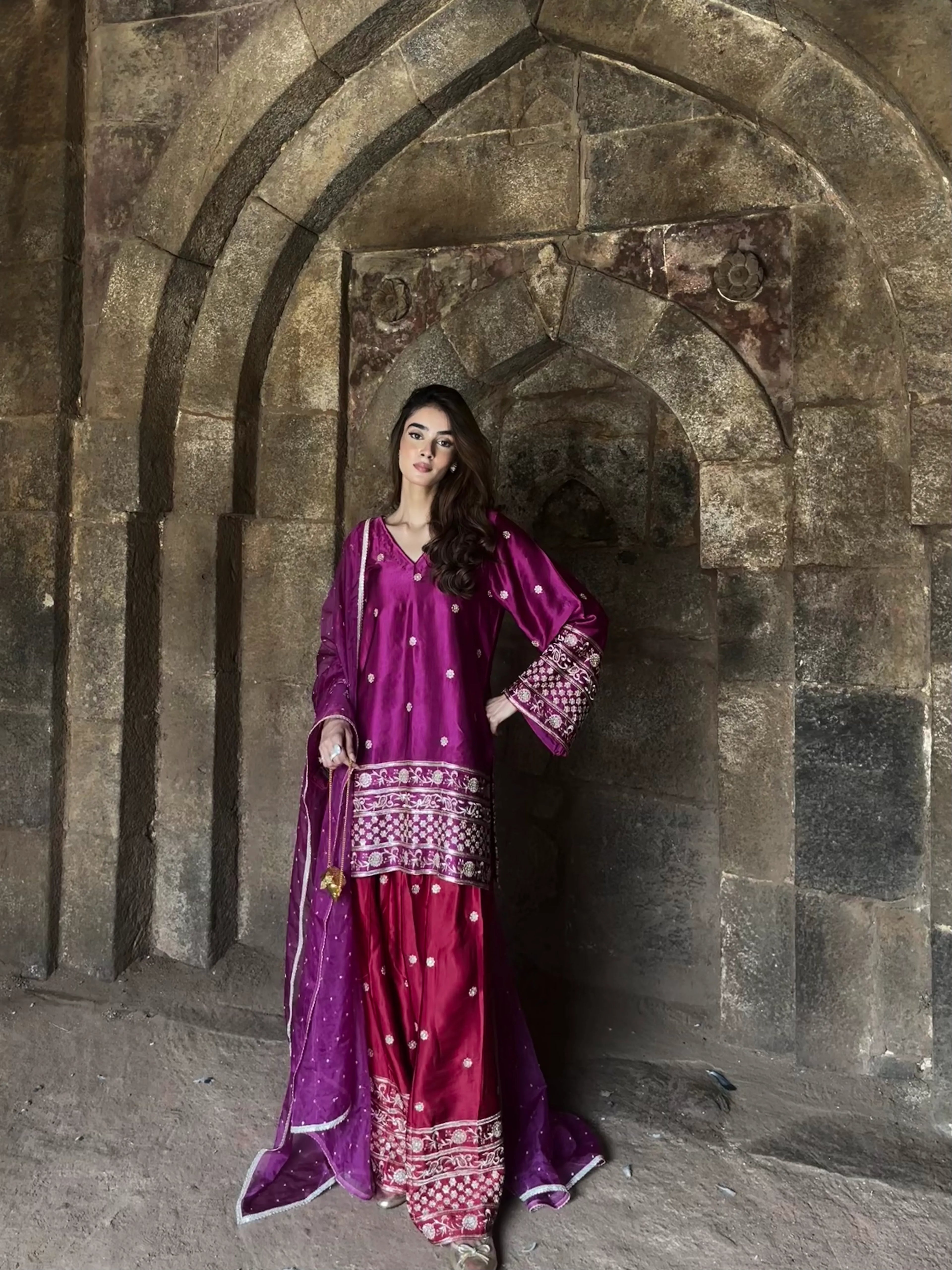
If you’re between sizes on diwali suits for women, ask which part of the outfit is harder to forgive. A loose kurta forgives a little extra at the bust. Shoulders and sleeve length forgive nothing. Bell sleeves, like the embroidered ones on the Begum Gaji Silk Farshi Set, add one more check: the opening should clear your wrist bone so it flares instead of hanging.
For diwali suits for women in larger sizes, look for a proper XXL size chart rather than a vague free size note. A useful chart gives garment measurements in numbers for bust, hip and length, and the XXL column should be right there on the product page. If it isn’t, ask before you order.
Some festive pieces are made to order, cut after you place the order instead of pulled from stock sizes. The Bahaar Colorblock Brocade Set with Dupatta is one of them. It’s made to order as per your height, and it’s fully lined. Height is the right thing to tailor, because kurta length and salwar length are what make an outfit look intended rather than borrowed.
The catch with festive tailoring is time. Made to order diwali suits for women need a window, so order early and read the delivery details on the product page instead of assuming. Custom sizing also differs between sets, so check which options each page actually offers.
Fabric Guide: Choosing for the Hours, Not Just the Look
A more useful way to sort fabrics is by what they do after four hours on your body. That’s the real test for diwali suits for women, and it changes which fabric wins.
Brocade has the pattern woven into the cloth, so it looks rich without much added. It also has body. It holds its shape and sits away from the skin, which is lovely in the evening and a little warm in a sunny afternoon. The Bahaar set uses a handwoven brocade kurta in Rani Pink, and the full lining matters here. A cotton lining under a rich fabric is often the difference between a suit that clings and one that glides, so ask about lining whenever a page doesn’t mention it. Among diwali suits for women, brocade belongs to the evening more than the afternoon.
Gaji silk, which you’ll also see spelled gajji silk, suits anyone who wants a smooth, soft cloth without the weight of heavy brocade. On the Begum Gaji Silk Farshi Set, the kurta has a smooth feel and a comfortable oversized fit, and the salwar is in the same Gaji Silk, with embroidery on the mori.
Cotton is the sensible choice for the long, warm part of the day. The Alia Bandhani Farshi Set has a soft cotton kurta in a red and orange Bandhani print, paired with a pastel green self weave brocade farshi salwar. It’s light enough for long hours, and as diwali suits for women go, that counts for a lot on a hosting day.
Organza is the lightest layer in the outfit and usually the most photographed. The Begum and Bahaar sets both finish with an embroidered organza dupatta, yellow on the Bahaar. One practical note: organza can catch on rough jewellery and embroidery, so pin it at the shoulder if you’ll be moving around a lot. When you compare diwali suits for women, give the dupatta as much thought as the kurta.
Styling Without Overthinking It
Let one piece do the talking. Styling diwali suits for women is mostly an exercise in restraint, because the outfit already brings colour, embroidery and shine. Pick one place for the eye to land and quiet everything around it.
The Begum set is a good study. Purple and red are already doing plenty, so jewellery can stay small. The Bahaar set goes the other way, with a Rani Pink kurta, a blue colorblock farshi salwar and a yellow organza dupatta, a loud palette on purpose. If that feels like a lot, the Alia shows the calmer route, a bright kurta over a soft pastel green salwar. Among diwali suits for women, the pastel bottom is the simplest way to turn the volume down.
Footwear is the part most people forget when they plan diwali suits for women. You’ll be on your feet for hours. Flat juttis or soft sandals beat heels, and a farshi salwar sweeps over the shoe anyway. The Alia set comes with pockets, so phone and keys go in there and a potli becomes optional.
Dupatta handling is the other thing nobody mentions. Drape it across both arms for photographs, then pin it at one shoulder once the pictures are done. That habit works with any of the diwali suits for women that finish with an organza layer.
Comparing Three Sets: Which Day Calls for Which
The right pick depends on the day you’ve planned, so here’s a plain way of comparing diwali suits for women by occasion.
For a long family day with plenty of sitting, the Alia Bandhani Farshi Set is the most practical of the three. Soft cotton kurta, signature oversized fit, pockets, and a red and orange Bandhani print that suits celebrations and family occasions.
Evening puja with photographs points to the Begum Gaji Silk Farshi Set. The purple and red combination feels festive without shouting, the Gaji Silk is smooth, and the embroidered organza booty dupatta adds a light layer over rich colour. It’s described for weddings, festive celebrations and family functions, so it earns a second outing. That rewear value is worth weighing before you decide among diwali suits for women.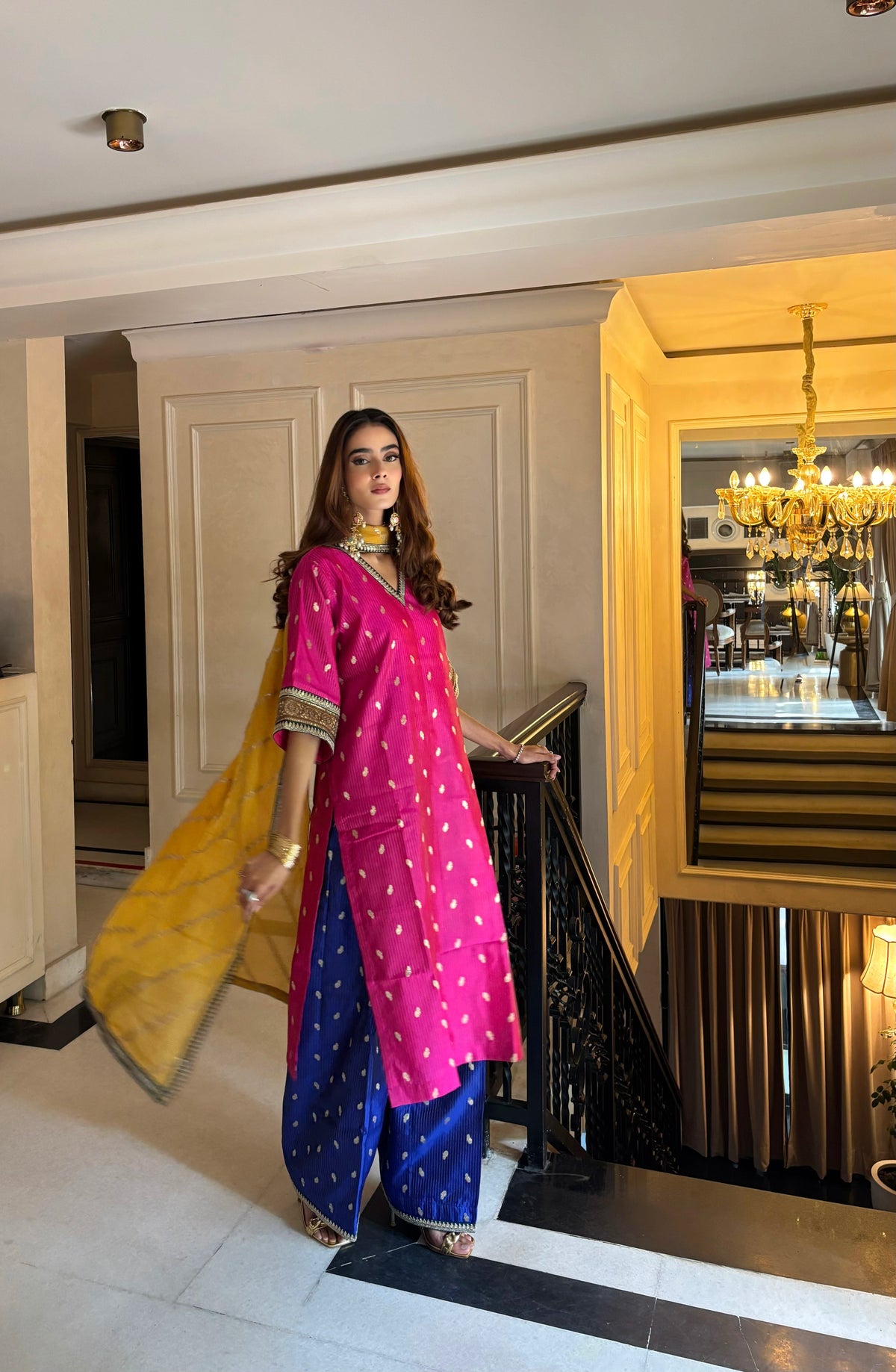
For a bolder evening, the Bahaar Colorblock Brocade Set with Dupatta is the brightest of the three. The handwoven Rani Pink brocade kurta has lace details at the neck and sleeves, the blue colorblock farshi salwar adds contrast, and the yellow embroidered organza dupatta finishes the look. It’s fully lined and made to order as per your height, so it suits the woman who wants a diwali suit tuned to her, and who orders early.
A fair rule of thumb is soft and light for the day, rich and structured for the night. Plenty of families change outfits between afternoon and evening, and two diwali suits for women, one cotton and one rich, make that plan simple.
Jewellery and footwear can be shared across diwali suits for women in different fabrics, which keeps the festive wardrobe simpler.
Real Questions People Ask
What size should I order if I’m between sizes in diwali suits for women?
Start with your shoulders and bust when you read the size chart. A relaxed kurta gives you slack everywhere else, but the shoulder line has to land right from the start.
How early should I order a made to order diwali suit?
Earlier than feels necessary. Made to order diwali suits for women are cut after you place the order, and timelines differ by product, so read the delivery details on the product page and keep a generous buffer before the festival.
Which fabric is most comfortable for a long festive day?
Cotton is the lightest option for long hours, as in the Alia Bandhani Farshi Set. Brocade has the most body and looks richest, but it’s the warmest, so look for a full lining, as on the Bahaar set.
Can I wear a festive suit again after Diwali?
Yes, and it’s worth choosing with that in mind. Many diwali suits for women also work at weddings and family functions, and the Begum Gaji Silk Farshi Set is described for exactly those occasions, along with festive celebrations.
Are oversized diwali suits for women the same as ordering a size up?
No. Oversized is a cut with extra room built in, while a size up in a fitted cut simply makes everything bigger, including the shoulders. Pick the size that sits right across your shoulders, since the generous cut gives you the fall and movement.
If you’ve narrowed things down to two sets, open both product pages and read the size chart and fabric notes side by side. That small comparison settles most doubts about diwali suits for women faster than another hour of scrolling.
When you’re ready to see the rest, the Diwali outfits for women collection on the Pyoor website is the place to browse. Whichever of the diwali suits for women you pick, check the size chart first and the colour second.
0 comments