

If you've started scrolling through options for this year's celebrations, you've probably noticed the diwali suit design conversation has shifted quite a bit from what it looked like even two or three years ago. The heavy, all over embroidered look that once defined festive shopping is sharing space with something quieter, and honestly, a lot more wearable. This piece is for anyone trying to figure out what actually suits them this year, not just what's trending on a feed somewhere.
What's Actually Changing in Diwali Suit Design This Year
The biggest shift in diwali suit design right now is restraint, and it shows up in almost every festive piece you come across this season. Brides and festive shoppers used to chase maximum embellishment, but a lot of women are now asking for pieces where the embroidery does one job well instead of covering every inch of fabric. Mukaish work is a good example of this shift in diwali suit design. It's a technique where fine metallic wire is hand pushed through the fabric to create small, scattered dots of shine, and it reads as festive without turning the outfit into something you can only wear once a year and then forget about.
Gota patti embroidery is having a similar moment in diwali suit design, though for a different reason. It's older, it's traditional, and it photographs beautifully under the kind of warm evening lighting most Diwali gatherings happen in. What's changed is where it's being placed. Instead of dense borders running down every seam, you'll see it concentrated at the neckline or hemline, with the rest of the fabric left plain enough to let the embroidery actually stand out rather than compete with itself.
Color has moved too, and it's changed how people think about diwali suit design for daytime versus evening. Pastel diwali suit options, the soft pinks, sages, and dusty blues that would have felt out of place at a Diwali party a decade ago, are now genuinely popular choices for daytime functions and smaller gatherings. Rani pink, mustard, and deep jewel tones still dominate for evening events, but pastel is no longer treated as a compromise. It's a real category people are choosing on purpose.
How to Choose a Diwali Suit Design That Suits You
Picking a diwali suit design isn't really about copying whatever's trending. Good diwali suit design comes down to matching the piece to where you'll actually wear it and how you want to feel in it. A few honest questions help more than any trend list.
Start any diwali suit design decision with the event itself. A daytime puja at home calls for something lighter, both in fabric weight and in embellishment. An evening reception or a friend's Diwali party can carry more shine, more structure, and a bit of drama in the silhouette. Trying to make one outfit do both jobs usually means it's slightly wrong for each.
Fabric matters more than most people budget time for when they're comparing diwali suit design options. Gajji silk has a soft, almost matte sheen that catches light gently rather than aggressively, which makes it forgiving for photos taken in mixed indoor lighting. Organza, brocade, and heavier silks each behave differently once they're actually on your body and moving through a room full of people, so if you can, touch the fabric before deciding rather than judging purely from a photo.
Fit is the part of diwali suit design that gets skipped the most, and it shouldn't be. A loose fit kurta paired with a fitted, tailored bottom creates a completely different silhouette than the same kurta paired with something equally loose below. Neither is wrong. But knowing which one flatters your frame and matches your comfort level is worth more than chasing whatever silhouette is having a moment online.
Styling It the Way It's Actually Worn Now
Once you've settled on a diwali suit design, the styling choices around it decide whether the whole look feels finished or slightly unresolved. This is the part of diwali suit design planning most people rush. Dupatta draping has genuinely changed. The classic front pallu drape is still common, but a lot of women are opting for a simpler shoulder drape with the dupatta pinned at one side, which lets an embroidered neckline or an interesting sleeve detail actually be seen instead of getting buried under fabric.
Jewelry has gone the opposite direction from a few years ago, and it changes how a diwali suit design actually reads in a room. Where once the rule was to match metal tones and layer heavily, now a single statement piece, a pair of jhumkas or one substantial neckpiece, often does more work than three or four smaller items combined. It leaves the embroidery on the suit itself as the focal point rather than competing with it.
Footwear is worth thinking about earlier than most people do when finalizing a diwali suit design. A farshi silhouette, where the salwar or bottom pools slightly at the ankle, genuinely changes what shoes make sense. Heels tend to disappear under the fabric entirely, so a lot of women switch to comfortable juttis or block heels they know they can actually walk and stand in for a few hours, since function matters just as much as how it photographs standing still.
Comparing Silhouettes: What Each One Is Actually Good For
There isn't one correct diwali suit design silhouette. Most of the debate online skips over the practical differences that actually matter once you're wearing a diwali suit design for six hours straight.
A farshi silhouette has real drama built into the diwali suit design. The extra length pooling at the ankle creates movement that photographs beautifully, particularly for evening functions with good lighting. The tradeoff is practicality. It's not the choice for a puja where you'll be sitting on the floor, moving between rooms, or standing for long stretches near a diya setup, since the extra fabric needs a bit of space and care to manage.
A straight fit diwali suit design with a matching or contrasting salwar is the more forgiving option day to day. It moves easily, works for both sitting and standing occasions, and tends to suit a wider range of body types without needing much adjustment. It's less dramatic than a farshi set, but for anyone attending multiple events across the festival, having one reliable, comfortable option matters more than most people expect going in.
An A line diwali suit design sits somewhere between the two. It has enough movement to feel festive without the length management a farshi silhouette demands, which makes it a reasonable middle ground for someone who wants a bit of drama but also needs to actually function through a long evening.
Where Product Choice Comes Into This
A lot of this comes down to seeing how these ideas actually play out on a finished diwali suit design, and this is where a couple of options from Pyoor's diwali outfits for women collection are worth mentioning by name.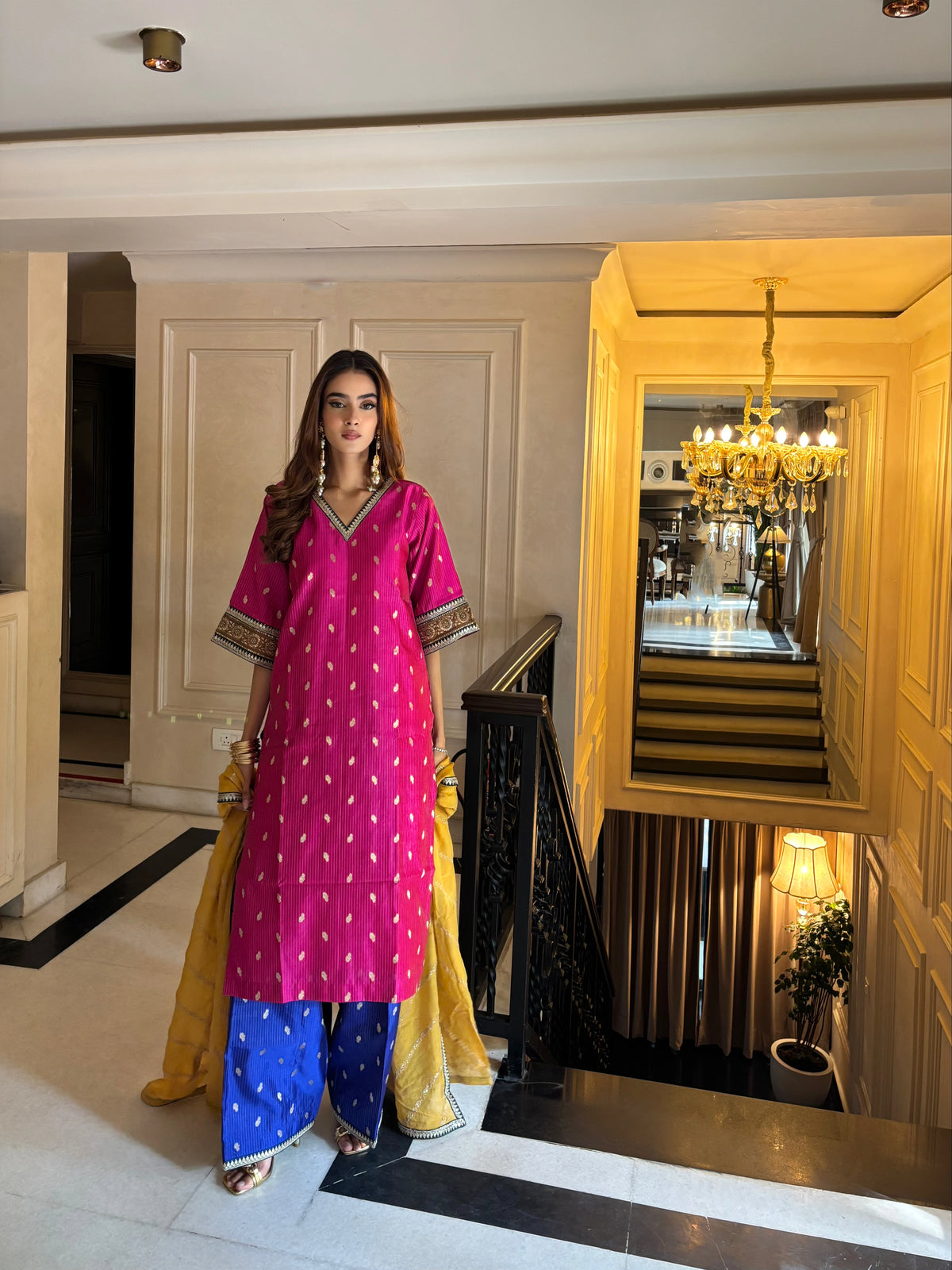
The Bahaar Colorblock Brocade Set with Dupatta leans into the bolder end of diwali suit design decisions. The kurta is handwoven brocade in a rich Rani Pink, cut in a loose fit with lace detailing at the neck and sleeves, paired with a blue colorblock farshi salwar that creates the kind of contrast that reads well in evening light. The yellow embroidered organza dupatta adds warmth against the pink and blue combination rather than blending into it. Since it's made to order according to height, the farshi length is proportioned to the wearer rather than left as a generic guess, which matters given everything mentioned earlier about managing that silhouette comfortably.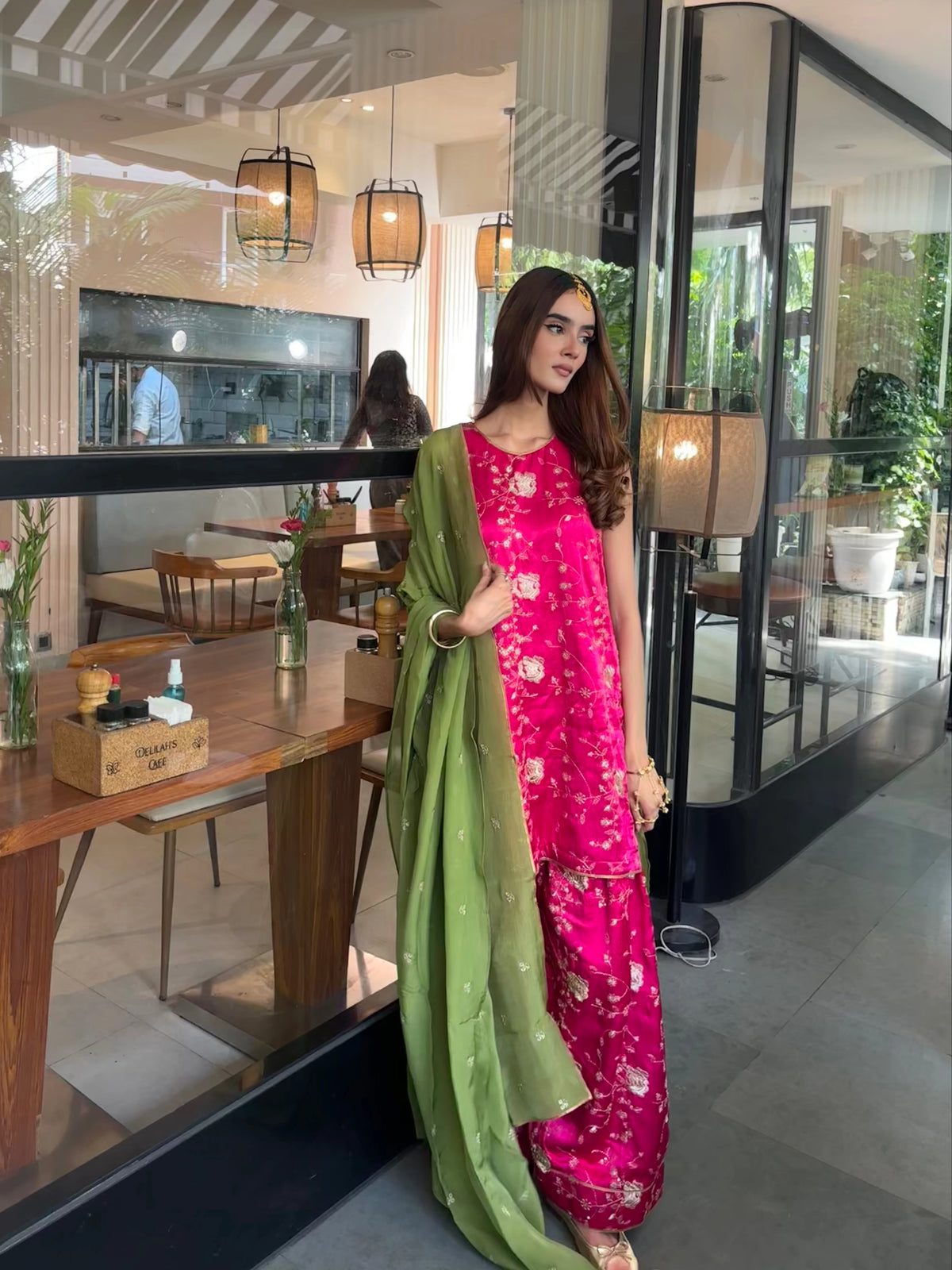
The Blush Pink Vintage Farshi Set takes the quieter route in diwali suit design. It's woven in soft pink gajji silk with embroidery running throughout, cut in a straight fit that sits close without feeling restrictive, and paired with a farshi salwar in matching silk and embroidery so the two pieces read as one continuous outfit rather than a top and bottom chosen separately. The mehendi green organza dupatta is the one deliberate contrast in an otherwise soft palette, and the cotton lining underneath keeps the silk comfortable for longer wear, whether that's a day function or a longer evening one.
Details on sizing, availability, and made to order timelines are worth checking directly on the product page before ordering, particularly for anything made to a specific height.
Real Questions People Ask
How far in advance should I order a diwali suit design that's made to order?
Made to order pieces, especially ones involving farshi lengths tailored to height, generally need more lead time than off the rack options. It's worth checking the specific timeline on the product page rather than assuming a standard turnaround, since embroidery heavy pieces can take longer.
Is mukaish work durable enough for a full evening of wear?
Yes, generally. The metallic wire is worked into the fabric rather than sitting on top of it, so it holds up reasonably well through normal movement, sitting, and standing. It's not indestructible, so treating it with the same care as any embellished silk is a good habit.
What's the difference between a diwali suit set and buying pieces separately?
A diwali suit set means the kurta, bottom, and dupatta are designed together as one coordinated piece, with matching or intentionally contrasting fabric, embroidery, and color placement. Buying separately gives more flexibility to mix and match, but a set removes the guesswork of pairing colors and embroidery styles that were meant to work together in the first place.
Can a farshi silhouette work for someone who isn't used to wearing longer hemlines?
It can, though it helps to practice walking in it once before the event itself, since the extra fabric at the ankle takes a bit of getting used to. Choosing a slightly shorter farshi length or opting for a straight fit instead is a reasonable alternative if that feels like too much to manage for a full evening.
Do pastel diwali suit options still feel festive enough for evening events?
They can, particularly when paired with metallic embroidery like mukaish or gota patti, or a contrasting jewel toned dupatta. The color itself doesn't have to be bold for the outfit to read as festive, since embellishment, fabric sheen, and dupatta choice all carry weight too.
Is gajji silk warm to wear at a crowded indoor evening event?
It's on the lighter side as far as silks go, and it breathes reasonably well compared to heavier brocades, though any silk can feel warm in a packed, poorly ventilated room. Choosing a lighter dupatta fabric to pair with it can help balance things out.
If you're still deciding between a few diwali suit design options, it helps to actually look at the pieces up close rather than judging entirely from photos, since fabric weight, embroidery placement, and fit all read differently in person than they do on a screen. Pyoor's diwali outfits for women collection is a reasonable place to start narrowing things down before the festival rush makes decisions feel rushed.
0 comments