

You open a deepavali collection page, scroll for ten minutes, and close it with a dozen thumbnails in your head and no decision. That isn't a taste problem. It's a filtering problem, because a festive page shows you everything that looks good and almost nothing about whether it will suit your actual evening.
So here's a shorter, more useful kind of roundup. You'll get a way to narrow the choices, some plain notes on fabric and fit, and three curated picks from Pyoor that each solve a different festive situation. Think of it as a festive edit with the reasoning left in.
The short answer: pick by situation, not by colour name. Decide where you'll sit, how many hours you'll be dressed up, and what kind of light you'll be standing in. A diwali suit set that passes those three tests will beat a prettier one that fails them.
What a deepavali collection should actually help you decide
Deepavali isn't one event. It stretches across several days, and each day asks something different of your clothes. A morning of rangoli and phone calls to relatives is nothing like an evening of Lakshmi puja on the floor, and that's nothing like a loud dinner at a cousin's house.
Most of us shop for the photograph and forget the schedule. Every deepavali collection quietly assumes you've already thought about yours. A quicker way to do it: your outfit has to survive three things, and only one of them is how it looks. It has to survive sitting, whether that's a floor, a sofa or the back seat of a car. It has to survive hours, because nine to midnight is a long time in anything stiff. And it has to survive lamplight.
That last one gets skipped constantly. Warm light from diyas and fairy lights pulls pastels toward cream and deepens jewel tones. A shade that glows at noon can look flat by eight, and product photos are usually shot in daylight, so a deepavali collection rarely shows you the evening version.
This is the real job of a good page like this. It should narrow things by situation. When you browse the Pyoor deepavali collection, or anyone's, read each piece as an answer to a question: where will I be sitting, for how long, and under what light?
Deepavali or Diwali? A quick note on the spelling
Same festival, different spellings. Deepavali is the form used widely across South India and in countries like Singapore and Malaysia, and Diwali is the more common one in North India and in most English language shopping searches. Neither is wrong. If you're hunting for a deepavali collection online, try both spellings, because shops tag the same outfit under either.
How to pick a diwali suit set without second guessing yourself
Start with the floor. A deepavali collection can look flawless on a standing model and fall apart the moment you're seated. If you'll be on the ground for a puja, a farshi suit is the practical hero. The wide, flared salwar gives your knees room and the fabric pools instead of pulling. A fitted trouser looks sharp standing up and feels like a punishment when you're cross legged for forty minutes.
Then look at the kurta. A looser cut is kind during a season built around mithai, and it moves a half second after you do, which photographs beautifully in motion. Our deepavali collection leans on that loose, easy cut for exactly this reason.
Colour is where people overthink a deepavali collection. Plenty of families follow rules about red or yellow for particular days, and if yours does, wonderful. If not, contrast matters more than any rule. One shade from head to toe can go flat in dim light. A deliberate pairing gives your outfit edges that both the eye and the camera can find.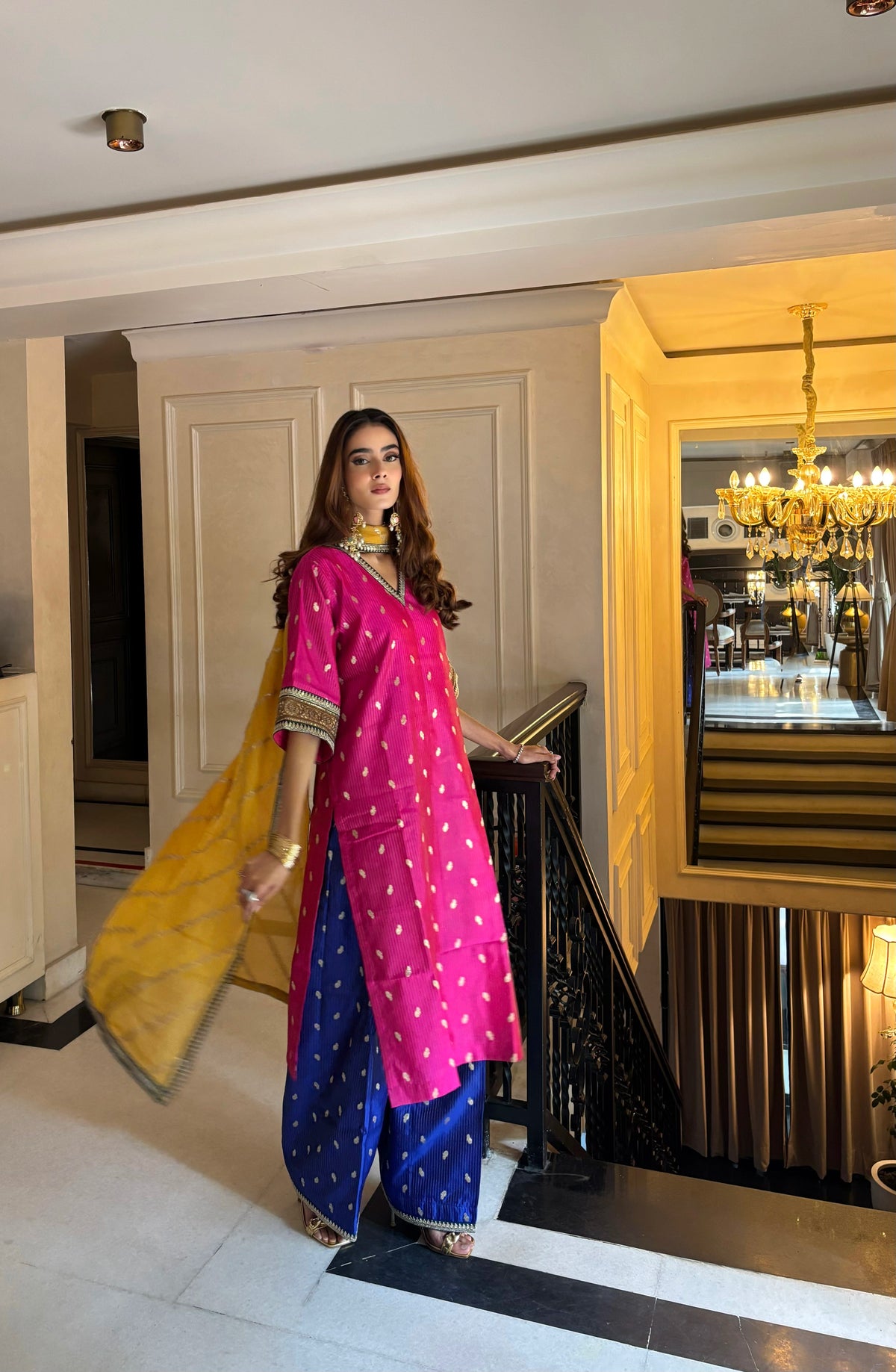
That's the logic behind the Bahaar Colorblock Brocade Set with Dupatta. The handwoven brocade kurta is Rani Pink, cut in a loose fit with lace on the neck and sleeves. The farshi salwar is a blue colorblock, and a yellow embroidered organza dupatta adds a third colour on top. Bold on paper, yes, and exactly the kind of piece a deepavali collection should have room for. But the set is fully lined and made to order as per your height, and that detail matters more than it sounds, since length is what decides whether a farshi hangs gracefully or drags.
Before you add anything to the cart, try this. Say out loud where you'll wear it and for how many hours. If the answer starts with "um," keep scrolling through the deepavali collection until it doesn't.
Fabric notes for your deepavali collection shortlist
Fabric tells you more than the product photo does. Gajji silk usually has a little body to it, enough to hold the shape of a wide salwar without feeling heavy. Brocade is woven with the pattern built in, so it carries richness without needing much added on top, though it tends to feel warmer than lighter fabrics. Net is airy and needs a lining to be comfortable. Organza is crisp and sheer, which is why it shows up so often as the dupatta.
Surface work is the other half, and most of what makes a deepavali collection sparkle in the evening comes from it. Mukaish work uses tiny metallic points that scatter light like sparks, so it comes alive near a diya. Gota patti embroidery uses applied metallic ribbon, which gives a more graphic, defined shine. Neither is a claim about the three sets below, so check each product page for exactly what the embroidery involves.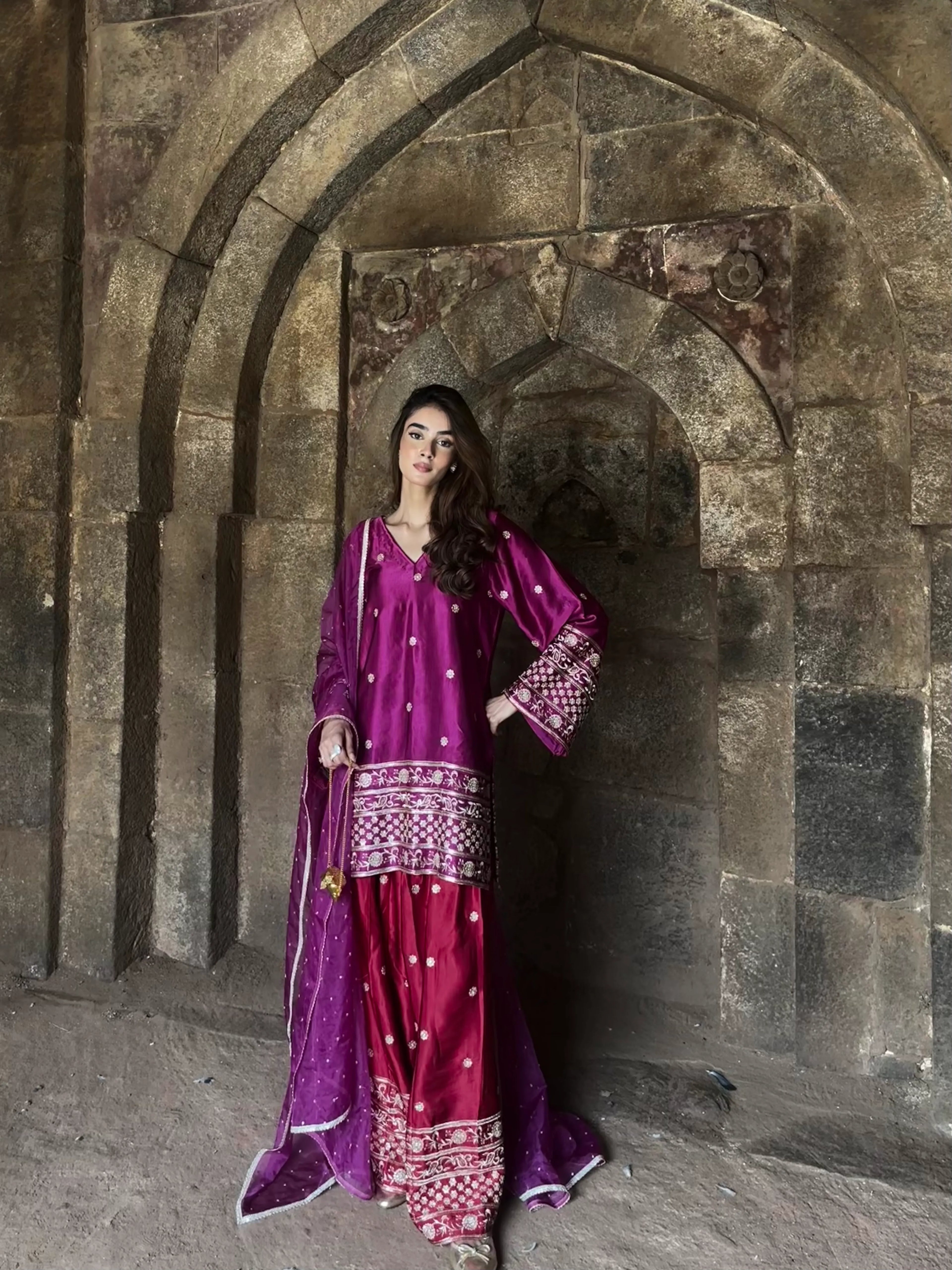
The Begum Gaji Silk Farshi Set is the clearest example of fabric doing the work. Both the kurta and the matching salwar are gajji silk, in a purple and red combination. The kurta has a soft feel and an oversized fit, the salwar carries embroidery on the mori, and the bell sleeves are embroidered too. An embroidered organza booty dupatta finishes it with a lighter layer over all that colour.
Wearing this one for a long stretch? That oversized fit does the quiet work. It's a set for celebrations that call for rich colour and visible craft, whether that's a wedding or a family function in the same week as Deepavali.
One more fabric habit worth building. Any deepavali collection will show you gleaming photos, but only the product page tells you about lining. Look for it every time, because an unlined embellished kurta can itch by the third hour.
Wearing your deepavali collection pick across the festive week
Plan for repeats. Few people buy a new outfit for every day of the festival, and nobody should feel they have to. The trick is changing the supporting cast while the set stays the same, and a deepavali collection piece with a strong base colour makes that easy.
Dupattas are the easiest lever. Pinned flat on one shoulder, a dupatta reads as relaxed, good for the afternoon visits. Draped across both arms, it turns dressier for evening. With the Begum set, the organza booty dupatta is light enough that you can shift it either way without it overwhelming the kurta.
Jewellery should respond to how busy the outfit is. A heavily worked set like Begum asks for simple earrings and maybe one ring. A calmer set can take bold jhumkas. If your whole festive edit is already loud, quieten the accessories rather than competing with them.
Footwear deserves a thought, too. Many homes ask you to leave shoes at the door, and the puja itself is barefoot. Pick sandals you can slip off in three seconds, not boots with laces.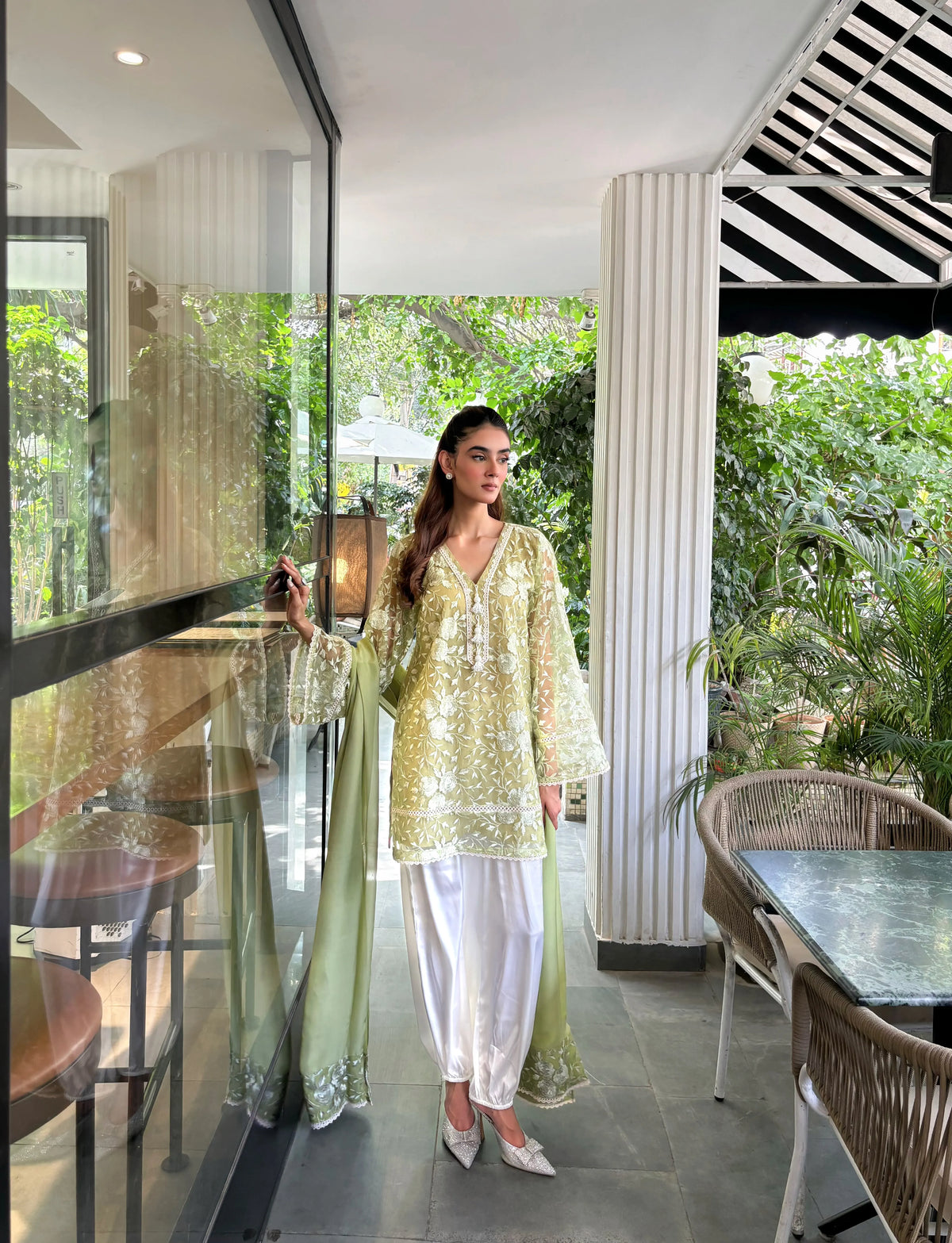
Daytime is its own category, and among the deepavali collection picks here, Amelia owns it. The Amelia Coral Green Balloon Set suits warm days and gatherings where you'd like to be comfortable and still look special. The kurta is embroidered net with a soft cotton lining, paired with a white satin balloon salwar, and the neckline and sleeves carry tassel and lace detailing. The pastel green organza dupatta finishes the look. It's a gentle, fresh set for a family lunch or a daytime Bhai Dooj visit.
Quick caution on pastels. Because lamplight warms them, a pastel looks best in daylight or under white light. Pair it with warm metal jewellery in the evening and it won't wash out. That's worth remembering whenever a deepavali collection tempts you with softer shades.
Comparing three picks from the deepavali collection
Here's how the three sit side by side.
Within this deepavali collection roundup, Begum is the richest. It's the one for an evening where craftsmanship should be visible from across the room, and the purple and red pairing reads festive without needing extra decoration. The Bahaar set is the most playful, built on colour contrast with a lighter touch in the lace trim, and its made to order sizing helps if you're particular about length. The Amelia is the lightest in mood and weight, and it belongs to daylight.
None of them is the best deepavali collection pick in the abstract. Each is the best for a day. If your week includes a puja at home and a family lunch, you might legitimately want two, and they'd look nothing alike.
A practical note on ordering from a deepavali collection. Because Bahaar is made to order, plan your timeline before the festival week rather than during it. Check the size chart, delivery details and the care instructions on each page, since we haven't covered those here and they can vary by piece.
Questions people ask about choosing from a deepavali collection
How do I choose from a deepavali collection when everything looks good?
A good deepavali collection overwhelms by design, so narrow by situation first. Decide where you'll sit, how long you'll wear it and whether the event is day or night. Then compare two or three pieces rather than twenty. A shortlist built that way is quicker, and you'll regret fewer purchases.
What colours work best for a diwali suit set?
There's no single correct colour. Jewel tones such as purple, red and rani pink deepen beautifully in lamplight, while pastels suit daytime. If you want something that looks good in photographs, choose a deliberate contrast, like a pink kurta with a blue salwar.
Is a farshi suit comfortable for puja and long evenings?
Generally yes, in most pieces from any deepavali collection. The flared salwar gives plenty of room when you sit on the floor, and a loose kurta helps through a long meal. Check the lining and fit details on the product page before ordering.
Can I wear a pastel suit for Deepavali?
Yes, particularly for daytime gatherings. In the evening, warm light can soften pastel shades, so add a richer dupatta or warm toned jewellery to keep the outfit from fading.
What matters more in a deepavali collection, the embroidery or the fit?
Fit, every time. Beautiful embroidery on something that pulls at the shoulders or drags on the floor won't feel festive for long. Sleeve length and salwar length are worth checking first.
If you're still undecided, open the Diwali outfits for women collection on the Pyoor site and set the three picks above next to your own calendar. The one you keep reaching for is usually the right one, and a deepavali collection is only worth browsing if it ends in a decision like that.
0 comments